
Axios Austin

September 18, 2025

It's Thursday, folks.
☀️ Today's weather: Mostly sunny, with a high near 95.
Today's newsletter is 945 words — a 3.5-minute read.
1 big thing: U.S. Latino economy hits $4 trillion
The U.S. Latino economy hit $4 trillion in 2023, expanding at twice the pace of the rest of the country, according to the most recent data available.
Why it matters: Latinos' youth, population growth, educational gains and entrepreneurial drive are powering one of the world's largest economic forces — even as wealth gaps persist.
By the numbers: If U.S. Latinos were a country, their GDP (total value of goods and services produced) would rank fifth globally for the third year running, according to the Latino Donor Collaborative (LDC) report.
- California ($989 billion), Texas ($739 billion) and Florida ($396 billion) are the top state contributions, per the report.
- Between 2018 and 2023, Latinos in Texas accounted for 31.3% of the state's overall economic growth.
Between the lines: Latino GDP has grown at an average 4.4% annually — second-fastest among the world's 10 largest economies, trailing only China and on par with India.
- "Latinos in the U.S. are not just participating in the economy; they are propelling it," LDC co-founder and chairperson Sol Trujillo said in a statement.
Zoom in: The National Association for Latino Community Asset Builders (NALCAB), a San Antonio-based Community Development Financial Institution (CDFI), helps build Latino wealth by expanding access to homeownership through housing development, buyer education, down payment aid, and lending support.
Yes, but: Even as Latinos make major economic inroads, many are still shut out of homeownership and lack access to important financial tools such as the CDFI Fund, NALCAB executive vice president and COO Levar Martin tells Axios. The fund is a federal program that channels billions to credit unions, banks, and nonprofits serving low-income communities.
- Latinos' gains could be threatened by steep cuts to the fund proposed by the Trump administration. All 11 CDFI programs remain legally protected and funded for now.
What they're saying: "The CDFI Fund has been very impactful. This brings financial services to communities that don't have access — losing this lifeline would ripple across the country and our economy," Martin tells Axios.
2. Five questions with Poncho's Clay Spencer
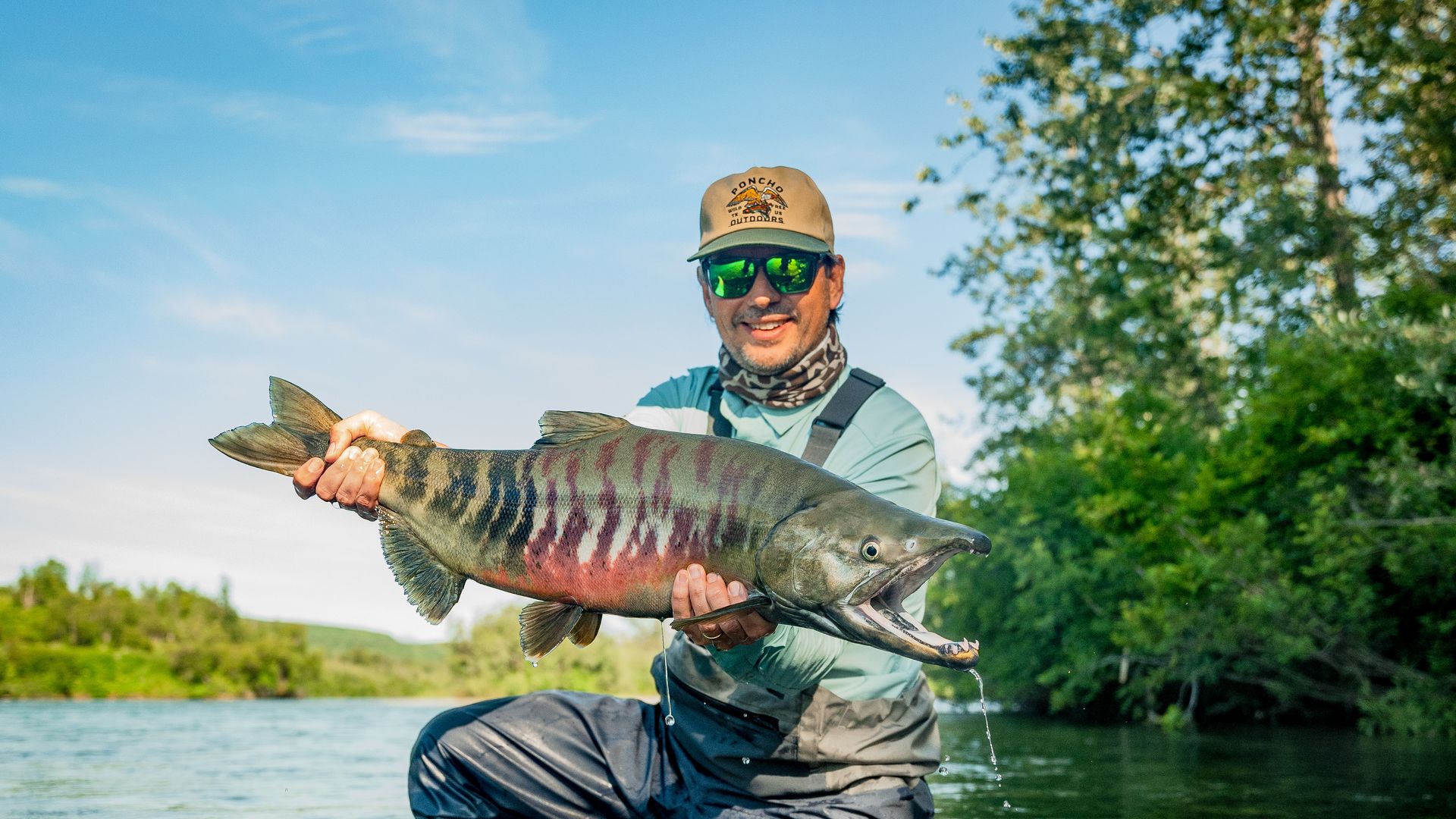
UT grad Clay Spencer launched Poncho in 2018 with a simple idea: make a better fishing shirt.
Zoom in: Unlike other brands at the time, Spencer's original performance shirts offered different-sized fits while still making them moisture-wicking, light and offering sun protection.
- The company has since expanded to flannel, denim and Western. Along the way, stars like Matthew McConaughey and Post Malone have been spotted in the brand.
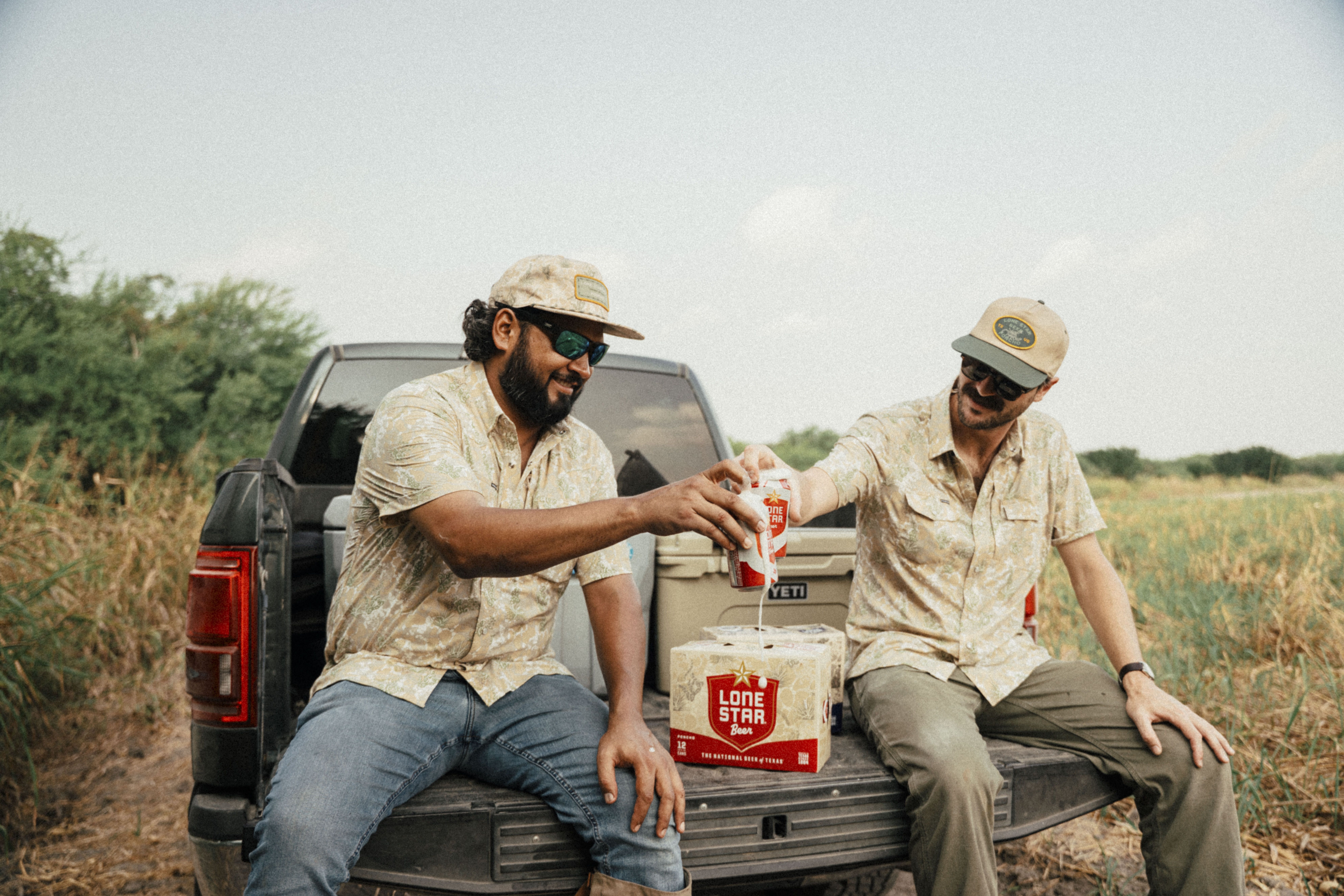
Driving the news: This month, the brand and San Antonio-based Lone Star Beer teamed up to release limited-edition merch, including hats, shirts and beer cases wrapped in Poncho's South Zone camo print.
We caught up with Spencer to chat about Poncho's evolution, the Lone Star collab, and what's next.
This interview has been lightly condensed and edited for clarity.
What was your vision when you first founded the company, and how has that evolved?
"I had a very clear vision about the shirt I wanted to wear outdoors — how I wanted it to look, feel and perform. It didn't exist so I set out to make it.
In the early years, I could only dream of people like Post Malone or Matthew McConaughey wearing our shirts. To see them wear Poncho now is a testament to what happens when you focus on making a great product. The community follows."
How did this collaboration with Lone Star come about?
"Lone Star is a legendary Texas brand. We've always wanted to partner with a company as iconic as Lone Star, and to do something cool, like putting our camo on a 12-pack of beers.
When we were designing our new South Zone Camo, it felt like a moonshot idea, but when we talked to Lone Star about it, it just clicked."
3. 🤠 The Roundup: Wrangling the news
🎤 Rapper Cardi B's 2026 U.S. tour will include a stop at the Moody Center on March 6. (Axios)
📰 Veteran local journalist Melissa Barragán Taboada will lead the Texas Tribune's new Austin newsroom. (Texas Tribune)
🏛️ U.S. Rep. Greg Casar (D-Austin) introduced a measure that would censure U.S. Rep. Cory Mills (R-Fla.) as part of a tit-for-tat for Republicans threatening to censure U.S. Rep. Ilhan Omar (D-Minn.) (Axios)
4. Social calendar
Here's what's on deck this week.
Friday
🎬 Enjoy short and full length films at the Central American Film Festival at the Asian American Resource Center. $13, 7-10:45pm.
🎸 Catch Benson Boone at the Moody Center at 8 p.m. Resale tickets available.
Saturday
🎨 Check out the opening of "Colorscapes: The Art of Elizabeth Payne," an exhibition of Texas landscape paintings at the Neill-Cochran House Museum. The 4-6pm reception is free and open to the public.
Sunday
📚 Celebrate 75 years of the University of Texas Press at Austin Central Library. 10am-7:45pm, free.
5. 🦠 1 photo under the microscope to go

Texas de-extinction startup Colossal Biosciences announced that they've successfully grown pigeon primordial germ cells (PGCs) for the first time, a "pivotal step" in their effort to bring back the dodo, per Colossal.
Why it matters: The move extends PGC technology beyond chickens and geese, enabling genetic engineering in pigeons and paving the way for reviving the long-extinct bird, according to Colossal.
What's next: The company said it's raised an additional $120 million, bringing its Series C round to $320 million and its valuation to $10.2 billion, which will support expansion of its avian genetics work.
Thanks to Astrid Galván and Bob Gee for editing this newsletter.
🎃 With Halloween around the corner, Asher is wondering what a "Chipotle fork" costume is.
🧑🧑🧒🧒 Nicole would like your tips and tricks for going to Matt's El Rancho with a group of 15 people.
Sign up for Axios Austin