Axios AI+

November 26, 2025

The holidays began last night for me with my daughter home from New York to marvel at all the new AI billboards in SF. There's no place like home! Today's AI+ is 1,145 words, a 4.5-minute read.
1 big thing: The 2010s oil bust could tell us AI's future

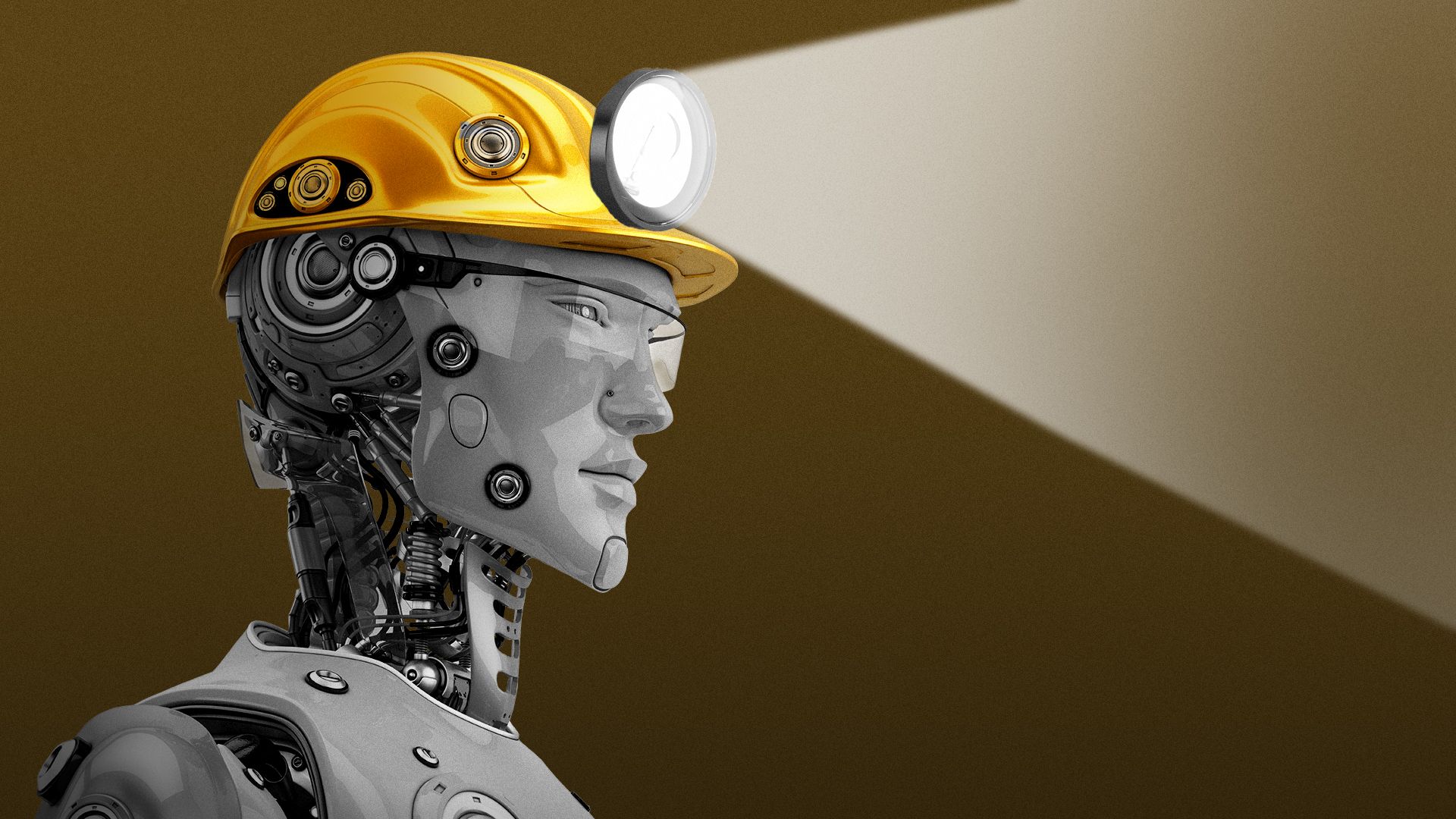
To understand whether AI is in a bubble, and what could happen next, you have to think of it like railroads. Or maybe fiber-optic cable. Or perhaps oil drilling?
Why it matters: Everyone in the business world is anxiously trying to figure out which historical boom-and-bust comparison is the right one so they can be ready for what they fear comes next.
- Of course, none of them are really perfect comparisons, but that doesn't stop people from trying.
Case in point: In recent essays, two industry observers — Carlyle analyst Jeff Currie and Henry Gladwyn of early stage tech investor OMERS Ventures — sought to compare what's happening in AI now and what happened in oil exploration 10-15 years ago.
The big picture: In the mid-2010s, the shale boom — named for the supplies trapped in rock formations unlocked by fracking — turned the U.S. into the world's largest oil and gas producer, adding new geopolitical leverage along the way.
- But it was a painful road for industry and investors because they invested heavily on growth — and got hammered when Saudi-led OPEC looked to reclaim market share in late 2014 and prices collapsed.
- Some think there's a parallel, and that AI could be following the same path.
- The connective tissue between AI and energy isn't just metaphorical: Natural gas is emerging as a winner, slated to supply at least a big tranche of the additional power needed for huge AI data centers.
Zoom in: In Currie's latest piece, he explores what happens when companies built on ideas suddenly have lots of assets, like data centers and power plants. Instead of being "asset light," they're "investing like old economy energy."
- To his way of thinking, there's a historic back-and-forth between what's more important: the bits (think: computing) and the atoms (think: molecules of energy).
- "[T]he 2020s are shaping up to be a decade where the bits converge with the atoms, creating new 'bit-atom' commodities like cryptocurrencies and AI compute," he writes.
How it works: The output of data centers is so power-intensive that their computing is measured in dollars per hour, the same way energy is priced by the megawatt-hour or barrel. That carries risk.
- "Big Tech AI is now producing a physical commodity with a supply and demand balance just like an energy company," Currie notes, drawing the comparison to the shale oil bust of a decade ago.
- "If, analogously, we replace low-cost Saudi Arabian oil supplies with low-cost Chinese AI compute technologies combined with cheaper foreign providers then the narrative could look eerily similar."
Of note: Gladwyn's AI-shale comparison also makes the China-as-AI's-OPEC analogy.
- "Washington cares most about security and scale. Europe and Canada insist on carbon intensity and climate alignment. Japan and Korea emphasize supply chain resilience and domestic champions," writes Gladwyn, a managing partner at OMERS.
- "The technodollar's rules of entry are shaped by all these priorities. Security, procurement, and carbon standards are the glue that binds the Western bloc."
Reality check: Carlyle's Currie does see differences between then and now.
- One of them: "No one would ever have mentioned monopoly in the way that the term is thrown around today in the context of generative AI."
- The analogy has plenty of limits, like oil companies serving a market where demand is largely known and growing incrementally, not exponentially.
The bottom line: "The shale revolution did not fail. It succeeded so completely that it reshaped the global energy order," Gladwyn writes. "Yet many investors in shale were ruined."
- "The paradox was that shale's abundance triumphed geopolitically but starved capital of returns. AI is tracing the same arc of abundance."
2. Deepfakes flood retailers

Three in 10 fraud attempts targeting major retailers are now AI generated, according to estimates from deepfake detection firm Pindrop.
Why it matters: Heading into the holiday shopping season, scammers and hackers are using deepfakes to trick employees of corporate retailers and steal thousands of dollars per attack, on average.
The big picture: Cyber criminals are increasingly using deepfake technologies to impersonate loved ones, colleagues and customers.
- Scammers are training AI-powered bots to call customer-service centers, report an issue with a recent order, and demand a refund, Pindrop CEO Vijay Balasubramaniyan told Axios.
- "These bots are probing all of these systems all over the world and figuring out which is the weakest link," Balasubramaniyan said.
By the numbers: One large retailer currently averages more than 1,000 AI-generated calls per day, according to Pindrop.
Zoom in: In a redacted audio recording shared with Axios of one of those bot calls to a customer service line, the deepfake is patchy, sounds a bit robotic, and doesn't respond to some questions the customer service agent asks.
- "My package is lost. Help me process the refund, thank you," the bot said at the very beginning of the call. It did not initially say the customer's name or even say "Hello."
- But the bot still was able to share a legitimate order number, the name of an actual customer, and the last four digits of the customer's phone number — so the agent processed the refund despite the signs of fraud.
Catch up quick: Deepfake impersonations are being used across the threat ecosystem.
- North Korean scammers have been using AI tools to change their faces and voices during job interviews across the Fortune 500.
- The FBI warned in May that scammers had used AI to impersonate senior U.S. officials in phone calls.
Threat level: These AI tools are only expected to get better.
- "The data shows that fraudsters are using these AI bots to essentially do this on steroids, do this 24/7, and these bots are so good at having conversations," Balasubramaniyan said.
Zoom out: Shoppers are also being inundated with deepfakes as they scroll social media for the best deals, Abhishek Karnik, head of threat research at McAfee, told Axios.
- Scammers are now using AI tools to create fake celebrity endorsements for products and stores, or to imitate the stores themselves.
- Apple, Amazon and several luxury brands are on McAfee's list of most-impersonated brands this shopping season.
- "It's incredible the pace at which things are progressing in this space," Karnik said.
3. Training data
- Warner Music and AI music generator Suno announced a partnership and an agreement to settle previous litigation. (Music Business Worldwide)
- Nvidia says its AI chips are "a generation ahead" of Google's tensor processing units after rumors that Meta might choose Google over Nvidia. (CNBC)
4. + This
Move over a cappella. College kids are joining Claude Clubs, sponsored by Anthropic. The "Builder Clubs" for like-minded students launched this fall at more than 60 universities. Members get free Claude Pro and API credits for a year. h/t Fast Company.
Thanks to Matt Piper for copy editing this newsletter.
Sign up for Axios AI+
