Axios AI+ Government

March 20, 2026


Morning! The White House rolled out its AI policy framework today, but the same fights on Capitol Hill aren't going anywhere.
Today's newsletter is 1,013 words, a 4-minute read.
1 big thing: White House unveils AI framework

The White House today sent Congress its ideas for regulating AI, but policy disagreements on the Hill are far from resolved.
Why it matters: Republicans are looking to the White House for direction on AI, but its plan is likely to run into the same sticking points that have stalled action for years.
- Those include how to protect children online and whether to preempt state laws that conflict with the federal standards they're trying to set.
- Pressure is mounting for Congress to act as states move ahead with laws that AI companies are increasingly comfortable living with.
What's inside: In addition to preemption, the framework covers child safety, communities, creators and censorship — "the four C's" outlined by White House AI czar David Sacks.
- The proposal also calls on Congress to address the use of AI replicas, codify President Trump's ratepayer protection pledge, and establish "regulatory sandboxes" to allow developers to experiment with AI under relaxed rules.
The White House has been working with Hill leadership on plans. The House Energy and Commerce and Senate Commerce Committees would have primary jurisdiction on any AI proposal.
- Asked about involvement in the effort, committee spokesman Matt VanHyfte pointed Axios to an essay Chair Brett Guthrie (R-Ky.) wrote earlier this year outlining his key pillars to AI leadership: "dominance, deployment and safeguards."
- "We're excited to see what the White House releases, and wouldn't be surprised to see if it lines up with what Chairman Guthrie believes," VanHyfte said. "E&C is the tip of the spear when it comes to AI regulation in the House."
- Blair Taylor, a spokesperson for Senate Commerce, told Axios that "we look forward to working with the White House and members of the Committee to advance meaningful AI legislation that encompasses a number of priorities, like those outlined in the [Senate Commerce Chair Ted] Cruz AI framework."
The big picture: The White House is trying to pair a national AI framework that would preempt state laws with a slate of kids' online safety bills that have bipartisan interest.
- But the House and Senate remain far apart on the details of those proposals, making any package a tough lift.
Friction point: The latest package of kids' safety bills that the House Energy and Commerce Committee advanced included a version of the Kids Online Safety Act that doesn't pass muster in the Senate.
2. The exclusive Democratic AI group chat

Democratic state lawmakers across the U.S. are quietly coordinating AI policy and comparing notes on industry lobbying in a private Signal group chat called "Frontier AI Legislators," multiple members told Ashley.
Why it matters: The group shares and tweaks bill language and swaps insights about industry pressure, aiming to help shape national standards for AI as Congress and the White House try to land their own plans.
The big picture: AI super PACs pushing for lighter regulation are spending record amounts against state candidates who are backing tougher rules, as thousands of state-level AI bills are introduced.
- AI and tech companies, in response, are dispatching lobbyists to statehouses at unprecedented rates.
- Enter the group chat, where lawmakers try to figure out how to deal with that.
Zoom in: New York State Assembly Member Alex Bores, who's running for Congress in New York's 12th District, founded the group last year.
- The chat has nine members representing New York, Massachusetts, Illinois, Colorado, Vermont, California and Rhode Island.
- At least two members of the group are running for national office: Bores and California state Sen. Scott Wiener.
What they're saying: "We realized that the lobbyists were going state by state, and sometimes saying different things to different people," Bores said in an interview.
- "We all fundamentally agree that the best path forward [on AI] is one where we're somewhat coordinated ... there'll be times where we should be different, but those should be intentional."
- The group "just became a way to share information, to share advice and to coordinate on a national standard given the failures of Congress to do that," he said.
3. Pentagon: Anthropic foreign workers pose risks
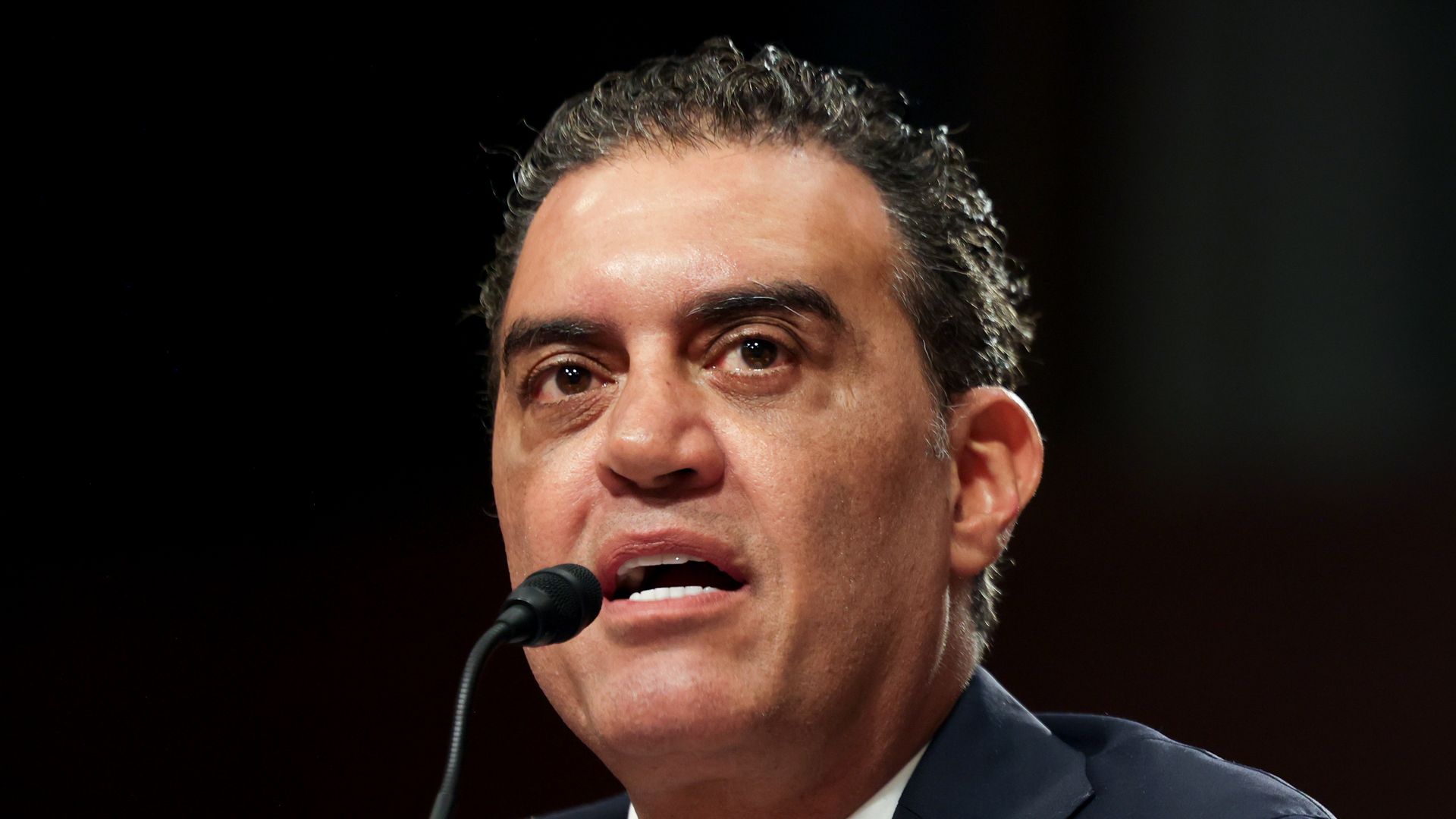
The Pentagon is highlighting new national security concerns about Anthropic's use of foreign workers, including from China, according to a court filing.
Why it matters: The Defense Department is raising red flags about a key element of the AI industry — its reliance on global talent — as it moves to dismiss Anthropic's lawsuit.
What they're saying: "Anthropic employs a large number of foreign nationals to build and support its LLM products, including many from the [People's] Republic of China (PRC)," a March 17 declaration from Pentagon undersecretary Emil Michael states.
- The use of those workers, Michael wrote, "increases the degree of adversarial risk should those employees comply with the PRC's National Intelligence Law."
- The risks with other major U.S. AI companies that use foreign workers are reduced by "the technical and security assurances of the other labs' leadership, along with their consistently responsible and trustworthy behavior" when working with the Pentagon, the filing states.
- "Anthropic's case, however, is different."
4. The Output: Colorado and more Anthropic news

Here's our guide to catch you up on the AI policy news you may have missed this week:
🤝 Colorado AI moves: A long-stalled deal to rewrite the state's AI regulations appears suddenly within reach, our Axios Denver colleague John Frank reported.
- Disagreements over liability and scope forced advocates back to the table to draft a last-minute overhaul before the session ends in May.
- A task force convened by Gov. Jared Polis released draft legislation this week to amend the 2024 law.
🇪🇺 EU AI Act update: Key EU lawmakers this week endorsed a ban on AI apps that create sexually explicit images, Reuters reported.
🏛️ Anthropic Hill meeting: A bipartisan House Homeland Security Committee briefing with Anthropic's Jack Clark was held behind closed doors on Wednesday, per sources familiar with the meeting, and only briefly touched on the company's fight with the Pentagon, Maria scooped yesterday.
Thanks to Mackenzie Weinger and David Nather for editing and Matt Piper for copy editing.
Sign up for Axios AI+ Government
