Axios AI+ Government

February 06, 2026


Happy Friday. The White House is laying the groundwork for its big AI export push — keep scrolling for more.
Today's newsletter is 1,316 words, a 5-minute read.
1 big thing: Trump's CTO pushes plan to take U.S. AI abroad
President Trump's chief technology officer is calling for the U.S. to aggressively export its AI tech as the administration prepares to roll out a centerpiece of its AI strategy.
The big picture: The White House is framing AI exports as a way to avoid losing U.S. tech leadership abroad.
- The administration is expected to request industry proposals for its ambitious new AI exports program early this year.
- White House Office of Science and Technology Policy director Michael Kratsios will give an update on that program at the upcoming AI Impact Summit in India, per OSTP spokesperson Kristen Eichamer.
Driving the news: In some of his first public remarks since being confirmed as CTO, Ethan Klein said it was important to bring American AI technology "across the full stack to partners and allies across the globe."
- The U.S. led on nuclear development in the past, but ceded territory to others by restricting it too much, Klein said this week at the Ashby Workshops, an AI summit held by AI policy nonprofit Fathom.
What they're saying: "Eventually we saw kind of this overly burdensome, in my opinion, regulatory regime," Klein said. "We lost a lot of our leadership."
- "We saw that our partners across the globe went to China and Russia as producers and providers of that technology, and that's something I do have in mind when thinking about the development of AI."
Context: Some industry and lobbying sources told Axios last year that they were concerned with the lack of clarity and communication from the Trump administration around the planned American AI exports program.
- Companies across the AI ecosystem will be asked to offer proposals for the infrastructure, tools and models they want the government to designate as "priority" AI export packages.
- Companies that are accepted into the program would get federal loans, government investment and expedited licensing, per an executive order.
The Commerce Department accepted comments on its request for information on the program through mid-December of last year.
- OpenAI wrote that "for the U.S. to keep leading the world in AI innovation ... America must shape the tech stacks on which AI runs around the world" and suggested the U.S. work with partner countries on trusted supply chains.
- Anthropic's submission said close U.S. allies should be prioritized for exports. The company also wrote that "regulatory certainty" amid fragmented copyright, content regulation and data protection laws across the world was important.
- AMD urged Commerce to think of the "American AI Tech Stack" broadly, including data centers and edge providers. The chipmaker said open-source software and standards should be promoted, arguing such systems "future-proof" the AI stack.
Comparing the Trump administration's AI approach with the Biden administration's, Klein said the previous White House focused too heavily on safety and risk at the expense of adoption.
- "We really ought to refocus that instead on how we promote AI across different sectors, how do we work with industry to develop the standards Americans and folks around the world trust," he said.
What we're watching: The test will be whether the administration can translate its AI export vision into reality, rather than repeating the mistakes Klein says cost the U.S. its nuclear edge.
- Kratsios, per OSTP's Eichamer, will announce "progress to implement and expand the American AI Exports Program" and urge international partners to adopt the American AI stack at the India summit.
2. Inside Qatar's bid for AI sovereignty

As foreign investment pours into Qatar's tech sector, Doha is trying to harness the AI boom without giving up control.
Why it matters: Gulf states are making major plays to become AI hubs, and Qatar is betting that sovereignty over data, infrastructure and models will be key.
Driving the news: U.S. tech giants including Meta, Microsoft and Google were among more than 1,000 companies at Web Summit Qatar this week.
- While Doha is courting global tech giants, leaders spent the week emphasizing local ownership of data, infrastructure and governance — often referred to as "AI sovereignty."
What they're saying: "We're not just importing talent. We have homegrown talent," Namek Zu'bi, founder of venture capital firm Silicon Badia, said in a panel interview with Maria.
- Zu'bi and his partners from BECO Capital and Invisible Technologies previewed an AI services company for the Gulf Cooperation Council to automate workflows, noting "the majority of the the team is Arab, which is important."
Between the lines: One way Doha is looking to position itself as a global leader is in talent and workforce development.
- Universities showcased student and alumni startups across AI, fintech, agriculture and recruitment.
The intrigue: Chip R&D firm Imec is especially interested in Qatar, global partnerships vice president Max Mirgoli said in an interview on the sidelines of Web Summit.
- "Why here and not Riyadh? Education City. They built this cocoon for talented students," Mirgoli said, citing Qatar's academic ecosystem.
- Imec is launching a regional R&D hub in Qatar early this year and aims to reach 100 employees by 2030.
Yes, but: Given how the global AI ecosystem works, even efforts to assert AI sovereignty still depend on foreign chips, infrastructure and models.
The big picture: Qatar's focus on developing its workforce and STEM education comes as President Trump makes it harder and more expensive for foreign talent to obtain H-1B visas.
- "Quite honestly speaking, immigration is no longer moving in the U.S." Mirgoli said. "... If the flavor of the week is lemon, we should make lemonade."
3. Scoop: Hawley shopping data center costs bill
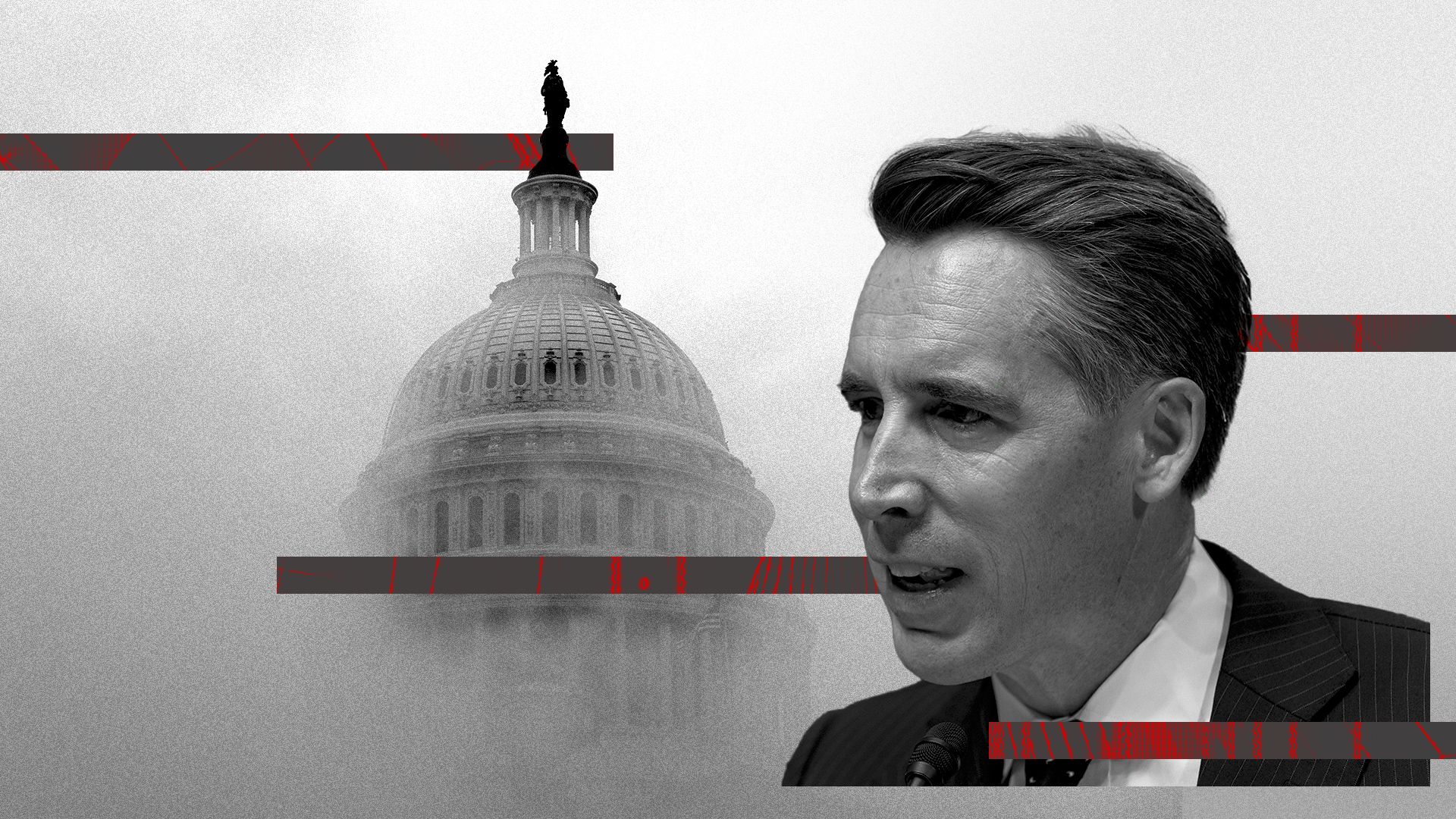
Sen. Josh Hawley (R-Mo.) is circulating a bill in Congress that would ensure the cost of data centers' energy use is not passed on to consumers, per a summary of the bill obtained by Ashley.
Why it matters: Hawley, who's been outspoken about AI dangers and consumer costs, wants to codify President Trump's pledge last month to not let the proliferation of AI data centers make electricity bills rise.
Driving the news: Hawley is shopping and plans to introduce a bill called the Guaranteeing Rate Insulation from Data Centers Act. Per the summary, it would:
- Guarantee no increase in consumer utility prices from data centers.
- Require new data centers to use energy "from power generation sources that are separate from the grid."
- Guarantee consumers first priority on the electrical grid.
- Require a 10-year off-ramp for data centers to find alternate power sources and transparency requirements around utility usage.
Between the lines: There is major political pressure on both sides of the aisle to make tech companies pay for surging power costs, rather than passing them onto customers.
The big picture: Hawley would be among the first congressional Republicans to push legislation on this topic.
4. The Output: Antitrust, ICE and more
Here's our guide to catch you up on the AI policy news you may have missed this week:
✍️ Antitrust note: Sens. Elizabeth Warren (D-Mass.), Ron Wyden (D-Ore.) and Richard Blumenthal (D-Conn.) called on the Justice Department and the FTC to scrutinize "reverse acqui-hiring" deals from Nvidia, Meta and Google, and "block or reverse them should they violate antitrust law."
📫 AI's 230 moment: With Section 230 approaching its 30th anniversary on Sunday, civil society groups sent a letter to the Senate urging the chamber "not to create a new shield for Big Tech by advancing legislation that would broadly preempt state" AI laws.
🏛️ ICE tech bill: Sens. Ed Markey (D-Mass.), Jeff Merkley (D-Ore.) and Wyden, along with Rep. Pramila Jayapal (D-Wash.), introduced the ICE Out of Our Faces Act.
- The bill would ban ICE and Customs and Border Protection from acquiring and using facial recognition technology and other biometric identification systems, and would also require them to delete all biometric data they've collected.
🗺️ Public sector AI: A new survey of 3,335 public servants across 10 countries found that 70% say they use AI, but confidence lags.
Thanks to Mackenzie Weinger and David Nather for editing and Matt Piper for copy editing.
Sign up for Axios AI+ Government
