Axios AI+ Government

August 21, 2026


It's Friday! We're looking at how New York's governor is fine-tuning her data center strategy and hoping her approach can help other Democrats.
- Plus, there are new worries about what AI companies are doing to books — and a new "AI audit" plan from a guy who wants Texas Attorney General Ken Paxton's job.
Today's newsletter is 959 words, a 3.5-minute read.
1 big thing: Hochul's business-friendly data center plan

New York Gov. Kathy Hochul is positioning herself as a leader of the Democratic search for a data center position that isn't explicitly anti-business.
Why it matters: Hochul says her data center platform isn't being designed with politics in mind.
- But as candidates across the country scramble for a winning position on the issue, New York is emerging as a test bed for one potential approach.
What they're saying: In an interview with Axios, Hochul said the "thoughtful" approach for Democrats is to avoid demonizing business and just focus on protecting their constituents.
- "I want Democrats to win, and if this [approach] helps them, embrace it, right?" she said.
- Hochul this week also blasted the Senate GOP campaign arm's pressure on AI companies to fix the optics of data centers.
- "I don't think it's government's role, certainly not the United States Senate's role, to be telling companies how to market their products," she said at a press conference.
Zoom in: New York is the epicenter of the affordability debate — an election issue that is crashing into AI angst.
- Hochul is trying to thread the needle of a business-friendly politician who also cares about workers, lowering living costs and the environment.
- Hochul is calling for a relatively short moratorium on data center construction — one year — while other progressive Democrats want to make the construction contingent on achieving AI safety and other much loftier goals.
- Progressives in Hochul's own state also support a moratorium that is longer than one year. Hochul has not said whether she would back that.
On Wednesday, Hochul held a roundtable with women whose jobs are being directly impacted by AI as part of a workforce development initiative to ready New Yorkers.
- "You need human interaction in some things. You may get a phone call that someone just got the worst news of their life and they're crying and I'm trying to help them understand this cancer diagnosis. That they may need radiation," said Lynn Brooks, a claims processor for Highmark Blue Cross Blue Shield of Western New York and union steward.
- "AI is a tool. I see the need for it. But I don't want it to replace the family," Brooks added, referring to her team.
The bottom line: Hochul will forever be able to boast that she was the first governor in the nation to sign a data center moratorium, but there is still a meaningful distance between her and progressives that allows her to maintain her business relationships.
2. Exclusive: FTC urged to probe book destruction

The Federal Trade Commission is being urged to investigate AI companies for buying, scanning and destroying books to train AI, per a letter shared first with Axios.
Why it matters: If the FTC agrees, the fight over AI training data may move from copyright into competition.
- That could include regulators scrutinizing whether dominant AI firms are literally eliminating resources their rivals need to compete.
Driving the news: More than a dozen civil society groups are urging the FTC to use its authority to examine what the letter's authors call a "destructive new data acquisition practice by dominant AI companies."
- The groups include Demand Progress Education Fund, the Consumer Federation of America and the Institute for Local Self-Reliance.
- In January, the Washington Post, citing court filings, reported that Anthropic spent millions to acquire and physically remove the spines of books to feed their scanned pages into Claude. Google, Microsoft and OpenAI have faced similar copyright lawsuits, per the Post.
Specifically, the groups want the FTC to determine whether such conduct constitutes an unfair method of competition, arguing that any AI company that does so is "starving the market" of critical source materials.
What they're saying: "We urge the FTC to view this practice not in isolation but rather as the latest escalation in a documented pattern of anticompetitive conduct designed to create an insurmountable systemic moat around AI incumbents," the groups write.
3. Exclusive: Texas AG hopeful's "AI audit" plan
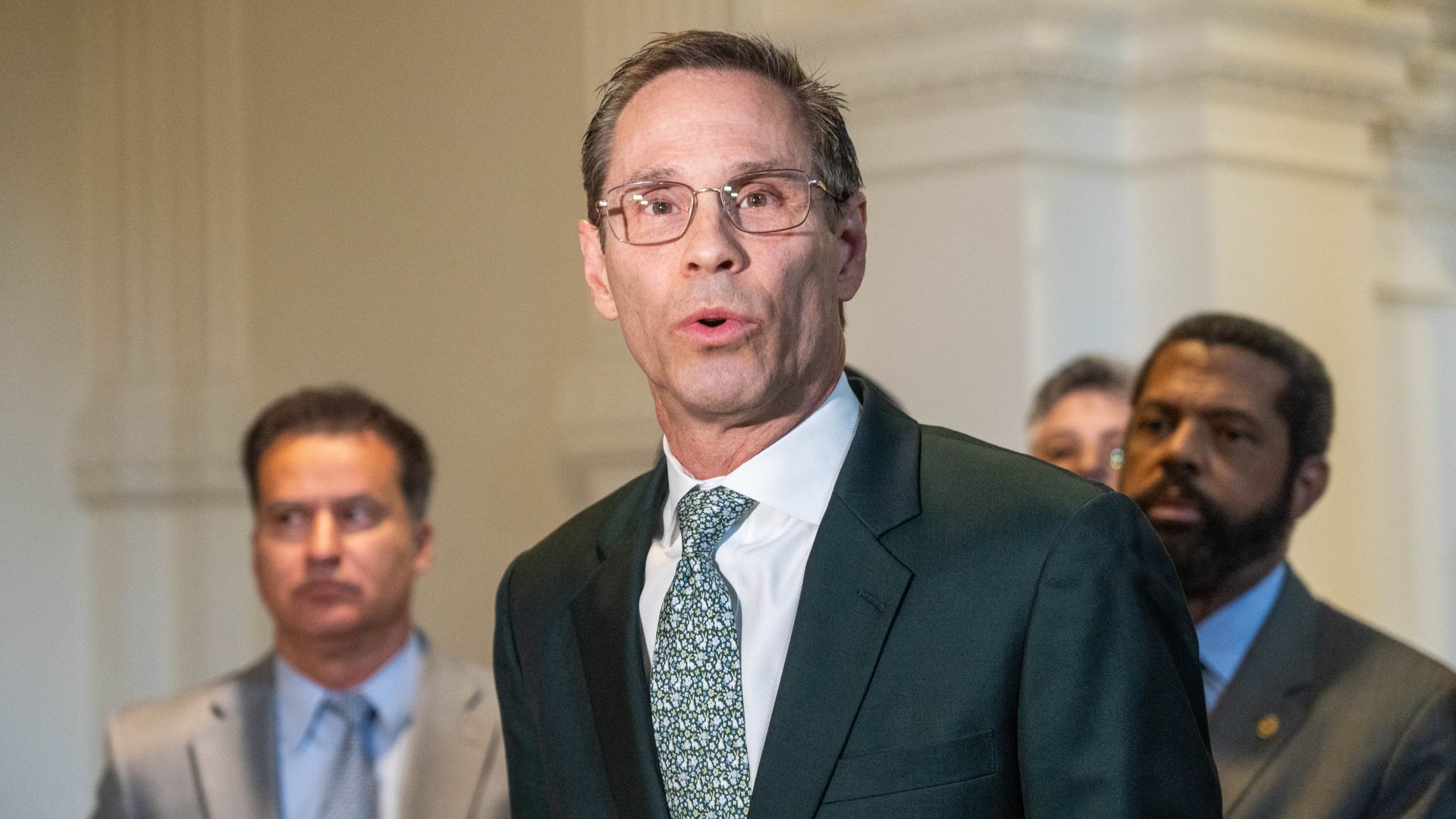
Nathan Johnson, the Democratic nominee for Texas attorney general, is pitching a plan to examine how existing state laws can be updated to protect constituents from AI harms.
Why it matters: State attorneys general have largely focused on wielding existing law to bring lawsuits against tech companies.
- Johnson wants to go a step further and get the legislature to pass laws that account for the AI age.
Driving the news: Johnson wants to look at consumer protection, fair competition and employment laws and come up with a specific list of recommendations for the legislature — all within the first 30 days in office, according to an announcement shared first with Axios.
- "Stuff that we thought the statutes were fine to handle three years ago might as well have been 3,000 years ago. The pace is changing so rapidly," Johnson told Axios.
- Texas has passed AI-specific laws, but Johnson says they still fall short — for example, by not requiring employers to disclose when they use AI to determine who gets fired.
The big picture: The Consumer Financial Protection Bureau has been gutted during President Trump's second term. It has lost much of its workforce and the agency has dropped dozens of investigations and transparency practices, prompting Democratic and Republican attorneys general to take on more consumer protection work.
- States have also been moving forward on AI regulation, while Washington has focused on a deregulatory approach coupled with preempting state action.
Thanks to David Nather for editing and Matt Piper for copy editing.