San Diego teens turn cancer questions into a card game

Add Axios as your preferred source to
see more of our stories on Google.
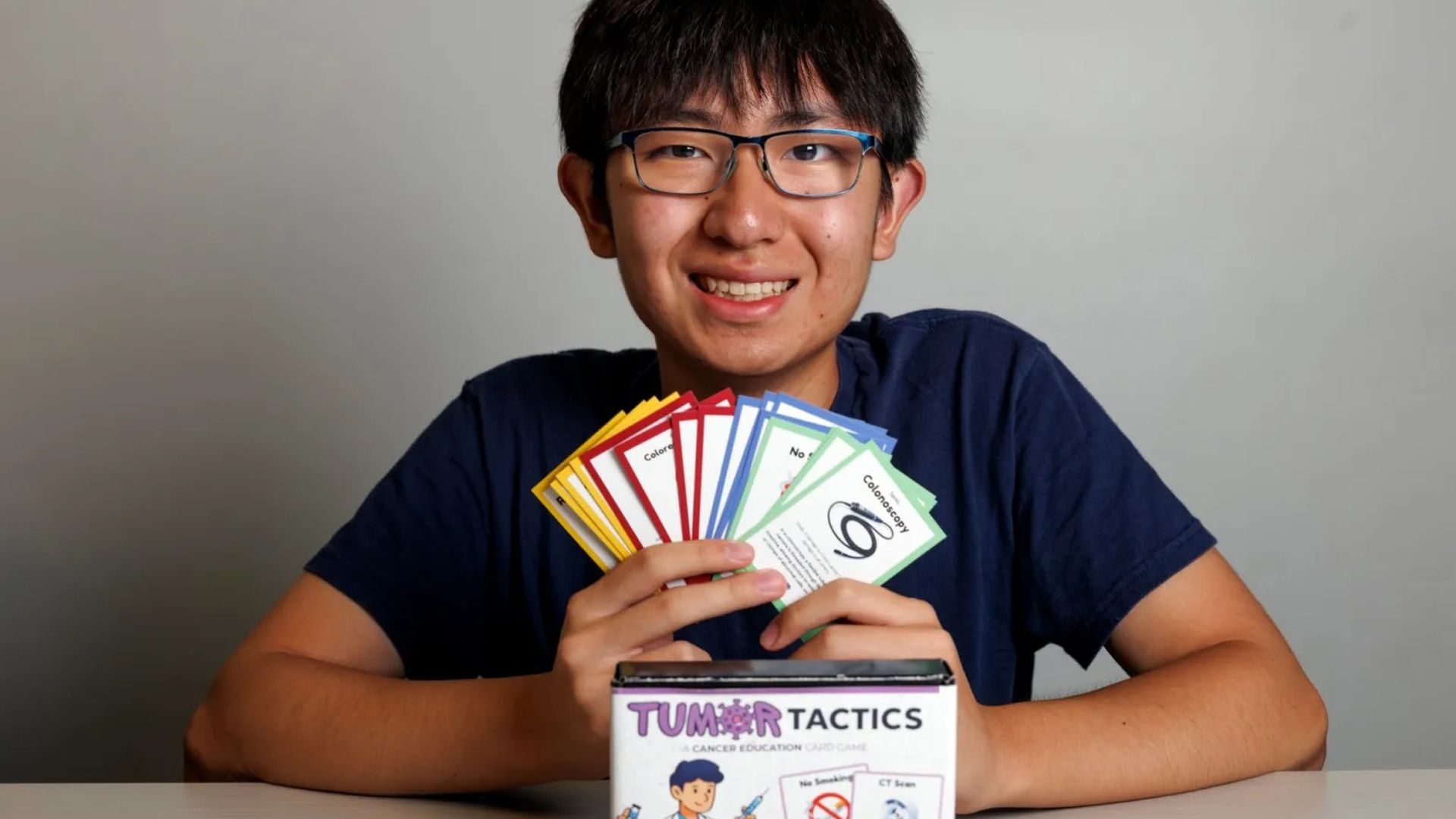
Daniel Zhang and Tumor Tactics. Photo: Courtesy of Daniel Zhang
When Daniel Zhang was 10 years old, his grandmother developed pancreatic cancer, and he had a lot of questions after watching her go through chemo and pass away.
Why it matters: Zhang, now a senior at Canyon Crest Academy, went on to create Tumor Tactics, a card game that helps other kids understand cancer.
"I needed someone to help me understand why the person I loved was getting sicker," Zhang said. "Years later, I ended up putting some of those explanations onto cards. Now the best part is watching a kid pick one up and ask the next question."
How it works: In the 72-card strategy game, players become doctors treating lung, colon and skin tumors, choosing treatments and dealing with complications.
- Zhang also started a nonprofit, STEAMLabs International, to pay for printing the game and bringing it to under-funded schools.
By the numbers: Tumor Tactics is now used by 23 California school districts.
- The team has donated more than 225 decks, including to Rady Children's Hospital, Scripps and St. Jude.
- They also introduced the game to more than 1,000 students and families over five days at the San Diego County Fair.
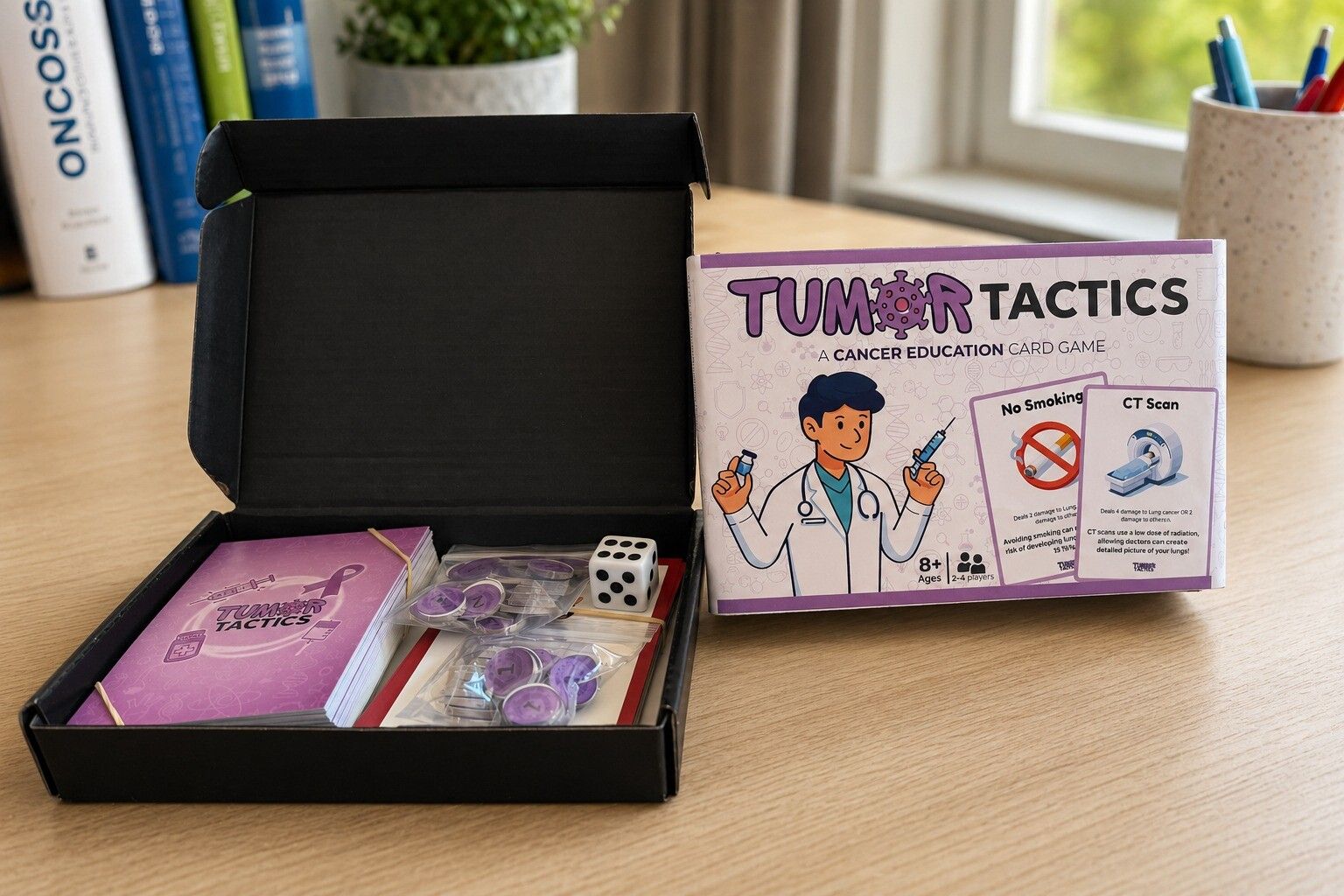
Case in point: At one school, Zhang recalled a fourth grader choosing a targeted therapy card, then asking why doctors didn't use that treatment all the time.
- "The student wanted to make a good move in the game, noticed a tradeoff, and then wanted to understand the biology behind it," Zhang said.
- So he talked to the student about why different cancers and patients require different approaches.
Follow the money: 90% of game-sale proceeds provide free kits for schools.
- 10% goes to the American Cancer Society to support pediatric cancer research.
What's next: Tumor Tactics is partnering with Hope for Stomach Cancer on a custom edition for stomach and esophageal cancers. They'll give more than 500 decks to young patients and families.