San Diego's Flock network is denser than most U.S. cities'

Add Axios as your preferred source to
see more of our stories on Google.
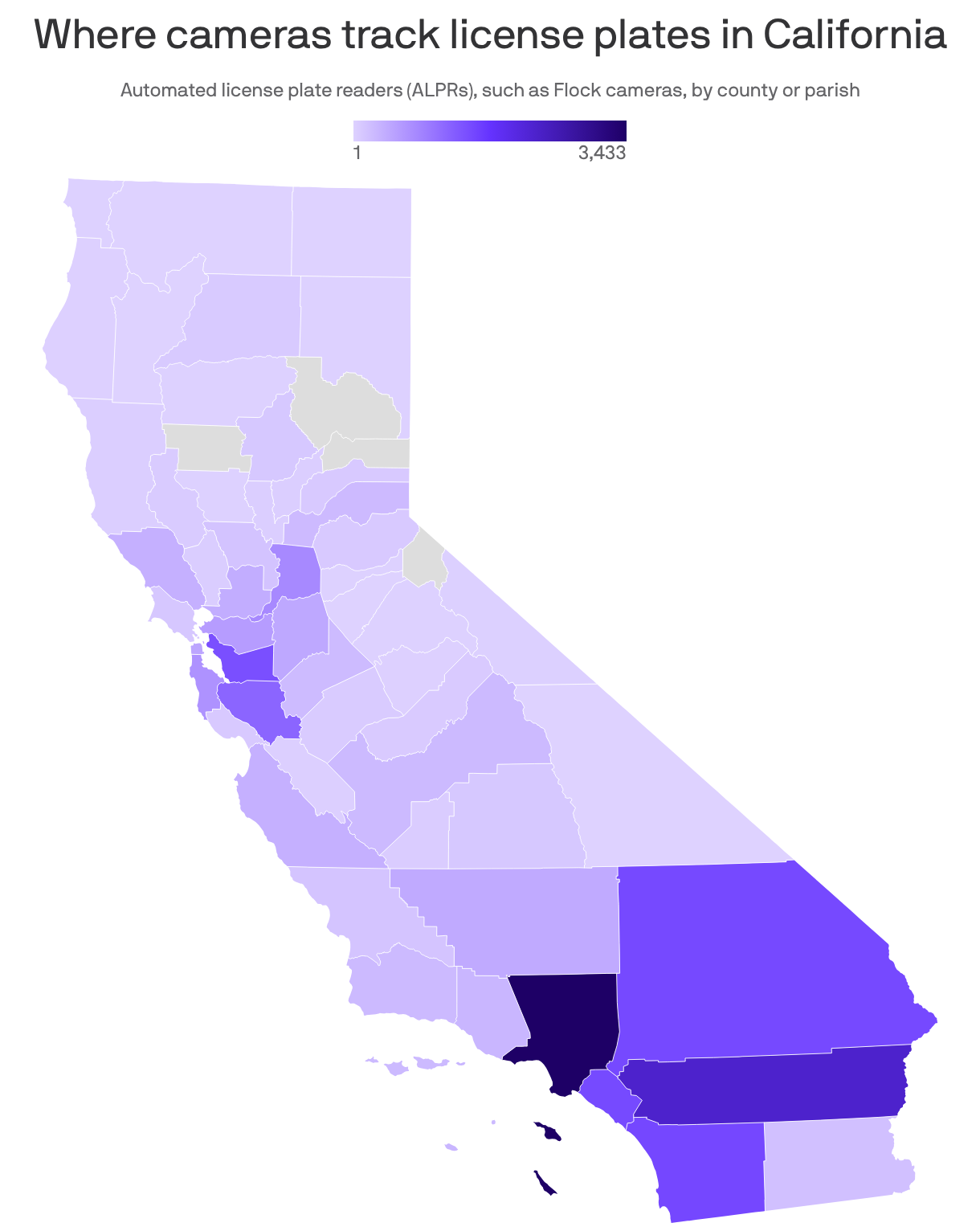
San Diego has among the densest arrays of automated license plate readers (ALPR) in the nation, according to publicly available data.
Why it matters: The database's insights come as questions have emerged about city oversight of San Diego police's use of Flock cameras, and as Americans of all political stripes increasingly push back against Flock and other surveillance systems.
How it works: Flock's cameras, and other automated license plate readers, are placed on streets and highways and use AI to capture and store information including license plates, car make and other features.
Catch up quick: The data comes via FindingFlock.com, a crowdsourced and volunteer-verified nationwide record of Flock and other ALPR locations.
- Local volunteers have documented 732 ALPRs in San Diego, the most of any California city in the Finding Flock index, and 3.5% of all such readers documented in the state.
- "At 2.3 per square mile (San Diego) is more densely covered than 63% of the 2,384 US cities indexed nationally," per Finding Flock.
- San Diego police say they own 500 of the ALPRs, and the rest are privately owned.
Countywide, about 1,400 readers have been identified by crowd sourcing, with about 45% of those having been identified as Flock cameras.
Go here for more on Finding Flock's methodology.
- The group has tallied roughly 141,400 cameras across the country.
These cameras can help police find stolen cars and wanted people, but their ability to track all vehicles all the time has fueled a growing privacy backlash and calls for tighter oversight or removal.
- Two San Diego men have sued the city, alleging police used ALPR data in their wrongful arrest last year.
- Concerns have also been raised about sharing data with federal immigration authorities.
The other side: Flock said last month that it's improving its privacy, security and accountability features.
- It's making misuse detection mandatory for all customers, and it suggests cities cut default data retention settings to one week, from 30 days.
- The company told Axios via email that the changes "come following a year of listening to customers, communities, and civil liberties groups and build on Flock's impact" in aiding about 1 million police investigations last year and helping find about 10,000 missing people.
Editor's note: This story has been updated to clarify that some of the ALPRs are privately owned.