How San Diego can prepare for El Niño flooding this winter

Add Axios as your preferred source to
see more of our stories on Google.
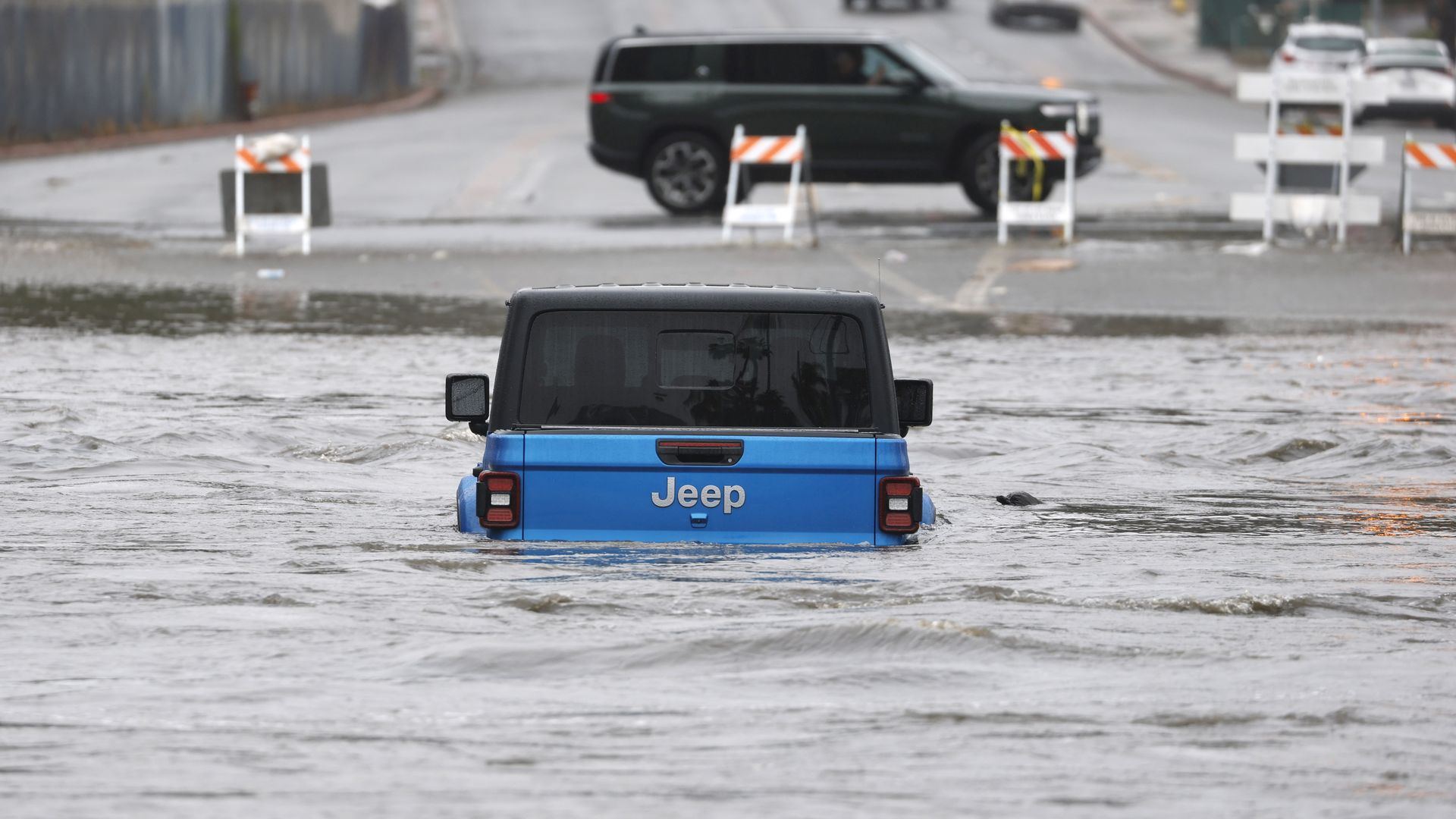
Don't be like this Jeep. Photo: K.C. Alfred/The San Diego Union-Tribune via Getty Images
El Niño is coming, bringing warmer and wetter weather, and the city of San Diego is asking us to prepare.
The big picture: Warmer water from El Niño changes our weather patterns and could lead to higher temperatures, more rain and coastal flooding.
- The weather pattern arrives on an irregular schedule, taking turns with neutral weather and then the cooler La Niña phase.
Threat level: This year's El Niño could match winters in 1982 and 1997 that had major coastal impacts and flooding, Tom Corringham, a research economist at Scripps Institution of Oceanography, tells Axios.
- Or it could fizzle out like the promised "Godzilla El Niño" of 2015 that didn't really do much in San Diego, he says.
El Niño winters cause 10 times more SoCal flood damage than La Niña winters, the opposite weather pattern that brings drier winters.
- That damage doesn't happen with every El Niño winter.
- "But you can think of it as when it's an El Niño winter, it's loading the dice towards more intense precipitation in Southern California," Corringham says.
Zoom in: That doesn't mean just rain, but also high surf and flooding, he says.
Here are some tips:
🚨 Gather information: The city has set up a special website with emergency tips, as well as a map to check if you live in a flood zone.
💧 Consider flood insurance: Standard homeowners insurance generally doesn't cover flooding caused by water entering from outside your home.
- Flood insurance typically has a 30-day waiting period before coverage takes effect, so don't wait until a storm is on the way.
🌧️ Clear drains: If your neighborhood is prone to flooding, clear your gutters, storm drains and other drainage areas.
🏠 Sandbag stock-up: Have sandbags or other barriers ready to help protect your property during a major storm.
🚗 Never drive through floodwaters: Use extra caution on the roads and avoid flooded streets, even if the water doesn't look deep.
🌊 Stay out of rough water: Avoid the ocean during high surf and other dangerous storm conditions.
📱 Watch the forecast: Keep an eye on weather alerts.
🔦 Make an emergency plan: Stock up on supplies you may need during power outages or if you have to stay home for a while.
And the federal government has a list of what to stock in an emergency kit:
🧃 Water: At least one gallon per person per day for several days.
🥫 Nonperishable food: Enough for several days, plus a manual can opener.
🔦 Flashlights: With extra batteries.
📻 Battery-powered or hand-crank radio: To get emergency alerts if power or cell service goes out.
🔋 Portable chargers: Fully charged power banks for phones and other devices.
💊 Medications: Several days' worth of prescriptions and basic over-the-counter medicine.
🩹 First-aid kit: Bandages, antiseptic, pain relievers and other basics.
🧼 Hygiene supplies: Toilet paper, wipes, hand sanitizer and menstrual products.
😷 Masks: To help with dust, smoke or poor air quality.
🧥 Warm clothes and blankets: Especially if you lose heat or need to evacuate.
📄 Important documents: Copies of IDs, insurance information and emergency contacts in a waterproof container.
💵 Cash: Small bills in case ATMs and card readers aren't working.
🔧 Basic tools: A wrench or pliers to shut off utilities if needed.
🐶 Pet supplies: Food, water, medications, and a leash or carrier.
👶 Kid or baby supplies: Diapers, formula, comfort items and anything else children may need.
🗺️ Local map: A paper map in case your phone dies or service is unavailable.
Yes, but: Winter storms hopefully won't require this level of preparedness, but it's a good excuse to put together an emergency preparation plan, Corringham says.
What's next: A wet winter causes more vegetation, which could cause a bigger wildfire season in the fall of 2027, he says.
The bottom line: Corringham says this increased threat is due to climate change.
- "We're seeing storm systems intensify," he says. "It speaks to the need to take climate change seriously."