Bill could put more San Diego condos on the market

Add Axios as your preferred source to
see more of our stories on Google.
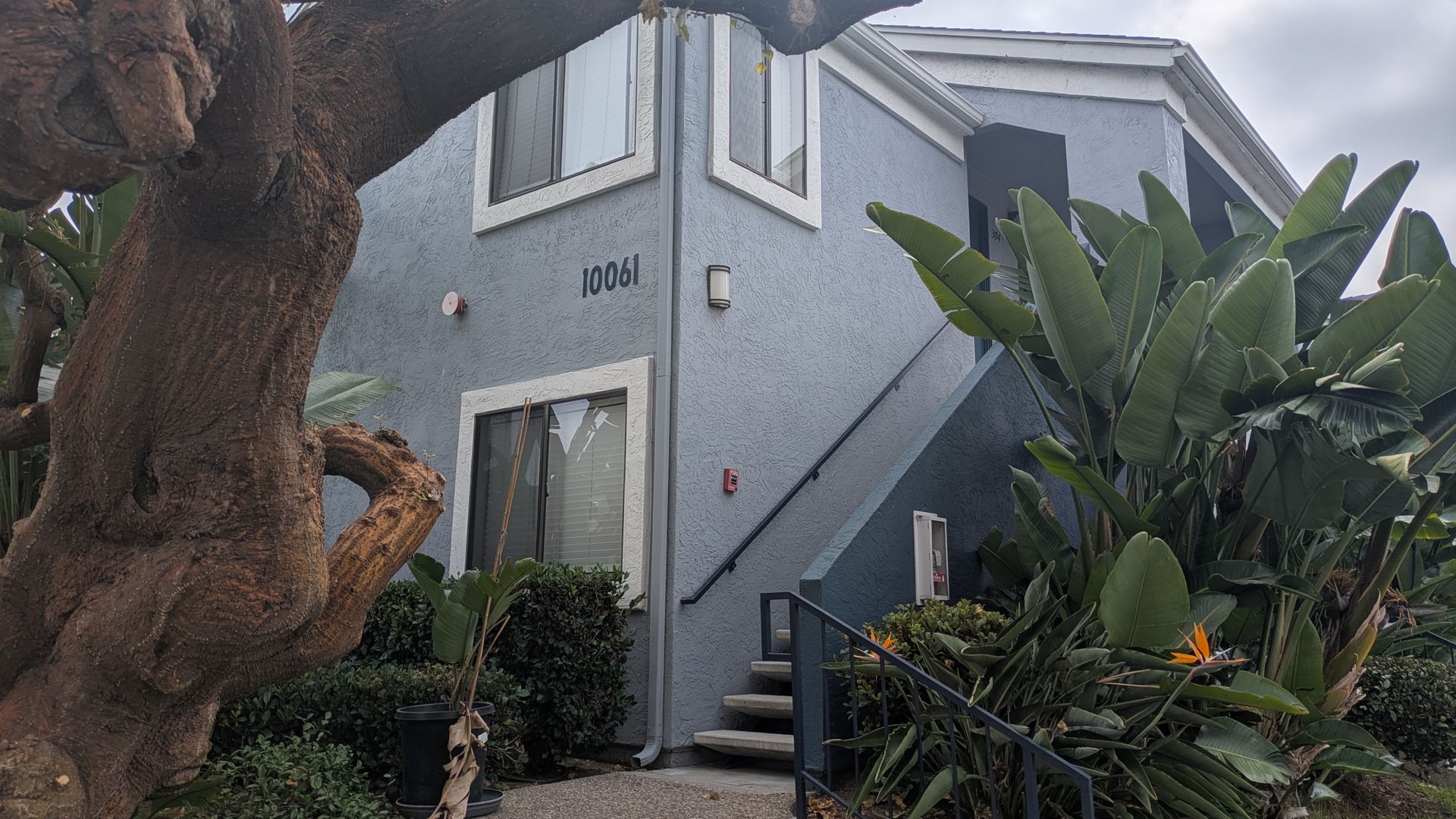
Townhomes in Mission Valley. Photo: Claire Trageser/Axios
It could become easier to build condos and townhomes for people to buy instead of rent under a bill making its way through the California Senate.
Why it matters: The city has a plan to build denser housing like condos that people can actually (sort of) afford, but building industry experts say the threat of lawsuits over repairs hampers the effort.
- But new legislation aims to boost housing construction by making it harder to sue. Opponents say it takes away too much power from consumers.
San Diego's strained housing market could use the boost. The city already has limited homes for sale, high prices, historically low sales and low turnover rates as owners stay put.
Catch up quick: Currently, if you buy a new condo or townhome and something's wrong with it, you can sue the builder.
- A law passed in 2002 called the construction defect law goes further than that. It allows you to sue even before the builder gets a chance to fix the problem, or even if nothing's actually broken yet.
- Builders can be sued up to a decade after a condo is built. That risk is scary enough that developers have seriously slowed building condos and townhomes that are for sale instead of rent, Stefanie Benvenuto, policy adviser with the Building Industry Association of San Diego, told Axios.
By the numbers: Condo construction statewide dropped 75% in the 24 years since the construction defect law, according to the Terner Center at UC Berkeley.
- And only 3% of new townhomes and condos built statewide are for sale, with the rest being rented.
What they're saying: "When I am in policy discussions with my builders, the construction defect law comes up every time," Benvenuto said.
- She called the existing law a "monster villain out there looming" that deters the city's push to gently increase density and build more affordable condo and townhome starter homes.
- The city's Neighborhood Homes for All of Us plan encourages more construction of cottages, duplexes and townhomes, which would be bigger than apartments but smaller than detached homes.
Still, there are plenty of other reasons housing is expensive in San Diego, including the high cost of land and other construction costs, so changing this law wouldn't be a magical fix, Benvenuto said.
The other side: Consumer attorney associations oppose the bill, arguing it could make it too hard for homeowners to pursue legitimate defect claims.
- The Consumer Attorneys of California, a main opponent of the legislation, declined an interview request with Axios.
- But consumer advocates and some builders worry the law could make the burden of proof too high for a lawsuit and discourage homeowners from hiring experts to document defects, since those costs wouldn't be recoverable, per Pacific Beach Builder.
Case in point: A San Diego law firm said it won $4 million in several lawsuits where homeowners and HOAs sued developers for defects including leaks, cracks and "improper shower enclosure installation."
- Under current law, even if the builder fixed those problems, they're still liable to be sued, Saad Asad, spokesperson for the advocacy group California YIMBY, told Axios.
- In each of those cases, the developers settled.
- That often happens instead of builders making repairs because then they can use business insurance as financial cover, Asad said.
Plus: These lawsuits spike insurance costs for builders, Asad said.
- "It's like buying wildfire home insurance near an area with a lot of fires — it's just so likely that it's going to happen that they just charge it into the cost of insurance," he said.
- That cost means builders are less likely to create homes for sale.
Yes, but: If the law passes, homeowners can still sue, but only after meeting new requirements.
- Homeowners would need to show an actual problem, and once builders fix what needs fixing, they couldn't be sued over that same specific problem a year later.
"The idea is about prioritizing repairs versus a lawsuit and a settlement to achieve the end goal of quality housing," Asad said.
What's next: The bill has cleared the Assembly and is making its way through the Senate.