Why Fashion Valley and Mission Valley malls are so different

Add Axios as your preferred source to
see more of our stories on Google.
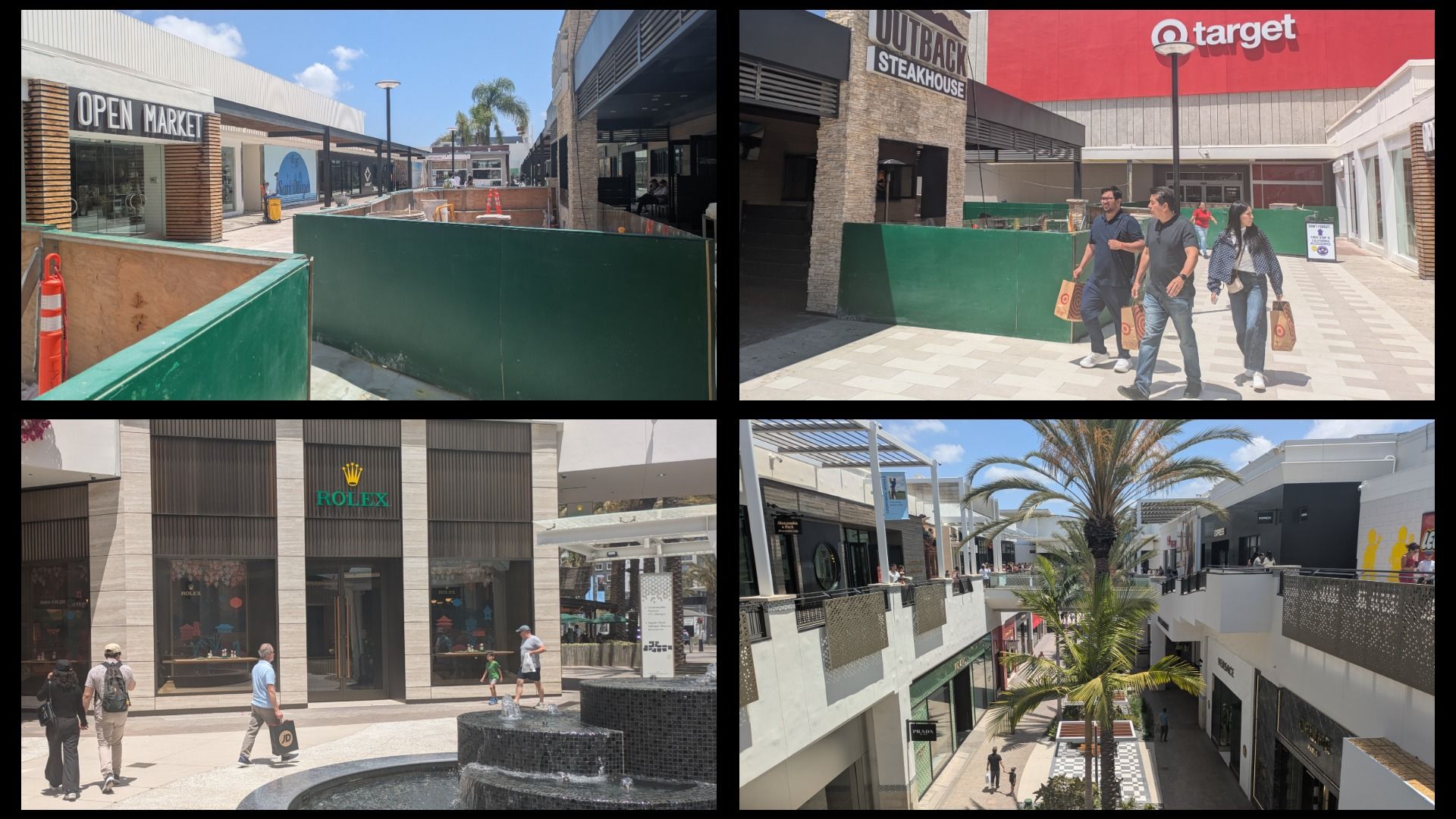
Mission Valley on the top, Fashion Valley on the bottom. Photos: Claire Trageser/Axios
Fashion Valley and Mission Valley malls are less than a mile apart, but the shopping experience in them couldn't be more different.
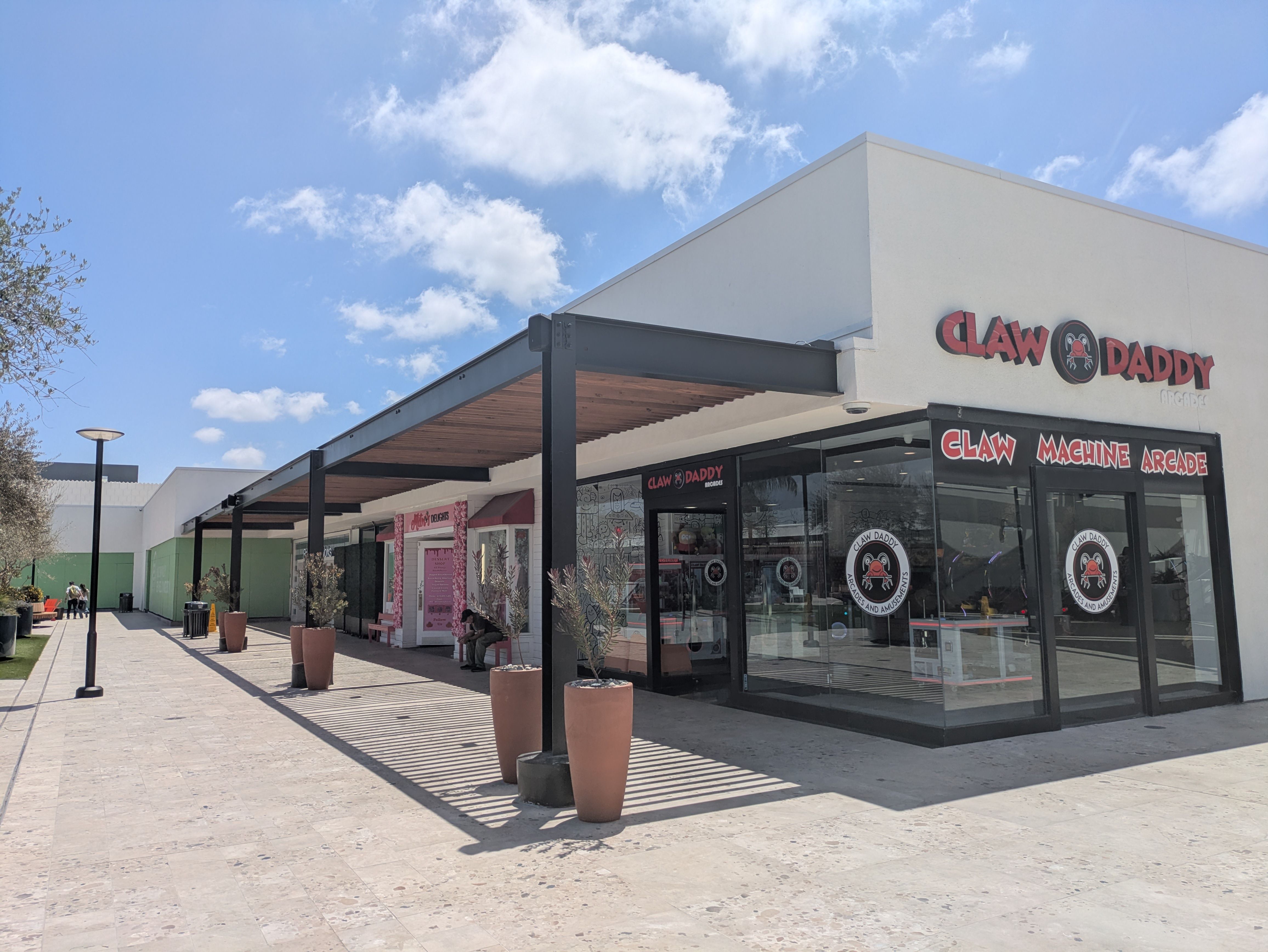
- Fashion Valley has every designer store you can think of; Mission Valley has the more traditional array of a Footlocker, Hot Topic, a comic book shop and claw arcade games.
Why it matters: The story of how these malls became so different shows the impact of luxury brand relationships, cross-border shoppers and how malls are handling post-COVID shopping habits.
Catch up quick: Both malls made pivotal changes in 2023 that sent them in differing directions.
Fashion Valley did a multimillion-dollar renovation to make it look fancier and attract higher-end retailers.
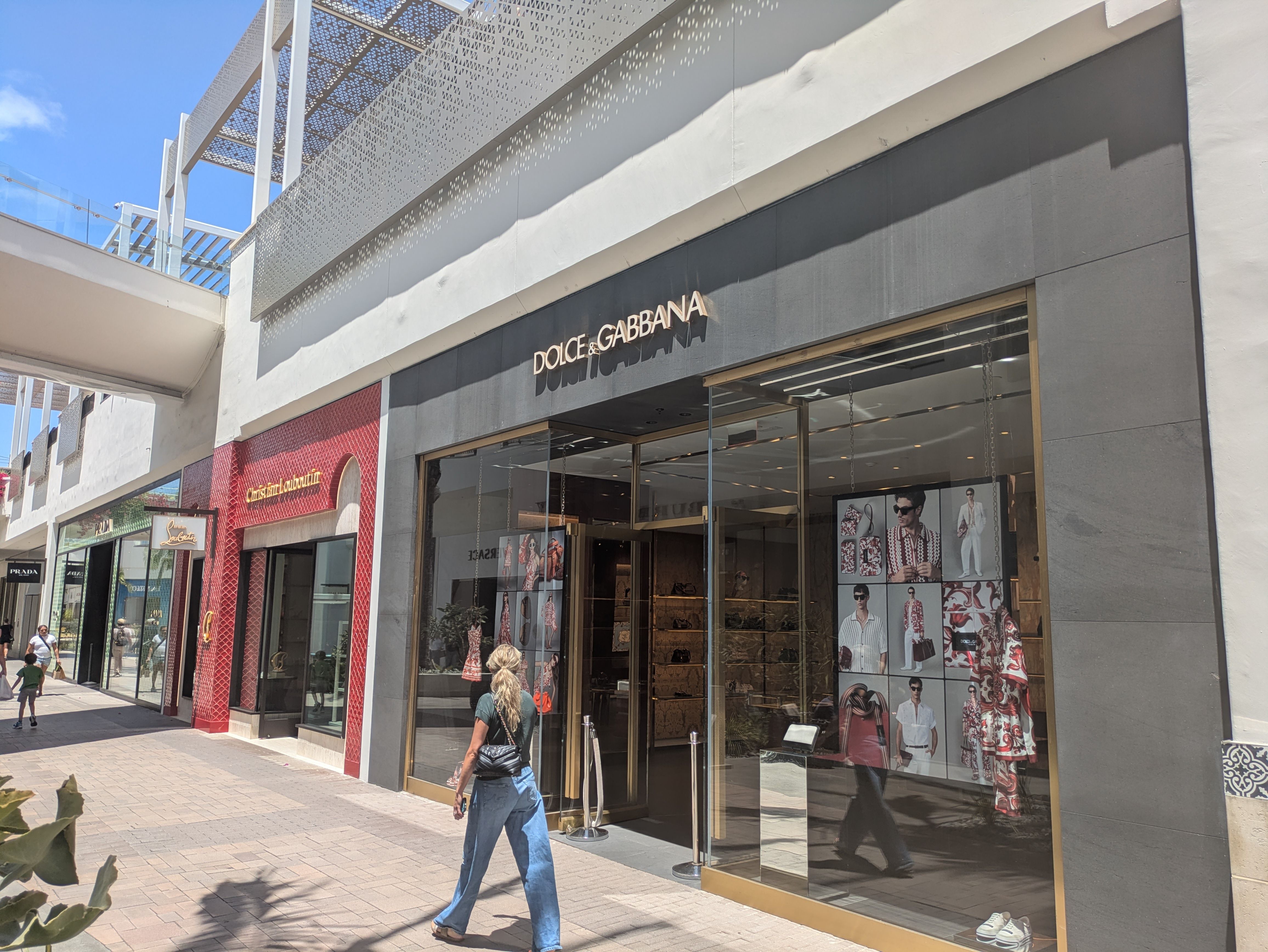
- It switched to a whitewashed look with dark wood trim, glass railings and added stores like DIOR, Bottega Veneta and Dolce & Gabbana.
- Then came Celine, and Christian Louboutin and Fendi, plus a Porsche studio and a much larger Rolex Boutique Fourtané, according to an ad in San Diego Magazine.
- JCPenney and Forever 21 also left the mall last year, making room for more pricey shops and 850 luxury residences.
That same year, Westfield sold the Mission Valley mall to Lowe and Real Capital Solutions, which aim to convert the space into housing and public spaces.
- But mid-market stores like Target, Michael's and Outback Steakhouse will remain.
- The timeline for the renovation hasn't been announced. For now, storefront vacancies are being filled with a tattoo parlor, a place to make slime and GameStop, among others.
Context: This split reflects a bigger wealth disparity in the country, Garrick Brown, vice president of real estate intelligence at real estate firm Galleli, told Axios.
- As the rich get richer, luxury booms.
- As do discounters and dollar stores.
- But mid-level stores suffer.
"Forty years ago, mall tenancy was dominated by those mid-priced retailers selling mid-price goods to Americans," Brown said. "This shift is why so many malls have failed."
The intrigue: Fashion Valley was always slightly higher end, with anchors like Nordstroms and Neiman Marcus, and that attracts luxury goods shoppers, including from Mexico.
- That has continued despite increased border tensions, per The Union-Tribune.
- The most common ethnicity of Fashion Valley shoppers is Hispanic, according to retail sales tracking firm CenterCheck.
- Meanwhile, Mission Valley shoppers are more often white.
By the numbers: Fashion Valley did $529.6 million in sales in 2025, with the average sale being $310.
- Mission Valley did $357 million in sales in 2024, with the average sale being $70, according to CenterCheck.
- (They don't yet have complete 2025 data for the mall to share.)
What's next: The malls that have survived are either focused on luxury, or are pivoting to mixed-use concepts with big box and discount stores, Brown said.
- That's what Mission Valley is trying to do.
Editor's note: This story has been corrected to say Lowe and Real Capital Solutions are the owners of Mission Valley Mall (not Retail Insite).