Despite San Diego school phone ban, students still find a way

Add Axios as your preferred source to
see more of our stories on Google.
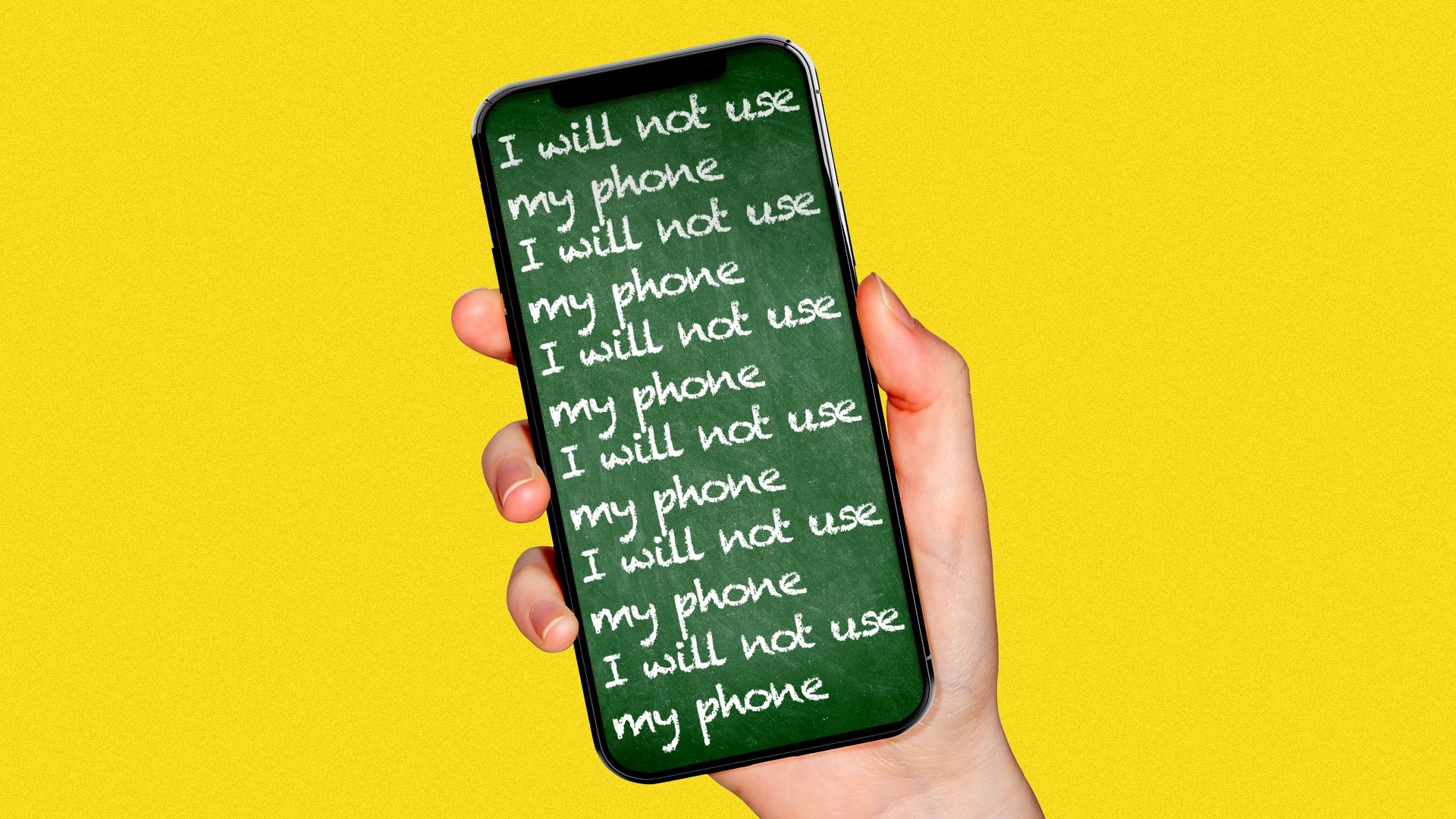
Illustration: Sarah Grillo/Axios
One year in, reviews of whether San Diego schools' cell phone bans have worked remain mixed.
Why it matters: A new state law requires school districts to restrict student smartphone use to rein in the addiction and anxiety that can come with such devices.
- But teachers and students told Axios that phones are still a common sight in the classroom.
Catch up quick: San Diego Unified bans phones from the first bell to the last, Pershing Middle School principal Melanie Kray told Axios.
- That means phones are on silent and put away in backpacks.
- Students get a warning the first time they break the rule, and after that the phone is confiscated and kept in the office until a parent picks it up, Kray said.
Yes, but: The urge to be connected is leading kids to find workarounds.
- Some have burner phones, so they hand over a phone they don't care about and keep their precious primary device, David West, a teacher at University City High School, told Axios.
- "We have a plethora of secondary phones that have been taken, and the kids don't even go get them, they just leave them in the office," he said.
Friction point: Some teachers don't enforce the ban, West said.
- "I go into classrooms and kids are just on their phones when their work is done," he said. "We're not going to see traction until we get a big buy-in from our teachers."
- West finds kids' phone addictions depressing.
- "These kids are so anti-social. They're just begging to go back and stare at their rectangle," he said.
- The University City High School principal did not respond to a request for comment.
Inside the classroom: Much to her chagrin, Neptune Bliss, a seventh-grader at Pershing Middle, hasn't been allowed to get a phone yet, but said most of her classmates have one.
- And they easily find their way around the ban, she told Axios.
- "They hide it behind their books and computers, or behind their backpack during lunch so they can still look at it," she said.
The other side: "No system is 100% perfect. You do have kids that try to skirt the rule, but I have found that since the law changed, you don't have as many power struggles between teachers and students, because the students understand that that's the law, and so they hand it over," Pershing principal Kray said.
- Parents used to want their kids to have access to phones during school, but "there's been a turning point, and now more parents are concerned about cell phone use," Kray said.
The bottom line: It's not so much the cell phone itself that's the issue, Kray said, it's all the social media that comes with it.
- "Kids are just not developmentally ready for all that, and it really is addictive," she said.