San Diego mosque shooting victims praised for "heroic" actions


Add Axios as your preferred source to
see more of our stories on Google.
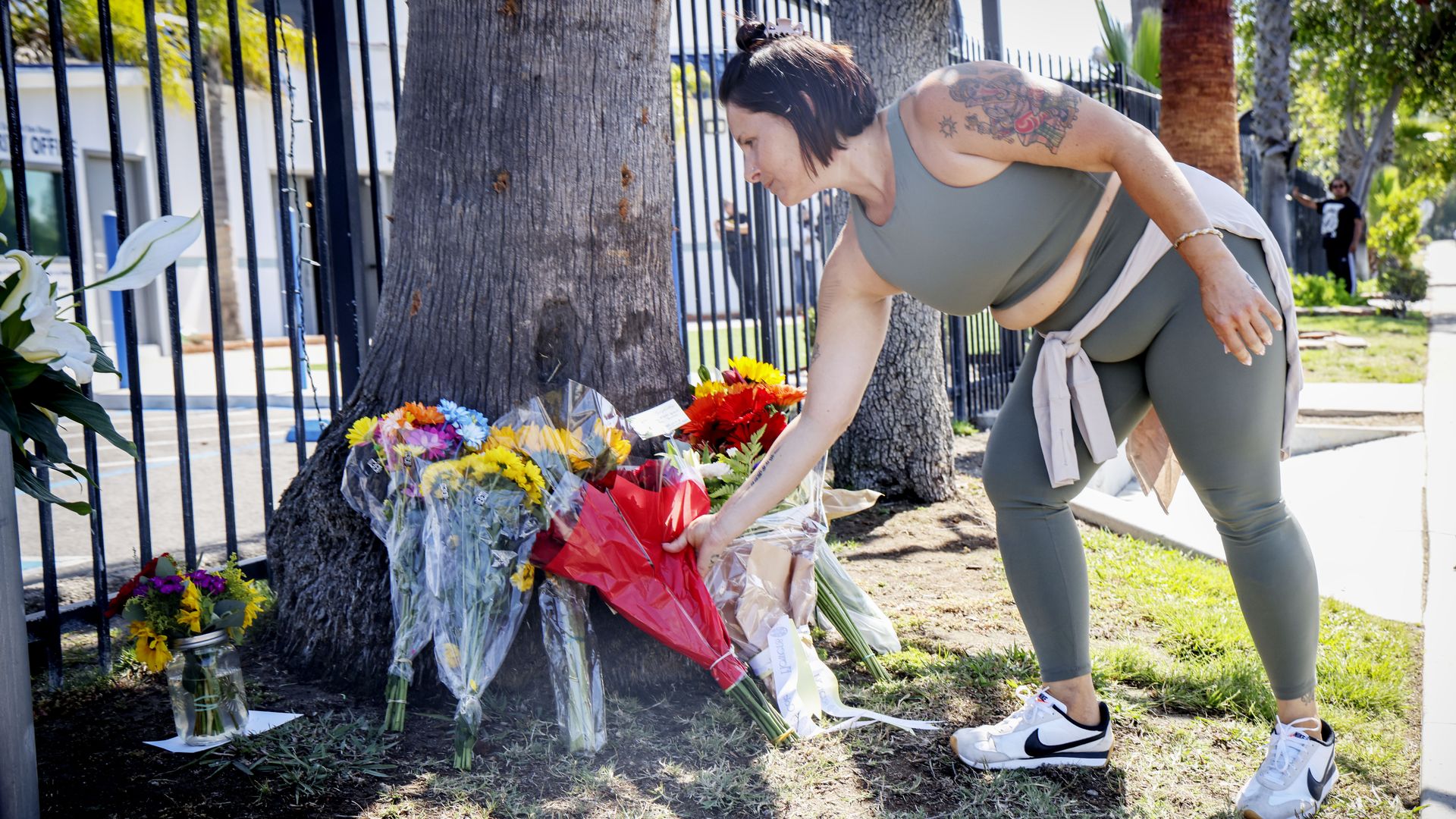
A woman leaves flowers at a memorial outside the Islamic Center of San Diego on Tuesday in San Diego, California. Photo: Sandy Huffaker/Getty Images
The three victims in Monday's shooting at the Islamic Center of San Diego were all beloved members of the Muslim community and acted heroically to save other lives, according to community leaders and San Diego police.
Security guard Amin Abdullah, as well as community members Mansour Kaziha and Nader Awad, were shot outside the center's entrance and are being lauded for preventing violence from reaching children attending school inside.
Zoom in: When the shooting began, Abdullah initiated a lockdown procedure and engaged in a gun battle with the suspects, "heroic" actions that saved lives, Police Chief Scott Wahl said this week.
- "His actions, without a doubt, delayed, distracted, and ultimately deterred these two individuals from gaining access to the greater areas of the mosque, where as many as 140 kids were within 15 feet of these suspects," Wahl said at a press conference Tuesday.
The lockdown call and gun battle allowed people inside to get out of the main areas and hide, and the gunmen encountered no additional victims inside, Wahl said, citing mosque surveillance footage.
- Kaziha and Awad inadvertently drew the suspects' attention out into a parking lot, where they were cornered and killed by the suspects, Wahl said.
- At that point, hundreds of police officers were seconds away from the scene, which forced the suspects to flee in their vehicle, Wahl said.
The mosque's Imam, Taha Hassane, shared memories of each victim Tuesday.
- Abdullah "never, never stopped smiling to anyone," he said.
- "He was the best, absolute best dad in the world," his daughter, Hawaa Abdullah, said at a separate news conference Tuesday. "He was my protector."
- "He took his job so seriously, to the point, sometimes he didn't even want to eat, he wanted to save his food, because he was afraid that if he went on his break, something bad would happen," she added.
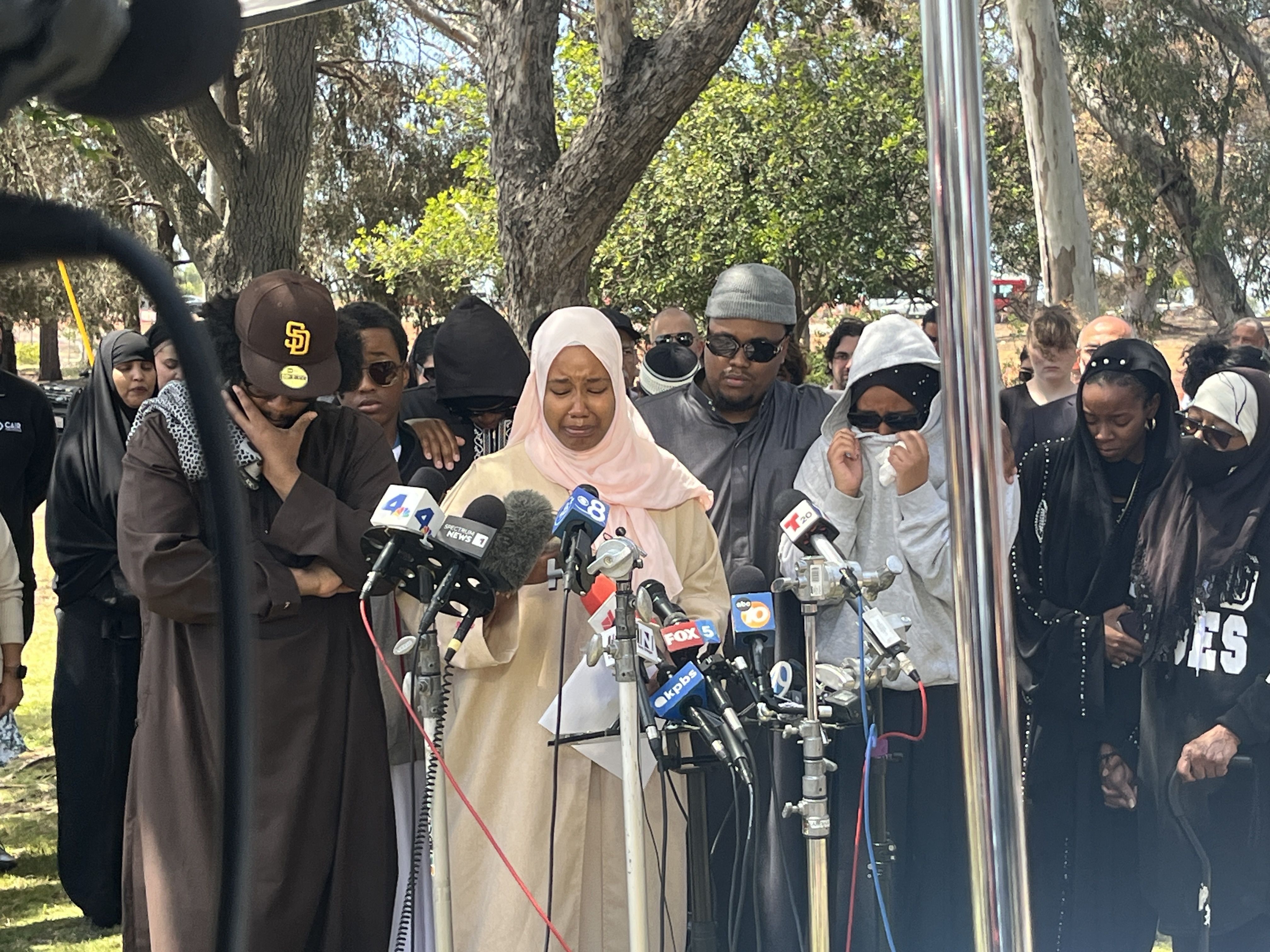
Kaziha, known as Abu Ezz, was a community leader who managed the mosque store for nearly 40 years.
- He was also the handyman, cook and caretaker and was at the top of Hassane's list to call when things went wrong.
Awad lived across the street from the center and came in every day for prayers. His wife is a teacher at the Islamic Center's school.
- "When he heard the shooting, he rushed to do something to protect," Hassane said. "They sacrificed their lives to protect the entire community inside the Islamic Center of San Diego."
What they're saying: The community is no stranger to threats, Hassane said.
- "We are used to receiving hate mails, hate messages, people driving by and cursing and all that stuff, but such horrible crime, we have never expected this," he said.
- They've taken steps to increase safety, Hassane said, including hiring additional armed guards like Abdullah, applying for homeland security grants and adding security cameras that cover the entire property.
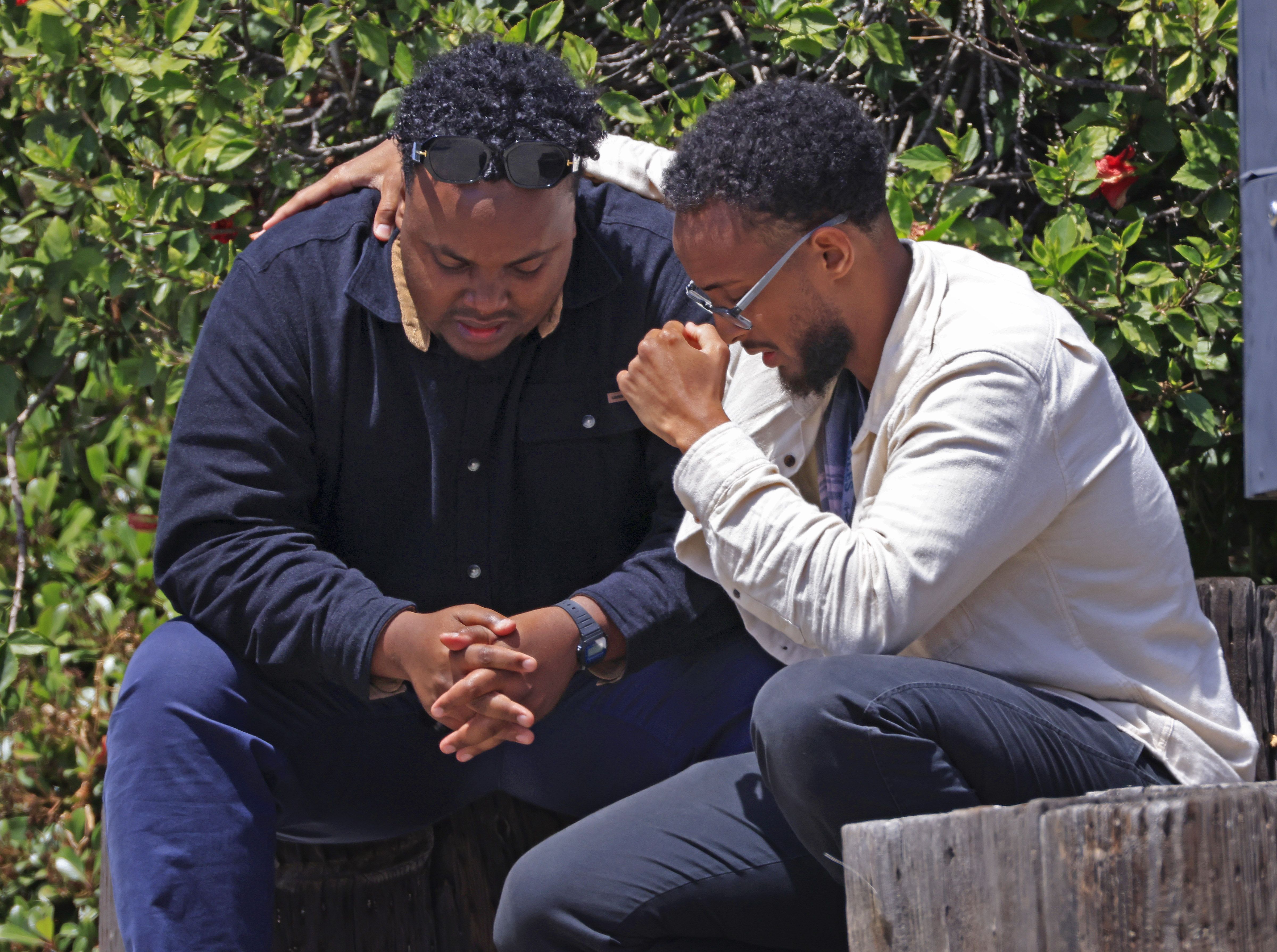
Catch up quick: The suspected gunmen were found dead nearby in a vehicle from what police believe were self-inflicted gunshot wounds.
- The suspected shooters are Cain Clark, 17, and Caleb Vazquez, 18, according to a local law enforcement source who requested anonymity because they weren't authorized to speak on the case. Their identities were also confirmed by multiple other news outlets.
Police began receiving calls regarding an active shooter around 11:40am Monday.
- That was about two hours after police were contacted by the juvenile's mother, who reported that several of her weapons and car were missing.
- The first calls reporting the shooting came as officers were speaking with the juvenile's mother, Wahl said.
The teenage suspects appear to have been "radicalized online to believe that [the victims] didn't belong because of how they looked or where they worshiped," Mark Remily, the special agent in charge of the FBI San Diego field office, said Tuesday.
- The FBI is working with local police to collect evidence and interview the suspects' families.
Law enforcement seized more than 30 guns, including pistols, rifles and shotguns, plus a crossbow, ammunition, tactical gear and electronics after searching two residences associated with the suspects.
- Wahl said the guns were not registered to the suspects and belonged to the parents of one of them.
- Police are still investigating how they obtained the weapons and assessing whether to charge the parents, according to Wahl.
Investigators found "writings and various ideologies outlining religious and racial beliefs of how the world they envisioned should look," in the vehicle they used, Remily said. He said they also recovered a manifesto.
- The suspects "didn't discriminate on who they hated," Remily said. "It covered a wide aspect of races and religions."
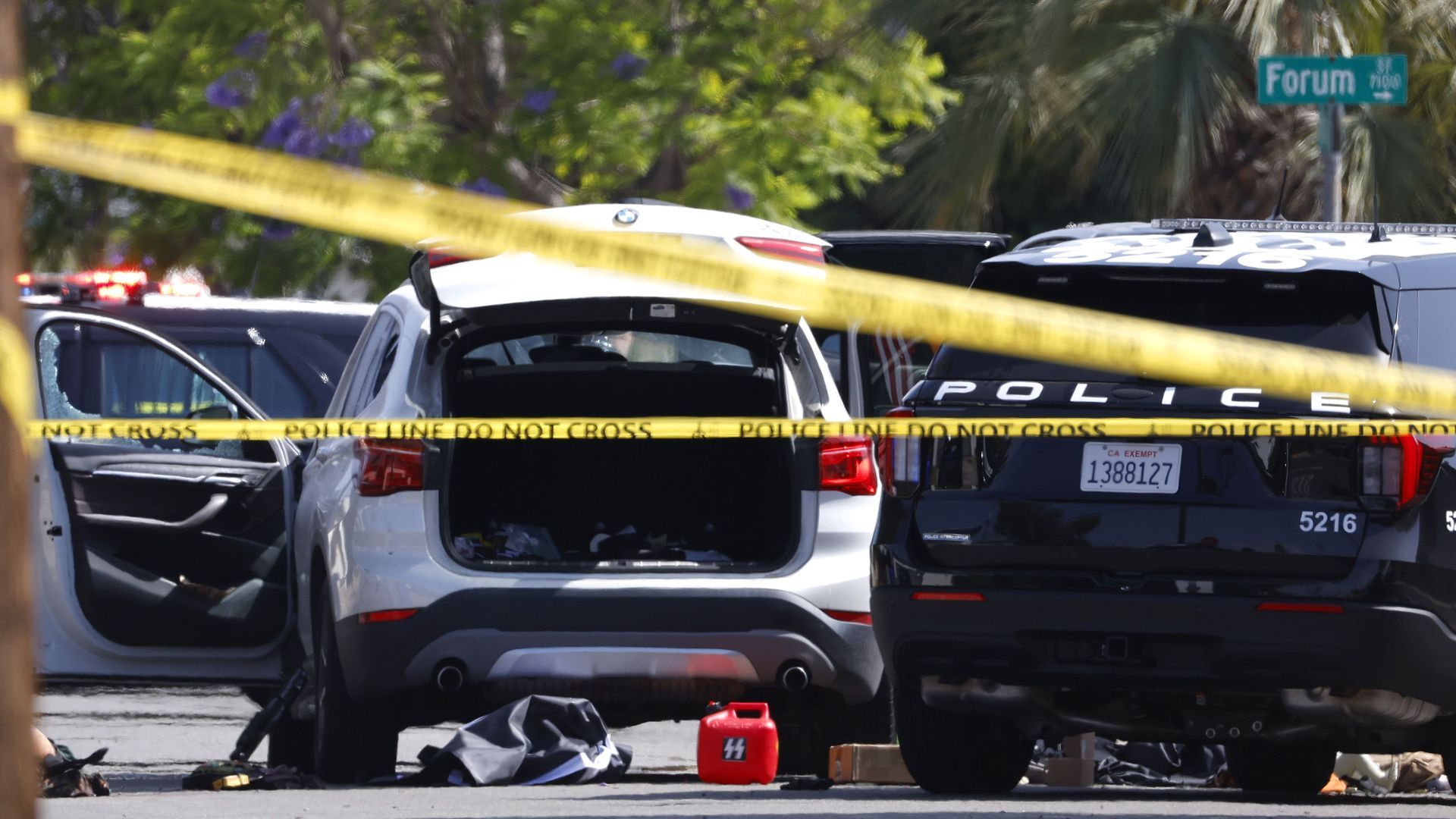
Zoom in: A symbol on a gas can outside the alleged suspects' vehicle seen in a photo taken Monday resembles the "SS bolts" associated with the Schutzstaffel, a paramilitary organization of Nazi Germany.
- The stylized double lightning-bolt design has become widely recognized as a neo-Nazi and white supremacist symbol.
Go deeper: Some in San Diego Islamic Center community feared attack for years