San Diego poker pro shares tips to win at the table

Add Axios as your preferred source to
see more of our stories on Google.
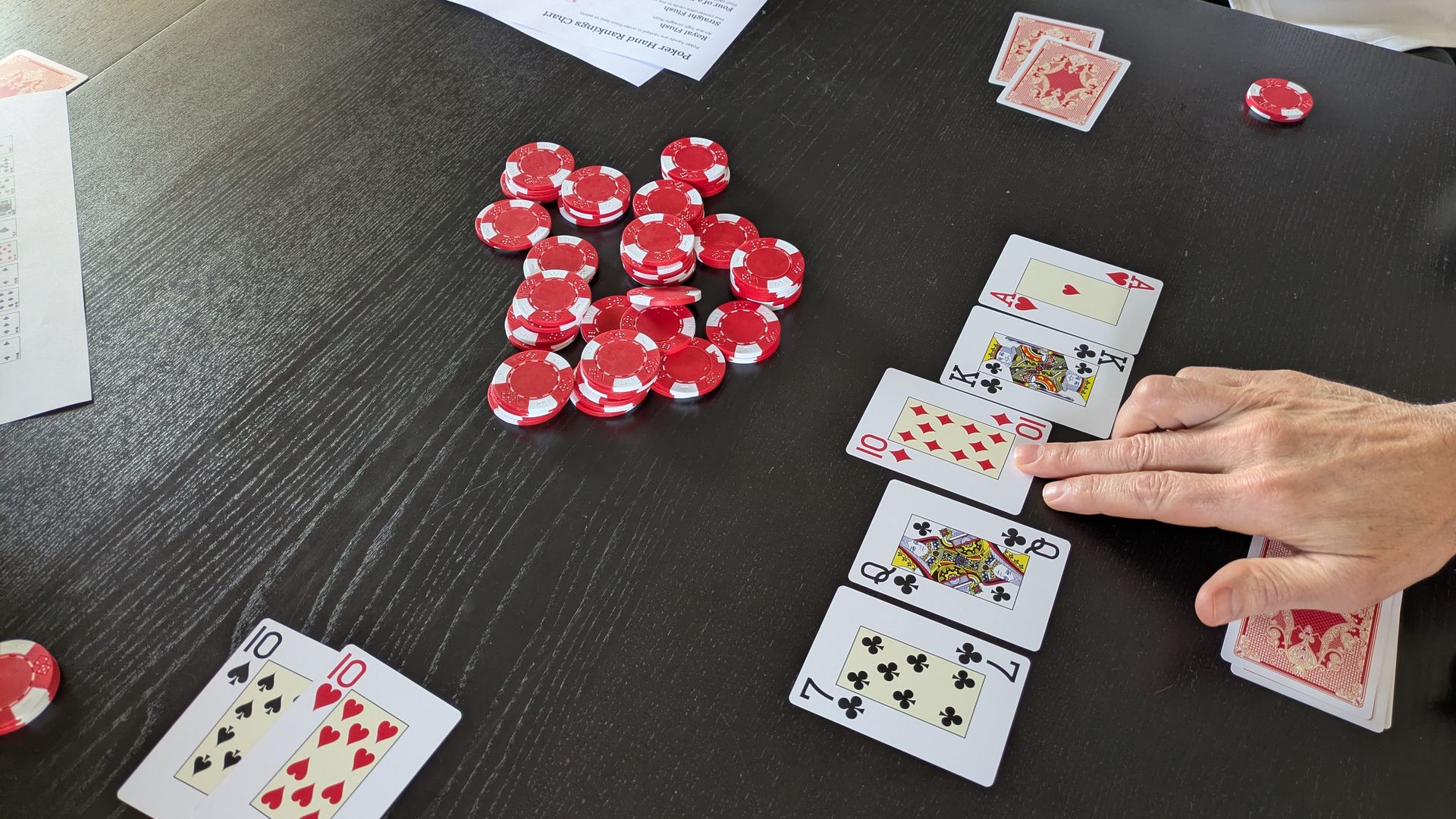
Cards on the table. Photo: Claire Trageser/Axios
Tim Acker's job is to play poker. He's been a professional player for 20 years and told Axios he makes in the six figures playing casino tournaments, online and in the Chula Vista card room Seven Mile.
The big picture: The pro sat down with Kate, Claire and their husbands for a poker lesson (lucky us!). It all comes down to math, he said.
Here are some of his tips:
💰 Buy in for the maximum: As a pro, Acker always sits down with the most chips allowed. When opponents make mistakes, you want to be able to fully capitalize, he said.
- But he advises beginners not to follow this advice.
🃏 Starting hand selection: The biggest beginner mistake is playing too many hands. The earlier your position at the table, the stronger your hand needs to be. Use hand charts to understand which hands are worth playing from which positions.
📍 Position is everything: The later you act, the more information you have. The button (dealer position) is the most powerful seat because you see everyone else act before you. Never underestimate how much this matters.
🎯 The only two real reasons to bet:
- Value bet — you think your opponent will call or raise with a worse hand
- Bluff — you think you can get your opponent to fold a better hand
Everything else ("I want to find out where I'm at," "I think I have the best hand") is flawed thinking.
📊 Think in ranges, not specific hands: Don't fixate on your own cards or guess your opponent's exact hand. Instead, think about the range of hands they could plausibly have given their position and actions. Then ask yourself how the board interacts with that range.
📖 Every hand tells a story: Each betting action is a chapter. Good players tell a consistent, believable story throughout a hand. When someone's betting line doesn't make logical sense, that's a red flag worth exploiting.
🤏 Most players under-bluff: Even good recreational players and solid regulars don't bluff enough, especially on the river (the fifth and final community card). Against these players, you can fold more liberally because they're rarely representing a bluff.
🌊 River bet sizing: At a high level, the ideal river bet size makes your opponent indifferent, meaning they genuinely can't tell if calling or folding is correct. That's where you extract maximum value and maximum folds simultaneously.
🧠 Emotional control: Even Acker admits to getting anxious during big bluffs. His tip: Instead of thinking about the specific hand you're holding, think about all the hands you could have reached this spot with, which takes the pressure off.
📒 Track everything: He logs every session—chips added, time played, casino, game type. That ensures you're correctly judging whether you're actually winning or not.