What's next for Midway Rising

Add Axios as your preferred source to
see more of our stories on Google.
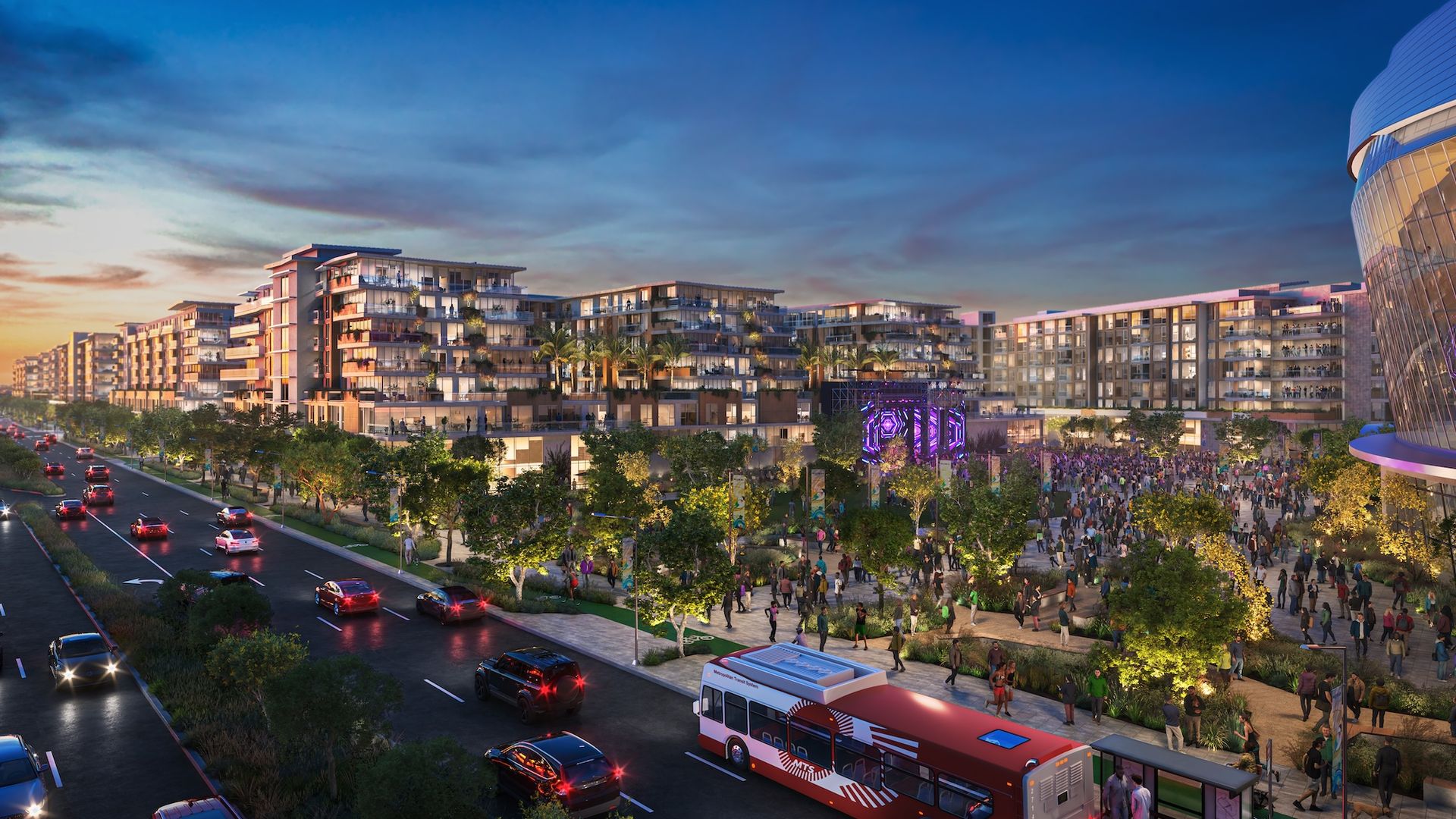
Rendering: Courtesy Midway Rising/Safdie Rabines Architects
Developers and city leaders aren't giving up on the Midway Rising project despite a recent California Supreme Court ruling.
Why it matters: The city has been trying for years to get clearance for the $3.9 billion project to move ahead, potentially remaking Sports Arena into a mixed-use development with thousands of apartments, shops, parks and a stadium.
The big picture: The redevelopment project is one of the largest affordable housing projects in California history, and it could have as big an economic impact as the three largest events at the San Diego Convention Center, including Comic-Con, according to developer Brad Termini.
Yes, but: The project has been the subject of legal action for years because of a 30-foot building height limit at the site.
Catch up quick: Voters approved in 2020 a ballot measure that would exempt the project from the height limit.
- That same year, the Save Our Access citizen group challenged the ballot measure in court, arguing that the city didn't properly study the environmental impacts of the project.
- The city updated its studies and put Midway Rising on the ballot again in 2022.
- Voters again approved the project, and Save Our Access again sued, saying the city should have done a brand new environmental study.
- Lower courts agreed and the California Supreme Court rejected the city's appeal last month.
Driving the news: Still, Mayor Todd Gloria and Termini say the project is moving forward.
- "Let me be very clear. … We will be getting this done," Gloria said in his recent State of the City speech. "This spring, I will bring this project forward for public hearings and a vote from the City Council."
- Termini told Axios it had always planned multiple routes to ensure the project could move forward.
State of play: Termini said the project can get around the height limit with the "state bonus density law," which grants an exemption if the project includes a certain level of affordable housing.
- "Our project is predicated on state bonus density law, so the impact of the (Supreme Court) decision was minimal to Midway Rising," he told Axios.
- Dave Rolland, a spokesperson for the mayor, told Axios "we are exploring multiple paths forward, including legislation that would pave the way to success in the Midway District."
Behind the scenes: The legislation Rolland mentioned could be a specific law exempting only this project from state environmental laws, according to Voice of San Diego.
- Los Angeles Rams owner Stan Kroenke, who's funding Midway Rising, got a similar law passed allowing him to build SoFi Stadium in Inglewood (where the Chargers play).
What they're saying: The whole Midway Rising saga was "a total own goal" on the city's part, said SDSU politics professor Brian Adams.
- "All they had to do was do the environmental impact report in the way that they're supposed to do it," he told Axios.
- Adams said getting an exemption is too risky because it could lead to more lawsuits, and he said the city should just put the issue before voters again because it passed easily twice already.
In the past elections, Adams said opponents tried to argue that if this project was allowed to get around the height limit, it would create a slippery slope.
- But voters approving Midway Rising twice suggests that's not the case, he said.
- Few people would buy the argument that Sports Arena is a jewel that needs preserving, Adams said.
- "People have been to Sports Arena and they know that it's different from Pacific Beach," he said.
What's next: The project will go before the Land Use & Housing Committee first and then the full City Council this spring, Termini said.