Child's death highlights hundreds of dangerous San Diego intersections

Add Axios as your preferred source to
see more of our stories on Google.
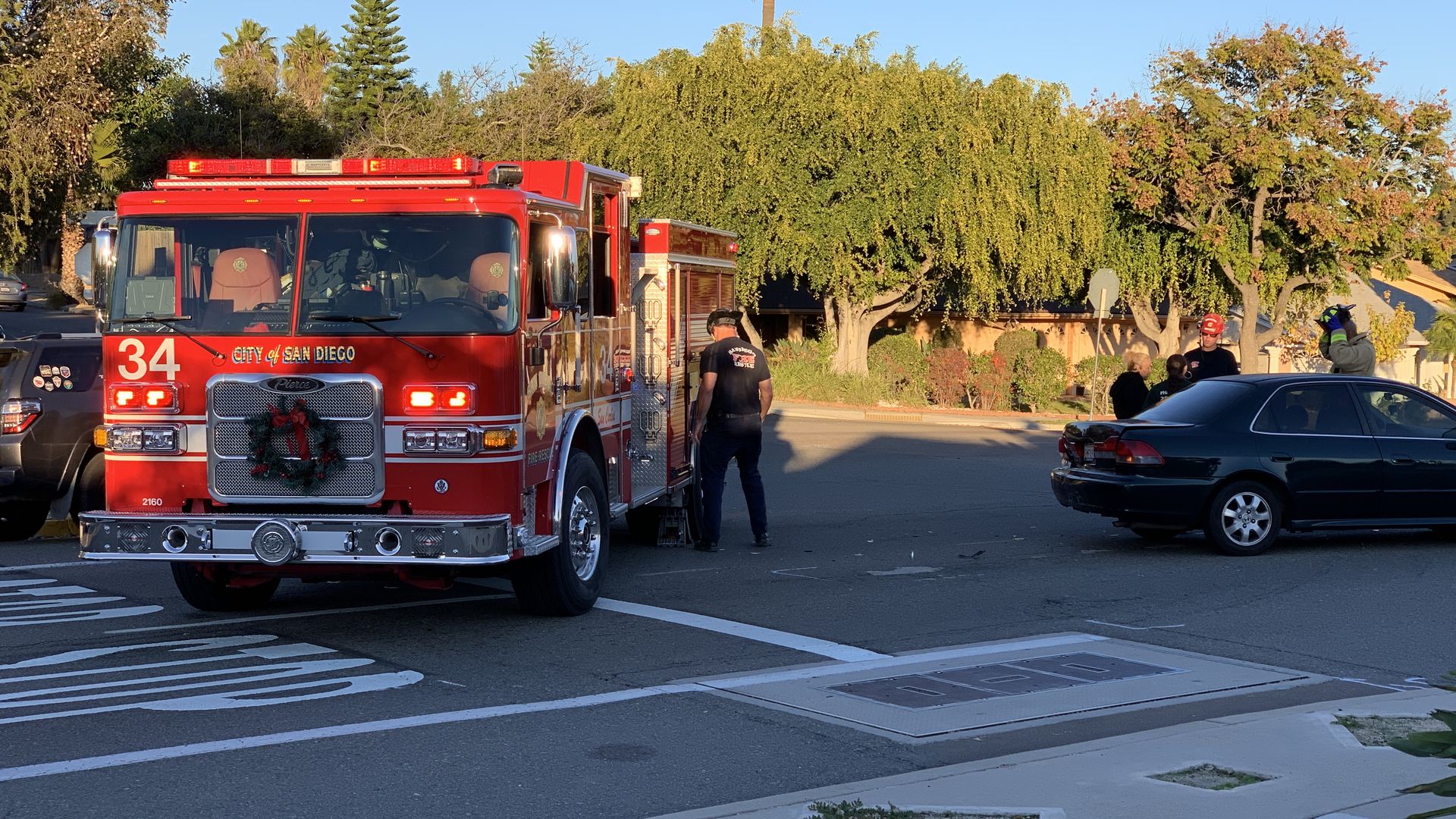
A fire truck responds to a crash on Jackson Drive on Monday, Dec. 8 at the same spot where an 11-year-old was struck and killed in October. Photo: Courtesy of Shannon Smith
Nearly 500 intersections across San Diego carry similar risks to the one where 11-year-old Andrew Olsen died in October, according to the city.
Why it matters: This ticking traffic time bomb has some locals worrying it will take someone dying at another intersection for the city to act.
The big picture: Those intersections may not meet current city criteria for stop signs or other traffic calming measures, and there isn't enough funding for them anyway, San Diego officials told Axios.
- The collision that killed Olsen and injured two other children occurred after at least one local had spent more than a year begging the city to address the area's dangerous traffic.
State of play: Councilman Raul Campillo, who oversees the district where the fatal accident occurred, declined an interview request. Instead, his spokesperson Crane Friedman referred Axios to an Oct. 24 memo the Transportation Department sent to Campillo a few days after Olsen died.
- It explains that the city has a points system to decide whether changes will be made to a street.
- Jackson Drive, where the boy was killed, didn't meet that criteria, scoring 10 out of 25 points.
- The city installed stop signs at the intersection after Olsen's death only because Campillo requested it, according to the memo.
Stunning stat: The city looked at 10 years of crash history and found 488 intersections "which may have an elevated risk of fatal crashes," according to the city memo, including the Jackson Drive intersection.
- The memo does not say how these intersections were identified or where they fall on the city's points system.
- "The Department is currently evaluating all 488 intersections for improvements and will be submitting budget requests for those improvements," the memo states.
What they're saying: Olsen's October death reflects the "absolutely absurd" way that the city handles such needs, Colin Parent, CEO of the safe streets advocacy nonprofit Circulate San Diego, told Axios.
- "What we should be doing instead is using some reasonable judgment to identify places where there's a real risk and making investments to prevent deaths, not to respond after the fact," he said.
The other side: When a severe or fatal crash occurs, the city reviews the location to decide whether to make a change, city spokesperson Anthony Santacroce told Axios.
- But even if an improvement is recommended, there often isn't funding to get it done, he said.
- David Rolland, a spokesperson for Mayor Todd Gloria, declined to comment.
Between the lines: The Transportation Department is able to address a fraction of the traffic service requests it receives from the public each year — 2,000-plus improvements out of more than 7,000 requests, Santacroce said.
Resident Shannon Smith, who spent more than a year trying to get the city to make a change on Jackson Drive, told Axios he's glad to see the stop signs installed. Still, he said he regularly sees drivers flying past them.
- He also questions the city's placement of the new signage.
- "There is a slight bend in the road which causes the trees along the street to block the view of all of the new signs until you are pretty close to the intersection," he said.
- "If you are driving 45 to 50 mph at the point where they become completely visible, you are going to have to slam on the brakes really hard."
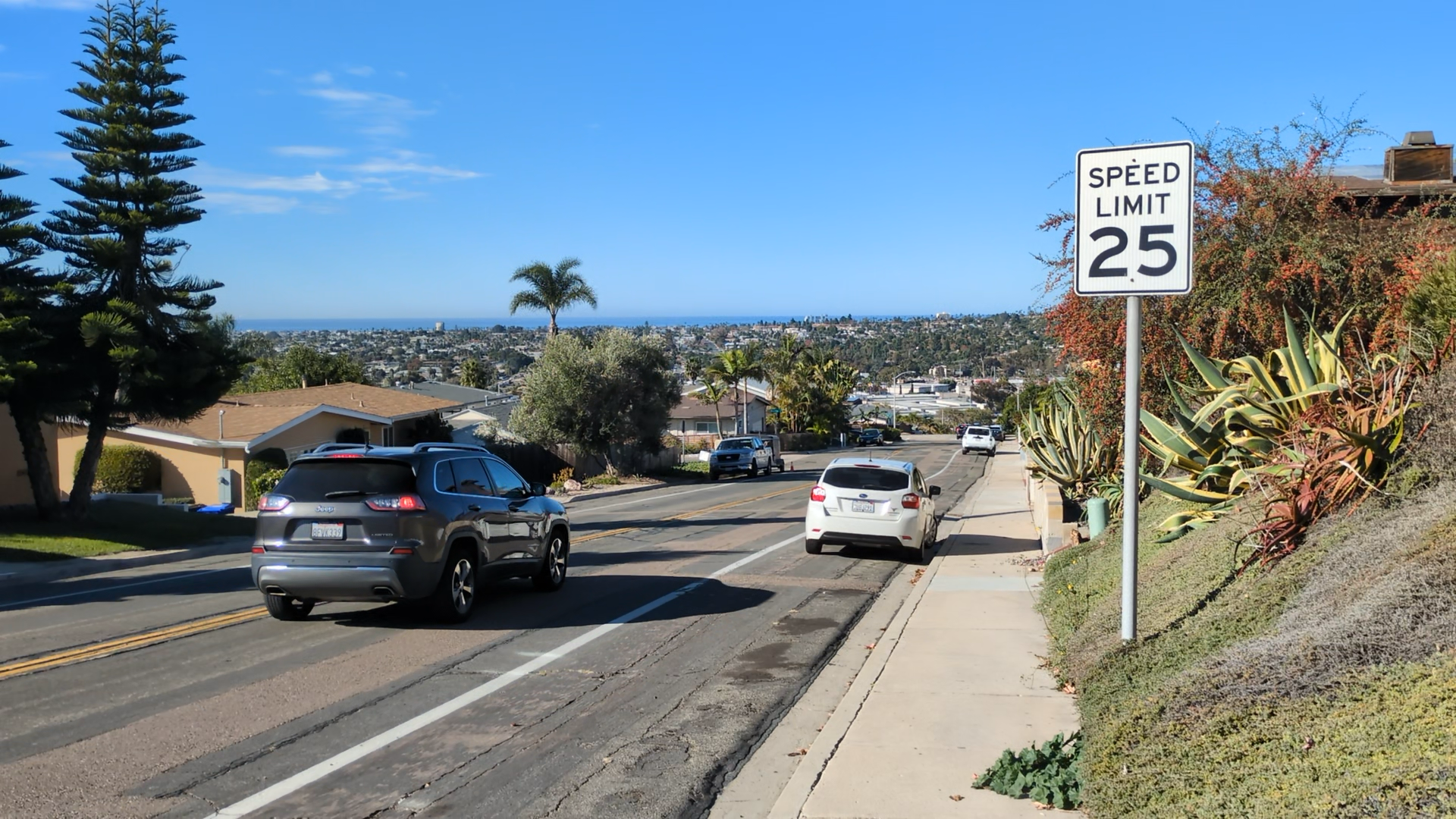
Zoom out: Meanwhile, Zachary Flechsig worries he could be the next Shannon Smith, begging the city to fix his street's safety issues before someone dies there.
Context: Flechsig's street, Brandywine Street near Mission Bay, is right next to Clairemont High School and has a posted speed limit of 25 mph. But, he told Axios, drivers race down its hill.
- Flechsig has been asking for a stop sign since he moved there in 2020, but has been told repeatedly that his street doesn't qualify.
"How much does the stop sign cost?" Flechsig said. "Like $100? I'll pay for that myself."
- City spokesperson Santacroce said that Flechsig's street has been approved for an electronic speed sign, but there's currently no funding for it.
Friction point: Parent, with the nonprofit Circulate, said the city defaults to "having street speeds oriented to maximize the number and speed of cars that can travel through them."
- The city is currently revising its street design manual and Circulate is lobbying for more changes, including narrower lanes, lower speed limits and roundabouts.
What we're watching: Advocates are asking the city to make these changes a top priority in the next budget.
Tell us: Do you live near what you consider to be a dangerous San Diego intersection? Have you tried to get the city to make changes? Email [email protected] to share your story.