Local fitness program empowers people with disabilities

Add Axios as your preferred source to
see more of our stories on Google.
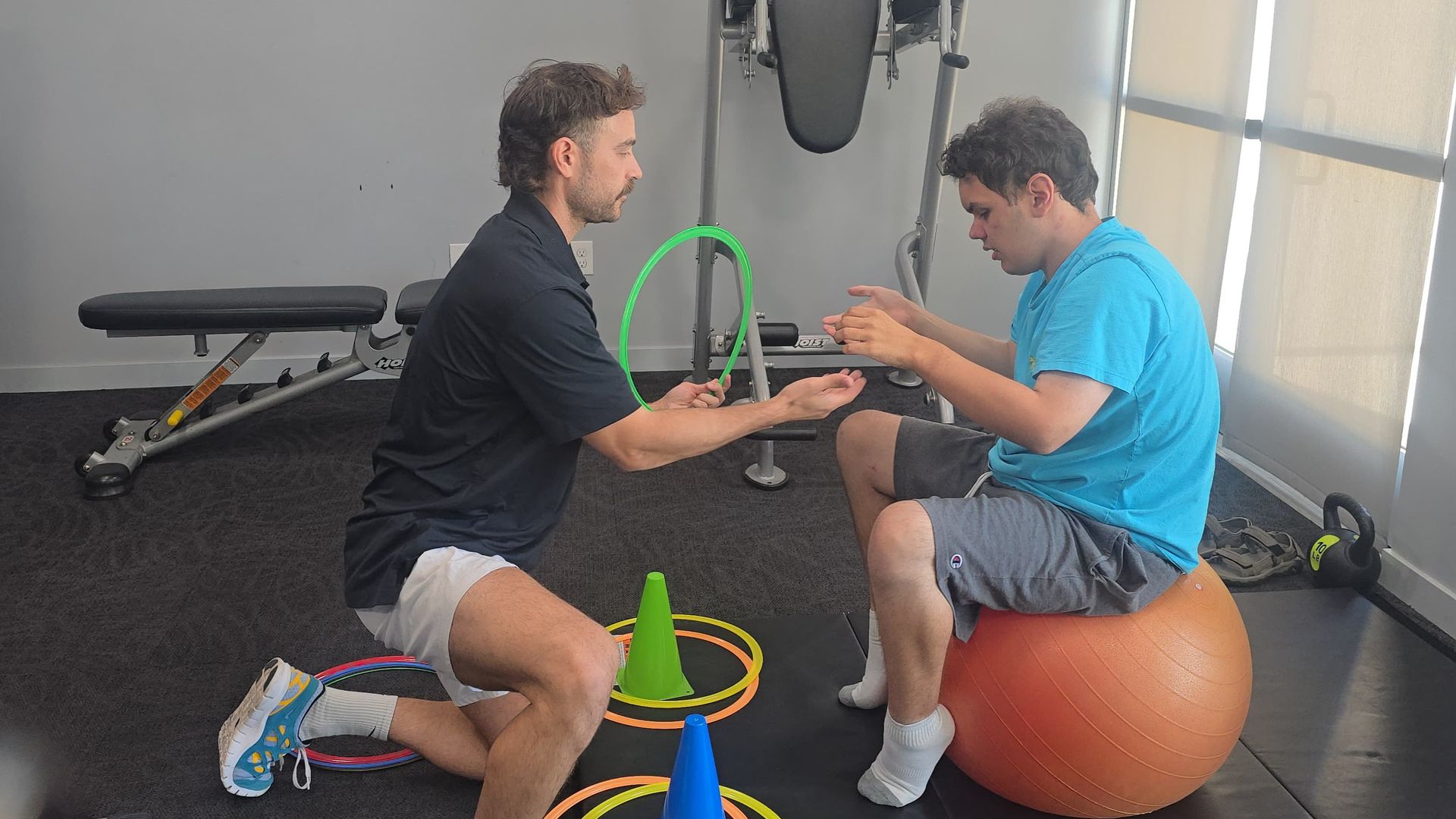
Matthew Iglesias works with Special Strong trainer Andrew Barbosa at the gym. Photo: Courtesy of Mitchell Iglesias
A new adaptive fitness program in San Diego is helping kids and adults with physical, cognitive and developmental disabilities build muscle, confidence and social skills.
State of play: Three friends, two of them moms whose sons are on the autism spectrum, brought the Special Strong national franchise here after struggling to find a suitable exercise program locally.
- "We had some things in the community, but it was not personalized to his needs," co-owner Sana Firdose told Axios, referring to her teenage son. "I wanted him to feel included and go to a regular gym."
How it works: Special Strong offers group classes, personal training and aquatics fitness programs at local gyms, allowing the athletes to work out near their homes and in a social setting that doesn't feel like a doctor's appointment.
- The coaches are personal trainers with additional adaptive fitness certifications to support individuals with Down syndrome, autism, cerebral palsy and multiple sclerosis, plus stroke survivors, amputees and wheelchair users.
- They serve 8-year-olds to seniors, and more than 30 athletes have signed up since the local program started in May.
Between the lines: The San Diego Regional Center, a nonprofit serving people with developmental disabilities and their families, helps pay for the gym memberships.
Zoom in: Matthew Iglesias, who has nonverbal autism, epilepsy and some physical impairments, has been doing personal training at 24 Hour Fitness three times a week for a few months.
- The 20-year-old does stretching, strength training, and balance and coordination exercises that incorporate cognitive challenges, stimulating his mind while working out.
- His dad, Mitch Iglesias, said Matthew has gained muscle and has had significant positive changes to his mood, motivation and behavior.
- "Be prepared for a big commitment, time- and energy-wise, but it's saved his life," Mitch Iglesias said.
The big picture: More than a quarter of U.S. adults ages 18–64 have a disability, and they are three times more likely to have heart disease, stroke, diabetes or cancer than adults without disabilities, according to the CDC.
- Aerobic physical activity can help reduce the effect of those chronic diseases, but access is a challenge for many, per the CDC.
The intrigue: There are a few adaptive fitness options around San Diego for people with disabilities, including a San Diego State University program, CrossFit gym, surfing clinics and Play My Way recreation center.
"They have to get out and play and do some kind of movement beyond the traditional therapies," Special Strong San Diego co-founder Deepa Balusamy told Axios.
- She said she's noticed the fitness classes improving her son's basic living skills and said they "will help him to get better day by day."