Heat streaks are getting more common in San Diego


Add Axios as your preferred source to
see more of our stories on Google.
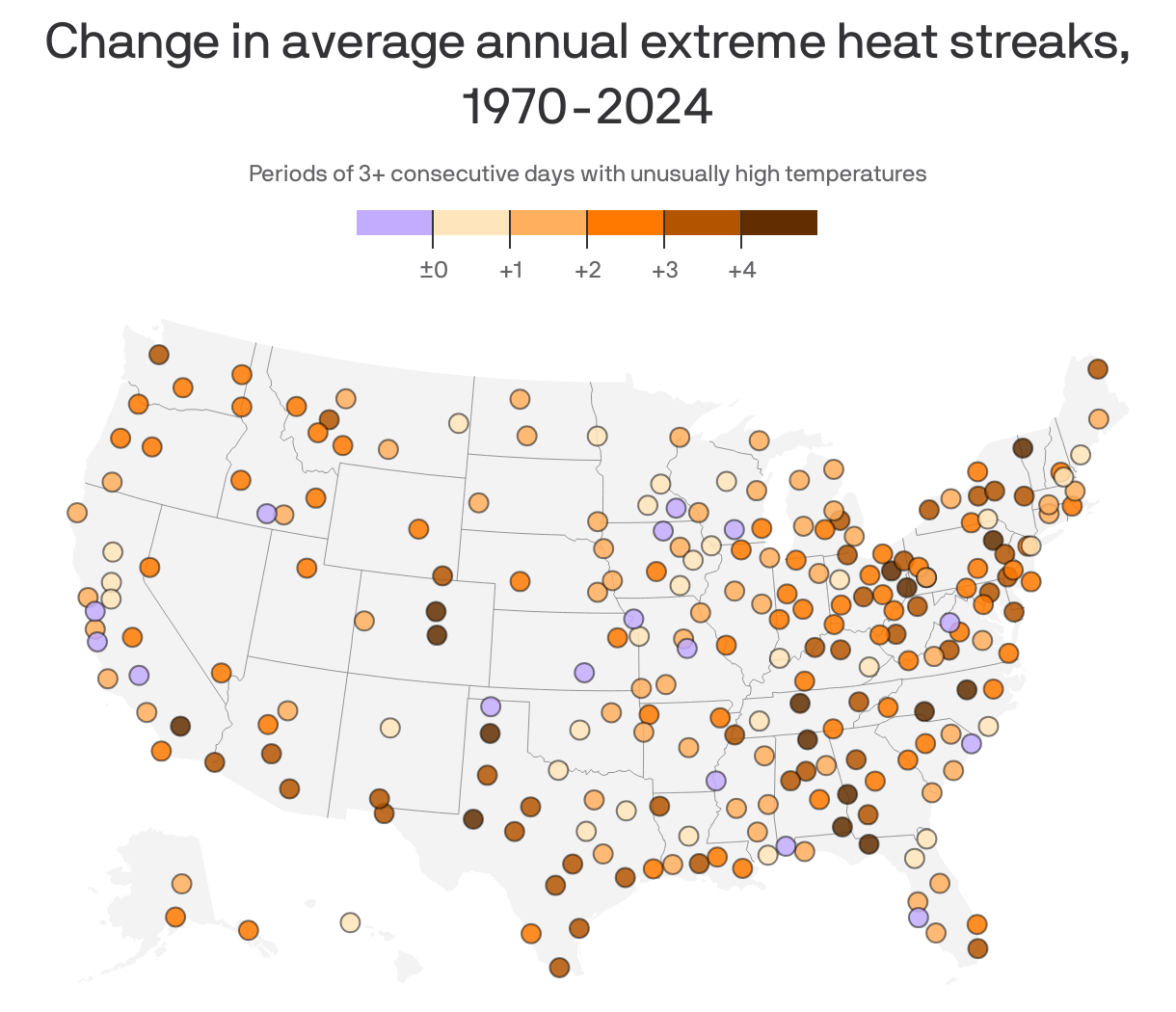
San Diego is getting more heat streaks on average each year than in 1970, a new analysis shows.
Why it matters: Extreme heat is particularly hazardous to human health, and air conditioning is less common in San Diego than in warmer climates.
- Extreme heat's effects on the body tend to be cumulative, and warm nights offer little reprieve for those without air conditioning.
- Multi-day heat streaks are also challenging for power grid operators, given all the energy-intensive A/C use.
By the numbers: The average number of annual extreme heat streaks rose between 1970-2024 in 80% of the 247 U.S. cities analyzed in a new report from Climate Central, a climate research group.
- San Diego now has on average two more heat streaks each year, in line with the 200 cities in which heat streaks became more common.
How it works: Climate Central defines an "extreme heat streak" as three or more days in a row with maximum temperatures over the 90th percentile of a given location's daily max temperatures during the 1991-2020 period.
Between the lines: Climate change is making extreme heat more intense and more frequent, studies have shown.