SeaWorld San Diego releases seven rehabilitated sea lions back into the Pacific Ocean

Add Axios as your preferred source to
see more of our stories on Google.
/2025/03/19/1742421850921.gif)
Seven sea lions waddled off a boat and into their newfound home in the Pacific Ocean this morning after being rehabilitated by SeaWorld San Diego's rescue team.
Why it matters: It marked the final step of an effort to save stranded, entangled or injured marine animals that need medical attention, including those that are endangered and threatened.
State of play: These California sea lions were found emaciated or wounded around San Diego County beaches, including one with a shark bite.
- Another pup was abandoned and rescued at a few days old, so he was bottle-fed, and had to learn how to eat fish and compete with other sea lions for about eight months before being released.
How it works: After loading the crated animals onto the docked boat, the team drove out of the bay and into the ocean's choppy waters that glittered in the sun.
- They stopped about 5 miles offshore of La Jolla at a spot with a large population of the same species and a plentiful food source.
- One needed a little nudge, but each sea lion splashed into the ocean and bobbed around the boat before swimming off.
- "Have a good life, guys!" one staff member said as they all cheered and waved goodbye like proud parents.
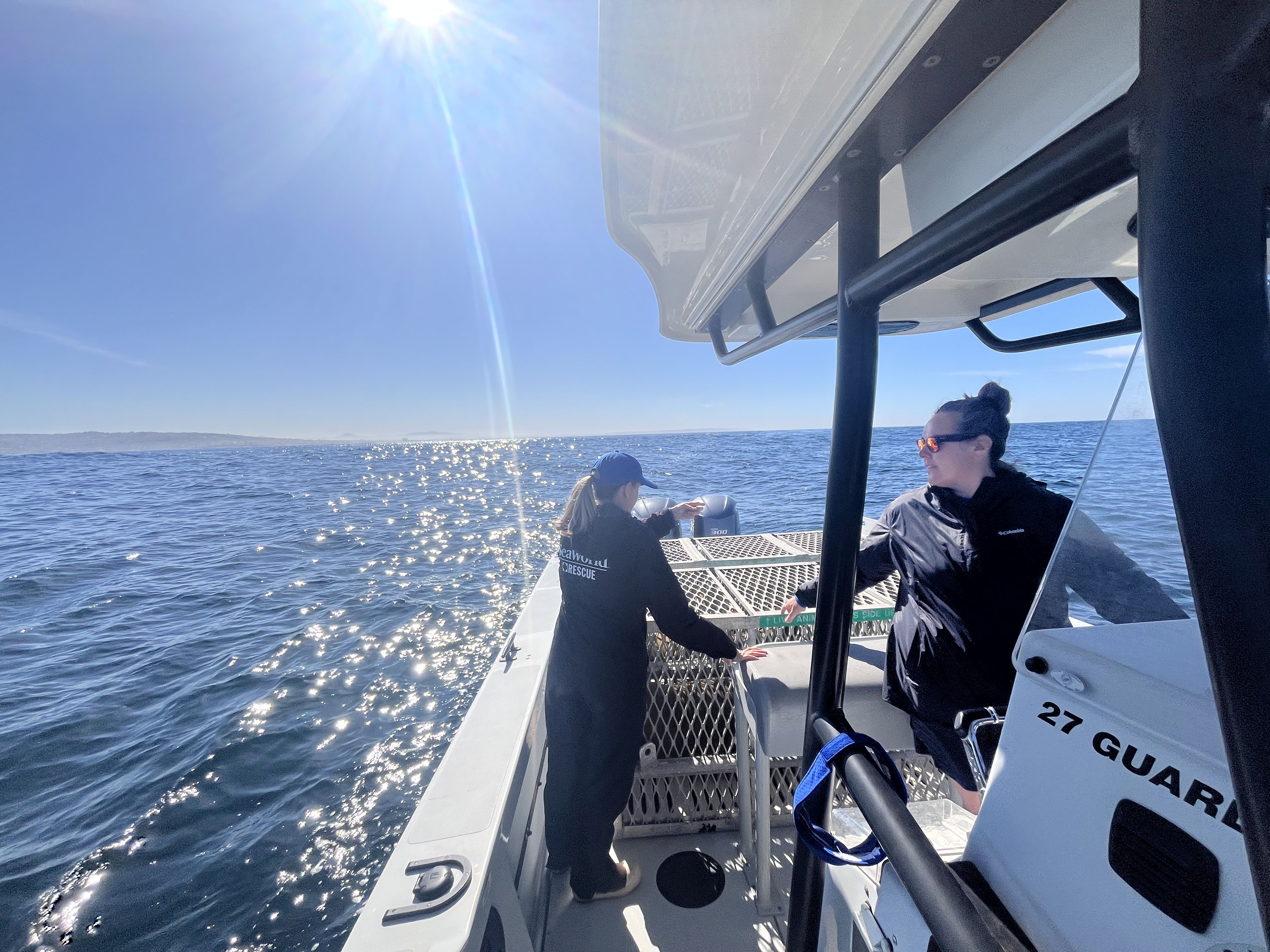
What they're saying: "We're the 911 operators for the animals," Jeni Smith, Curator of SeaWorld Rescue Team, told Axios. They're also the ambulance and the hospital.
- The rescue team fields calls from lifeguards and beachgoers reporting stranded or injured animals 24-7, 365 days a year.
- They do triage and assess the safety of locations to determine which are the most critical to pick up.
Inside the room: At SeaWorld's medical facility, a veterinarian and other staff examine and treat the animals, usually for about six to eight weeks.
- They do bloodwork, can perform surgery and ultrasounds, treat parasites, train and feed animals back to health, among other medical services.
- When the animals are healthy enough and the conditions are safe, they're released back into their natural habitat.
The intrigue: The released animals are tagged so their medical history can be shared if they're rescued again.
By the numbers: More than 40,000 animals have been rescued across SeaWorld operations since the wildlife rescue program began in 1965.
- In 2024, the San Diego team helped rescue 100 sea lions, 333 birds, four harbor seals, 20 elephant seals, seven Guadalupe fur seals, five cetaceans and five sea turtles.
- They've released 13 animals, including sea lions and birds, so far this year.
Threat level: There's been an uptick in rescues in Southern California in recent weeks, particularly with cases of domoic acid toxicosis in sea lions and dolphins, Smith said.
- The condition is caused by a toxic algae they ingest from eating contaminated fish. It affects their brains, making them disoriented, abnormally aggressive and can cause fatal seizures.
The big picture: These rescued marine mammals are "beacons to let us know the ocean health," Smith said, including warming water that can disrupt marine ecosystems and worsen natural disasters.
- "With global climate change, we are seeing that sometimes the animals are telling us the bigger story."
Anyone can report stranded marine animals along San Diego County beaches by calling SeaWorld's rescue hotline at 1-800-541-7325.