San Diego takes first step toward $25 minimum wage for tourism workers

Add Axios as your preferred source to
see more of our stories on Google.
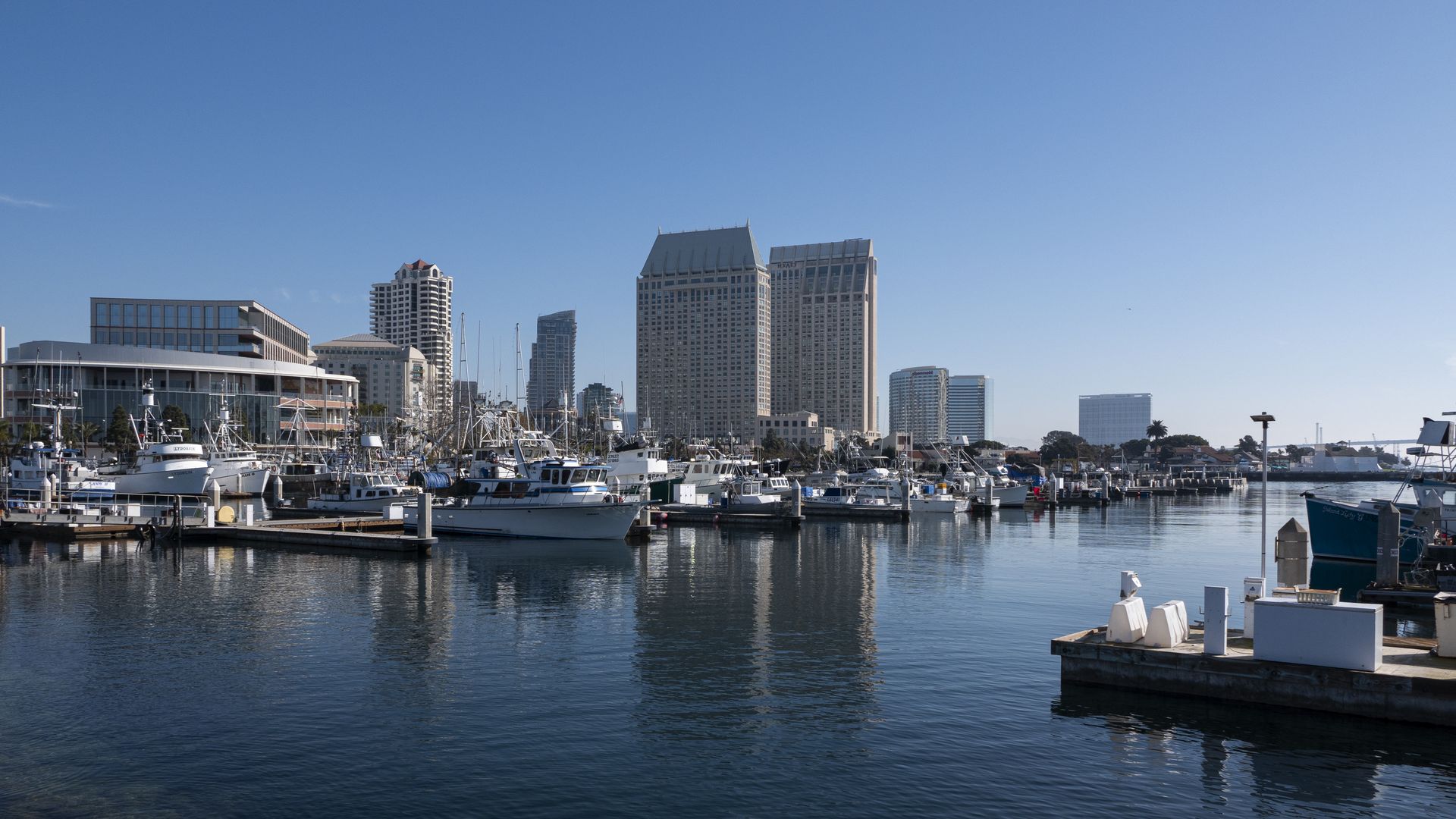
The hotel-dense waterfront of San Diego Bay, next to the Convention Center. Photo: Kevin Carter/Getty Images
A proposal to increase San Diego's minimum wage for tourism workers is moving forward and setting up a familiar standoff between the city's labor groups and business community.
Why it matters: Tourism is one of the city's largest industries, representing 1 in 8 jobs in the county.
Driving the news: City staff will now write an ordinance to raise the minimum wage for hotel and event center workers and janitors in the tourism sector to $25 per hour, after a City Council committee voted unanimously Thursday in support of the proposal from Council Member Sean Elo-Rivera.
- That vote followed more than an hour of public comment that split sharply along labor-business lines, repeating a dynamic from nearly a decade ago when the city approved a general minimum wage increase.
Friction point: Leaders from the region's business community spoke against the proposal, arguing a 45% increase for one economic sector would hurt San Diego's status as a tourist destination, lead to reduced hours for affected workers, and still hit local consumers.
- They were answered by county labor union representatives, who pushed the committee to prioritize workers and argued business profit margins were large enough to absorb the cost increase.
- Elo-Rivera said he would work with industry leaders to craft the proposal, but "I've asked that they not tell me the sky will fall if we do this," he said. "It's the same argument every time."
Zoom in: The San Diego County Lodging Association commissioned a study from Oxford Economics that concluded the increase would reduce regional sales by $333 million, eliminate 4,398 jobs, and reduce federal, state and local tax revenue by $57.8 million.
- It said businesses would cut staff, increase costs, and reduce services to compensate.
Yes, but: A presentation by Elo-Rivera's office stressed that the region had the country's third-highest hotel occupancy rate among large markets in 2024 and pointed to bullish growth forecasts for the sector as evidence it could take the hit.
- His office said recent efforts in Long Beach and Los Angeles were models for San Diego.
What they're saying: The Regional Chamber of Commerce, the San Diego Padres, and groups representing restaurants, property managers, hotels and downtown commercial areas all spoke against the measure.
- "I believe this is bad policy and a bad process at a bad time," said Mark Cafferty, CEO of the San Diego Regional Economic Development Corp. "Targeting one industry, or one base of jobs, during very challenging economic times, is not the way to do it .... I am more than happy to talk with all of you about this issue at any time, just as I always have been."
The other side: Labor organizers from hotel and construction unions told the committee — including by singing the 1931 mine workers' song "Which Side Are You On?" — they needed to choose between workers and bosses.
- The tourism industry "is creating two different tiers — of rich people who profit off our beautiful coastline, and very poor people who cannot afford to live here — and I am asking you to stand for the poor people," said Brigette Browning, head of both local hotel workers union Unite Here and the San Diego-Imperial Counties Labor Council.
What's next: Elo-Rivera said he expects a draft of the ordinance to return to the committee in June before potentially moving to full Council approval.
- He accepted a request from Council Member Marni Von Wilpert to include options to phase in the increase, rather than jumping to $25 on Jan. 1, 2026.