Otay Mesa Detention Center ranks fifth in U.S. for ICE detainees


Add Axios as your preferred source to
see more of our stories on Google.
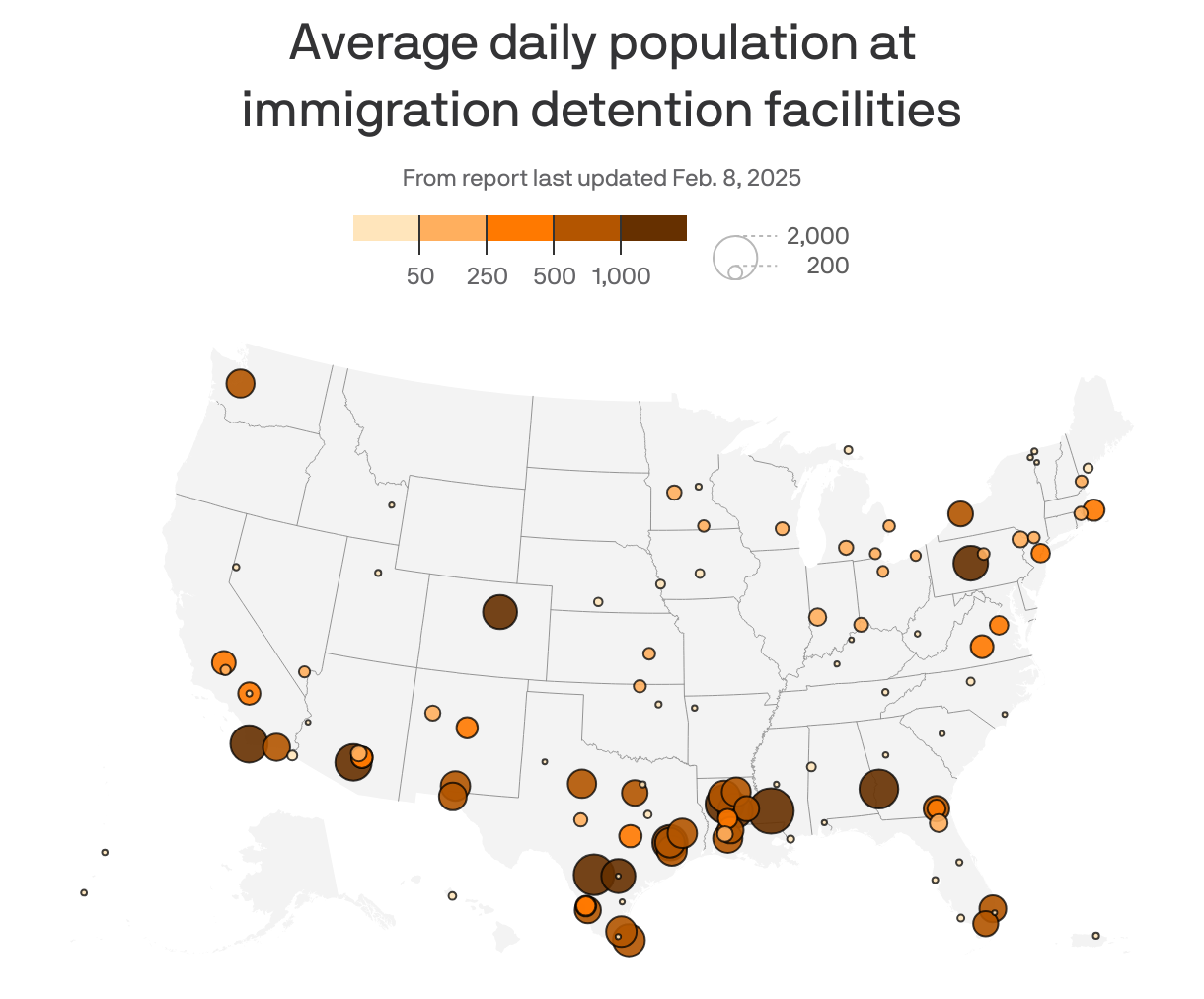
The Otay Mesa Detention Center is holding the fifth-most detained immigrants in the country, according to newly released federal data.
Why it matters: The San Diego County facility's detainees are among the thousands who've been rounded up across the nation during the ongoing crackdown on illegal immigration.
- California's six centers are holding the third-highest population of detainees (about 3,000 per day), behind Texas and Louisiana.
By the numbers: The Otay Mesa location had a daily average of 1,389 detainees for U.S. Immigration and Customs Enforcement (ICE) as of Feb. 8, according to Transactional Records Access Clearinghouse (TRAC) data.
- The Adams County Correctional Center in Natchez, Mississippi, had the most ICE detainees (2,154 a day), followed by the South Texas ICE Processing Center outside San Antonio (1,680 a day).
- Overall, ICE was holding 41,169 people in detention at various locations. Nearly 55% of them had no criminal record, and many more had committed only minor offenses such as traffic violations, TRAC found.
How it works: Immigrants can end up in these detention centers after being arrested by ICE or U.S. Border Patrol agents or after being arrested on criminal charges and released into ICE custody.
- Detention facilities can be run by the Federal Bureau of Prisons, state or local governments, private contractors, the U.S. Marshals Service, or facilities ICE has for families.
- The Otay Mesa location is owned and operated by CoreCivic, a private prison company.
The big picture: The data sheds light on the housing arrangements federal officials have made for detainees at a time when the U.S. government's immigration centers are at near capacity — and the Trump administration is pushing for dramatically more arrests.
Zoom in: ICE has been looking to open a new migrant detention center in northern California, which worries some advocates and state lawmakers.
- The expansion comes as the state's privately run institutions have faced allegations of medical negligence, sexual harassment, abuse, and poor food and water quality, The Guardian reported.
- A former employee last year sued the Otay Mesa center, alleging chronic understaffing was hindering medical care.
Between the lines: Holding immigrants in detention is by far the largest cost of the deportation process.
- A backlog of 3.7 million cases in immigration courts, where immigrants are entitled to make their case to stay in the U.S., means detained immigrants can wait months, even years, for a hearing.
- Undocumented immigrants facing criminal charges can't be deported immediately, as President Trump has suggested. Instead, they typically have to go through the criminal justice system, serve sentences if found guilty, then face deportation.
What we're watching: To hold more people from a raid surge would require a mass building project of "soft detention" centers, or temporary facilities, to house immigrants beyond the system's current capacity of about 42,000 people.
The latest: The Department of Homeland Security announced this week that undocumented immigrants must now register and provide fingerprints.