EXPLORE Act set to boost California's $81 billion outdoor recreation industry


Add Axios as your preferred source to
see more of our stories on Google.
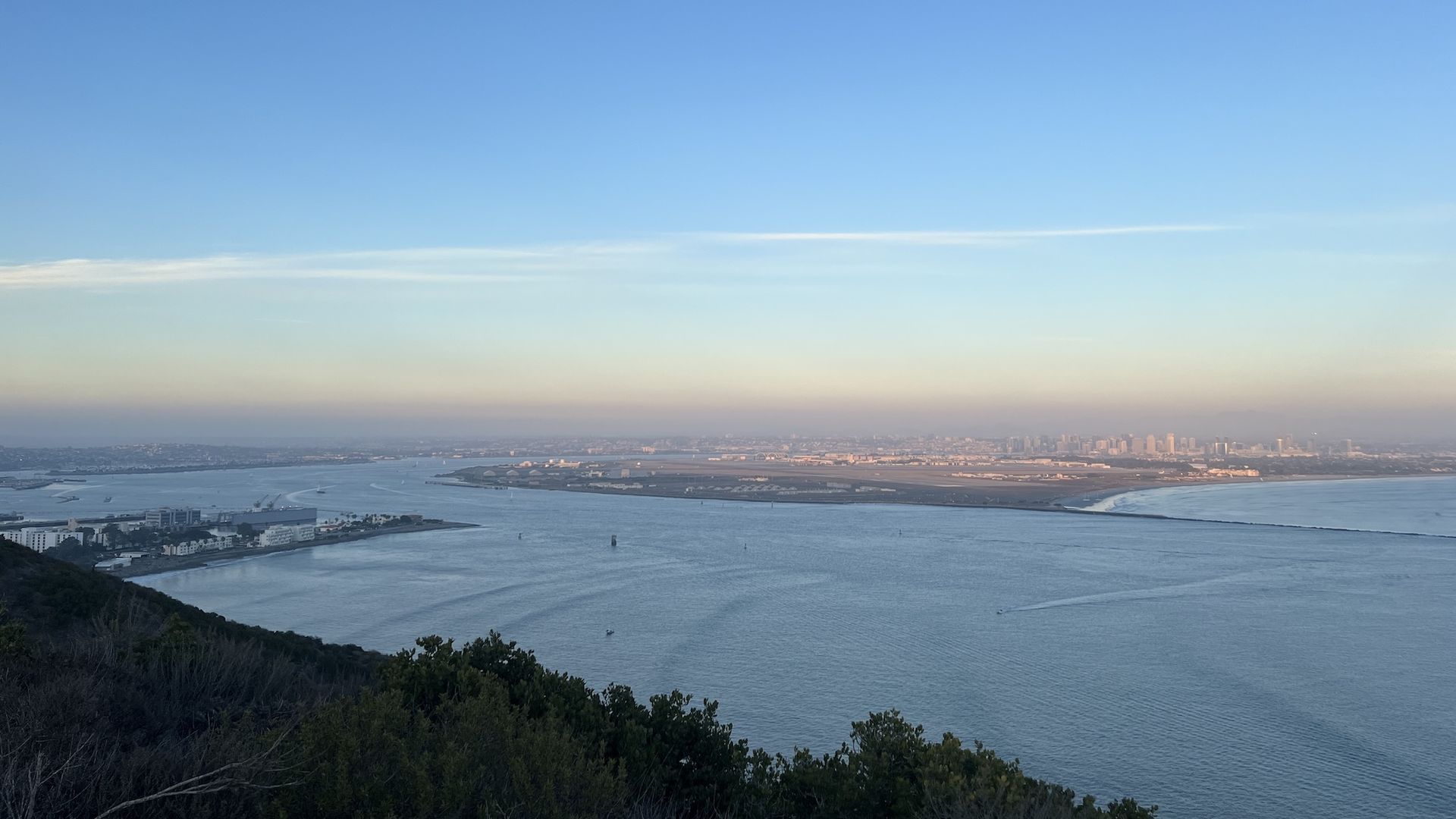
The San Diego Bay and city skyline from Cabrillo National Monument. Photo: Smith Collection/Gado via Getty Images
One of former President Biden's final acts will leave a lasting impact on outdoor recreation in California and across the West.
State of play: The bipartisan Expanding Public Lands Outdoor Recreation Experiences (EXPLORE) Act is hailed as a first-of-its-kind effort to boost the $1.2 trillion outdoor recreation industry by modernizing and improving public lands access.
- The measure, signed Jan. 4, won bipartisan support in both chambers and broke through the partisan gridlock in Washington with provisions to support hunting, fishing, climbing and other sports.
- U.S. Rep. Mike Levin, who represents parts of North County, was an original co-sponsor of the bill.
Why it matters: California has 28 national parks, monuments and recreation areas — more than any other state — including Cabrillo in San Diego and Joshua Tree nearby. And the list is growing.
The intrigue: The new law's modernization efforts include digital national park passes, broadband internet access at recreation sites and campgrounds, and better data collection about visitor numbers.
- Other provisions give more flexibility to guides and outfitters with permits to operate on federal lands and encourage the development of more accessible wilderness opportunities for children and people with disabilities.
- An Obama-era program that gave every fourth grader and their family free entry into federal lands was extended.
Zoom in: A dozen individual bills are part of the EXPLORE Act package, including ones from California Sen. Alex Padilla and Rep. Nanette Diaz Barragán that would fund more urban parks and trails, particularly in low-income communities.
- Last year, San Diego's park system ranked higher than most big U.S. cities', but scored poorly on equity. Low-income neighborhoods and neighborhoods of color have less park space than more affluent, predominantly white areas, a report by the nonprofit Trust for Public Land found.
- The city is upgrading local parks and expanding outdoor programs in underserved areas, while working to make parks more equitable across neighborhoods.
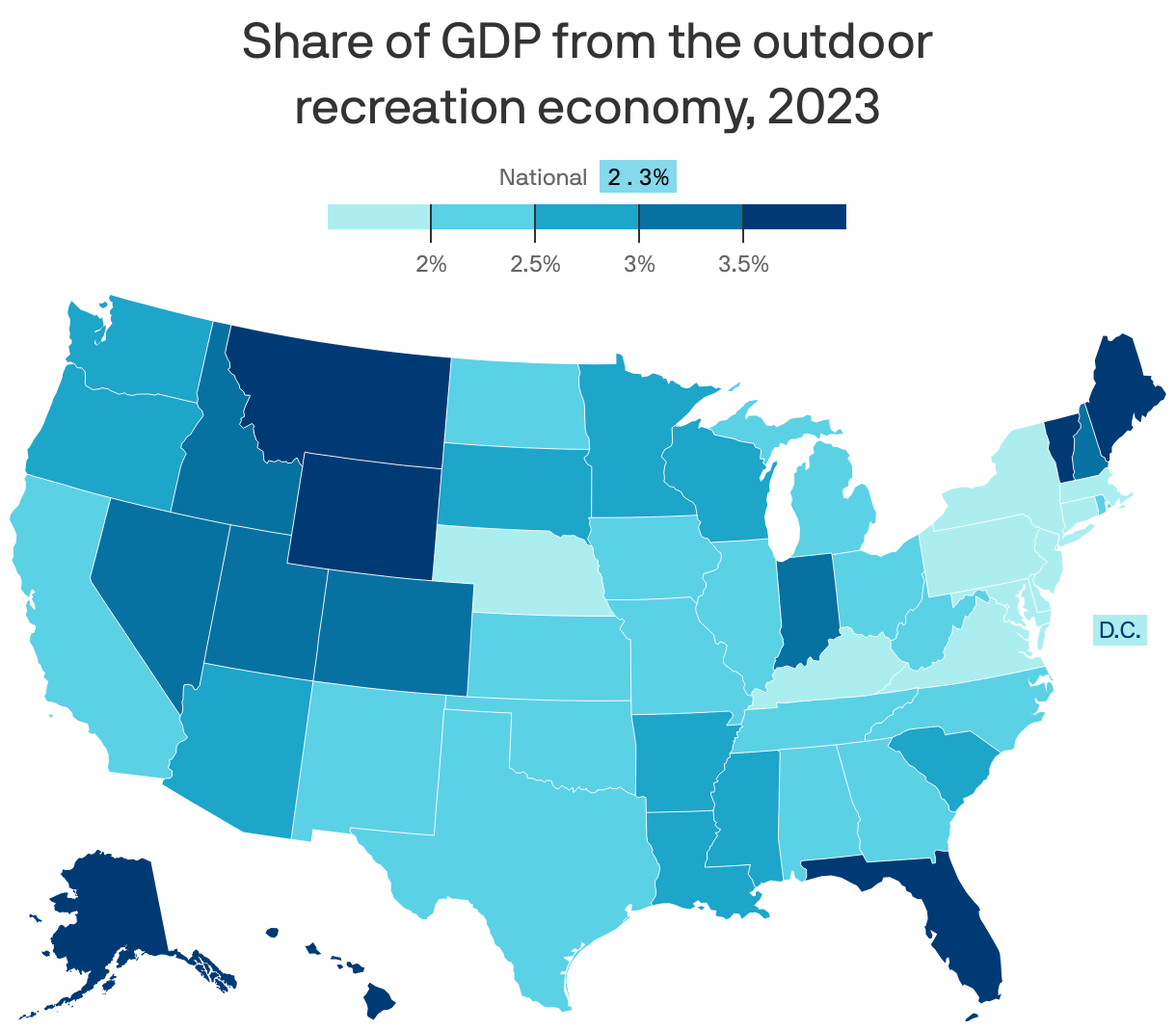
By the numbers: Outdoor activities contributed $81.5 billion to California's economy in 2023, up from $74.9 billion in 2022 and $43 billion in 2012, according to figures from the Bureau of Economic Analysis.
- The industry accounts for 2.1% of the state's economy, hovering around that share of California's GDP for the past decade.
- It generated about 545,500 California jobs in 2023, growing to about 2.9% of the state's total employment.
- Nationally, the outdoor economy accounts for 2.3% of the overall GDP, and for 5 million or about 3.1% of U.S. jobs.
Between the lines: The biggest drivers of revenue in California are industries that support outdoor recreation, including construction, travel and tourism.
- The top activities are boating, fishing and RVing.