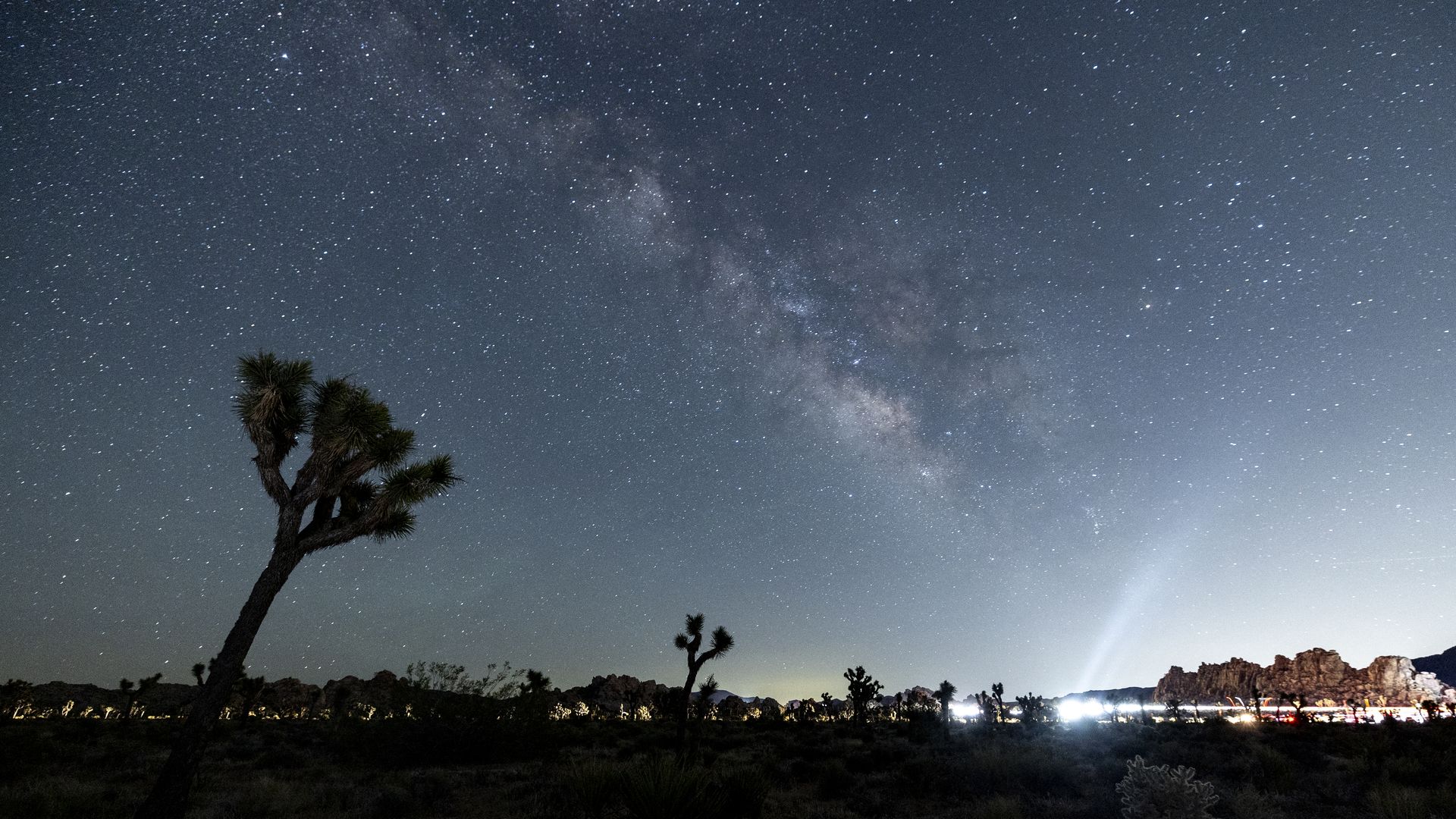
The Milky Way shines over a Joshua Tree at the National Park last year. Photo: Etienne Laurent/AFP via Getty Images
Night-sky tourism, or "noctourism," is set to be a major travel driver this coming year, Booking.compredicts.
Why it matters: The trend could bring travelers — and their dollars — to more remote locales with better night skies.
How it works: You don't have to leave the country to get a great view of the cosmos, but you typically want to get away from big cities and their light pollution.
The U.S. is home to over 100 dark sky sanctuaries, parks and more, according to DarkSky, which calls itself "the globally recognized authority on light pollution issues and night sky conservancy."
The big picture: Many of the country's best dark sky sites are out West, like Arches National Park in Utah, Big Bend National Park in Texas, and Joshua Tree National Park — just three hours away.
Zoom in: If you want to see the Milky Way, Joshua Tree has four designated stargazing areas — the parking lots of Quail Springs, Hidden Valley, Cap Rock and Ryan Mountain.
Sky's The Limit Observatory & Nature Center hosts monthly programs with large telescopes for public viewing on Saturdays around the new moon when the sky is darkest and stars and planets are most visible.
Pro tip: Try downloading apps like Sky Guide, which uses your GPS coordinates to help you ID what planets and stars you're seeing in the evening sky — just keep the brightness low to avoid ruining your night vision.