Amid $200 million annual deficit, San Diego managers have grown 461% in 10 years

Add Axios as your preferred source to
see more of our stories on Google.
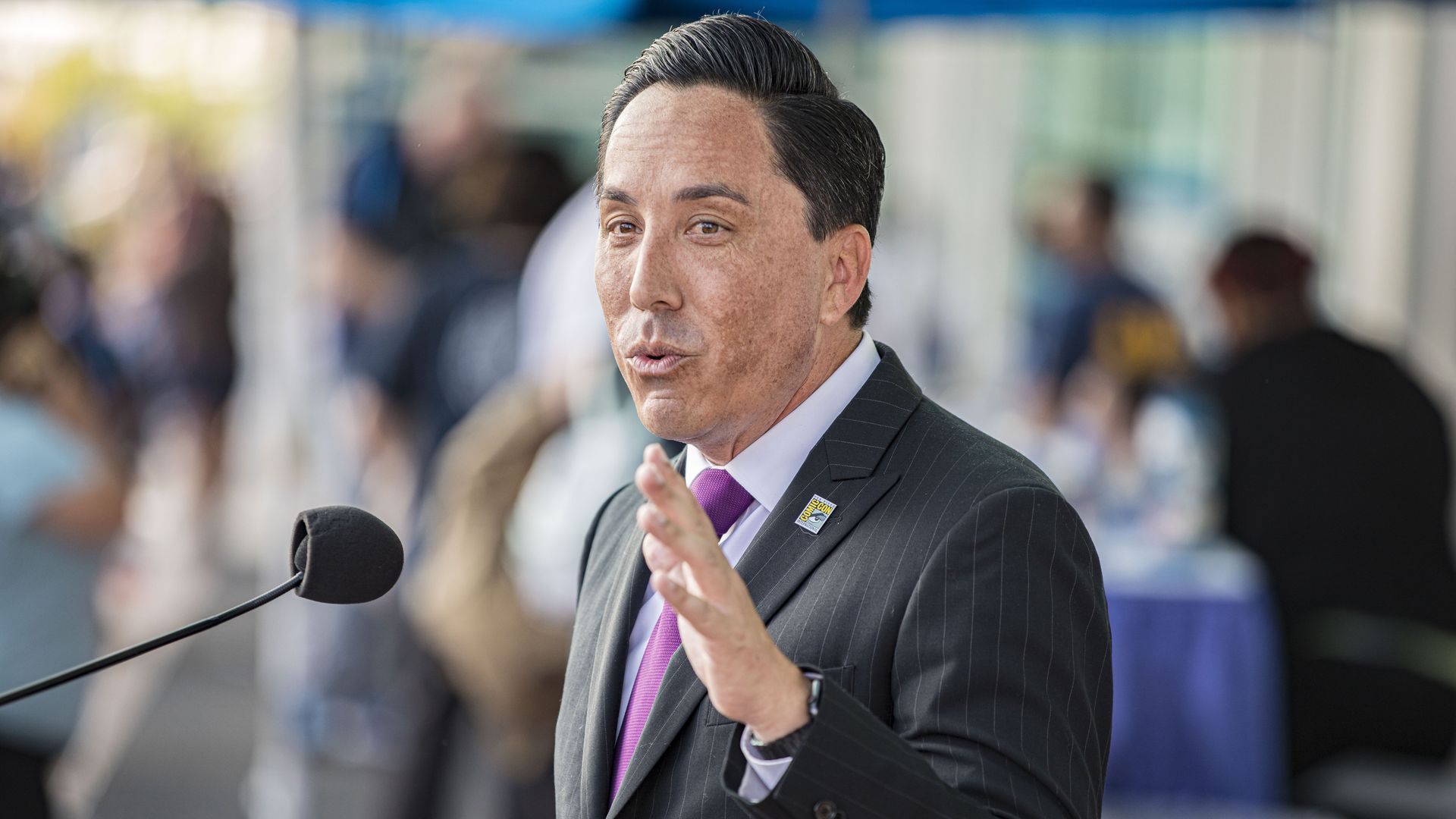
San Diego Mayor Todd Gloria is looking to tackle a $1 billion budget deficit over five years. Photo: Daniel Knighton/Getty Images
As San Diego officials look for ways to tackle a more than $1 billion budget deficit over the next five years, the head of a city labor union is drawing attention to one growing cost: the explosion of City Hall's middle managers over the last decade.
Why it matters: The failure of Measure E, a 1-cent sales tax, last month is forcing the city to confront its structural budget deficit, including potential service cuts.
Driving the news: Michael Zucchet, head of the Municipal Employees Association, outlined to the council's budget committee Wednesday the astronomical growth of nonunion managers, who earn higher pay and give the mayor more flexibility over their employment.
- In the 2015 fiscal year, the city had 70 so-called program managers or program coordinators; that has now grown to at least 393.
- During that 461% growth in management-level positions, overall city staff has grown by just 20%, Zucchet said.
- Those new middle managers represent at least $80 million in structural costs per year.
How it works: Most of those positions are not added during the city's regular budget cycle.
- The city created 45 last year, but 41 were added individually over the course of the year.
- "This is big money. They don't come to you in each budget, they come to you drip, drip, drip, one at a time," Zucchet told the council committee.
- Program managers and program coordinators make about double the comparable, union-represented position.
Between the lines: Councilmember Vivian Moreno voted against all 41 of those and asked her council colleagues to join her in stopping the inflation of city program managers
- "It's really hard to vote 'no,' but it becomes easier," she said, thanking Zucchet for compiling data that she called "astonishing."
What's next: Zucchet advocated for eliminating the 60 vacant program manager positions, which alone would save $15 million.
His revelation preceded a report from the Finance Department on the deficit facing the city over the next five years.
Follow the money: The Finance Department projects a $258 million shortfall in the 2026 fiscal year, which it expects to gradually decline to $169 million in 2030, as revenue growth outpaces spending.
- That projection assumes the city continues to provide the same service levels — infrastructure repairs, library and rec center hours, public safety staffing — as this year.
State of play: Some revenue relief could be on the way, with more than $100 million per year in new funding potentially available to stave off cuts.
- Voters in 2022 approved Measure B, which allowed the city to begin charging homeowners who receive trash collection a fee for that service. The city could vote next year to do so, bringing in an estimated $70 million every year.
- In 2020, voters approved Measure C, a hotel tax increase, which has since been held up in litigation. That case is expected to resolve next summer, and a city win would mean about $35 million per year to cover existing homelessness spending.
- The mayor and council could also increase what the city charges for parking to bring in another $10 million per year.
Zoom in: The outlook also expects the city to contribute $63 million to its emergency reserves, but the mayor and council waiving all or part of that could alleviate other cuts.
The intrigue: The Finance Department's budget includes money for Hope & Vine, the Middletown warehouse Mayor Todd Gloria wants to lease and turn into a 1,000-bed homeless shelter, and funding to staff and operate it.
- The council declined to approve that acquisition this year, with multiple members making critical comments of the proposal.
What we're watching: Zucchet said immediate changes the mayor announced last week don't go nearly far enough and along with the shelter's inclusion represent "a bad start to this budget process."
- Directors have been asked to prepare budgets proposing cuts of 5% for public safety departments, 10% for transportation and 20% for all other departments.
- The mayor will release a draft budget in April.