San Diegans are driving less, unlike rest of U.S.

Add Axios as your preferred source to
see more of our stories on Google.
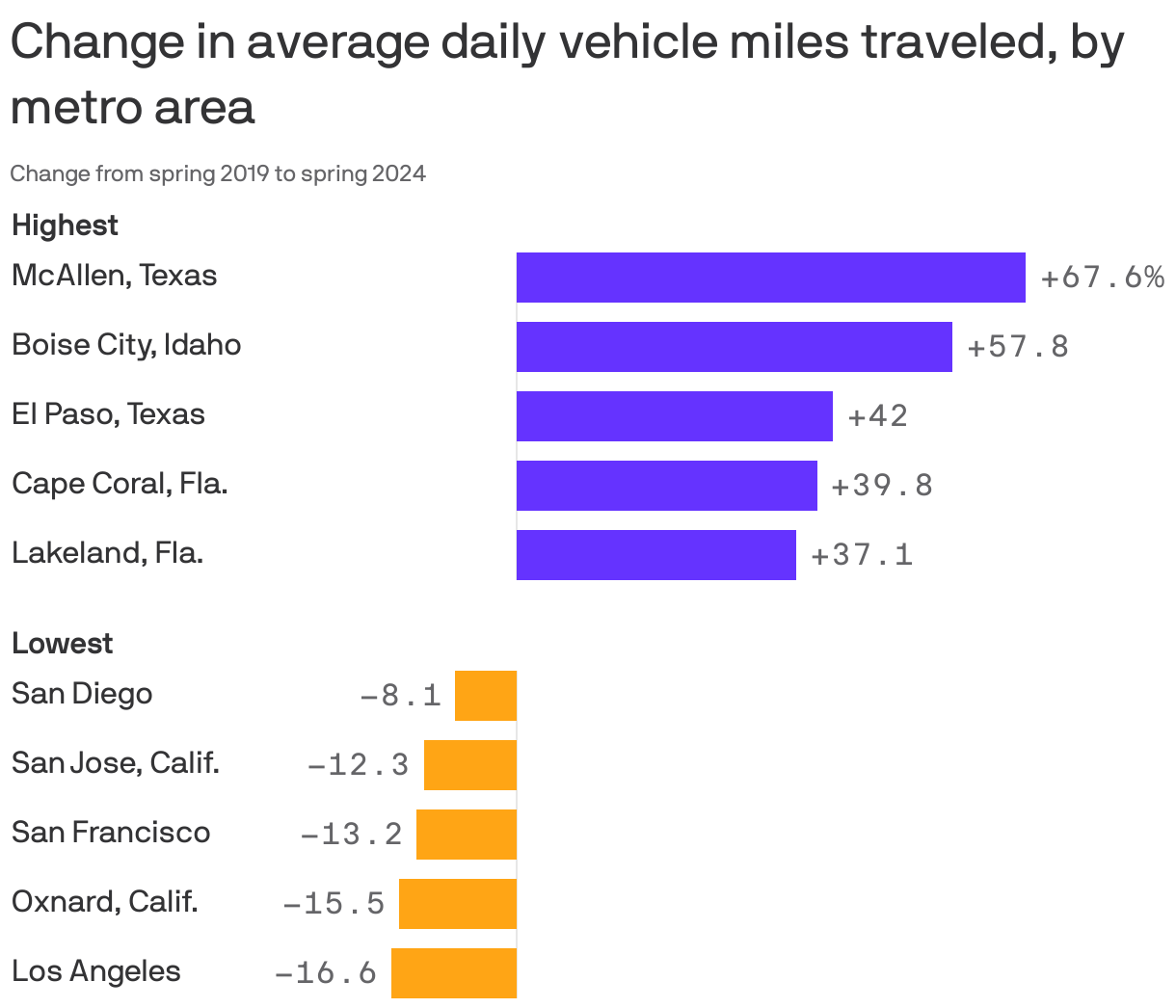
San Diegans are driving less than they did before COVID, while the rest of the country is driving more.
Why it matters: City leaders have made reducing driving a priority to cut the region's carbon footprint and comply with state emissions mandates.
Driving the news: San Diego was among the metro areas with the biggest decline in daily miles driven from the spring of 2019 to the same time in 2024.
- Per capita vehicle miles traveled increased 12.3% across the U.S.' 100 largest metro areas during the same period, according to transportation analytics firm StreetLight Data.
Zoom out: California appears to be going in the other direction.
- The five largest decreases in vehicle miles traveled (VMT) were all in California metro areas.
- Los Angeles led the way with a 16.6% decrease, and per capita VMT in San Francisco and San Jose both fell by over 10%.
Between the lines: San Diego has hoped to spur this sort of change through city planning efforts that incentivized dense, urban development over the sprawling projects the region is known for.
- That's been driven by a state mandate from a 2006 law that the region reduce its emissions by 19% of 2005 levels by 2035.
- County voters in November will weigh in on a measure to increase taxes to expand public transit.
Yes, but: The ousted former leader of the San Diego Association of Governments, the primary agency responsible for following the state law, tried and failed to enact a charge for driving to expedite the shift.
- Mayor Todd Gloria touted his role in killing that fee in a mayoral debate this week.
The bottom line: Higher VMT means higher emissions, but it can also reflect improvement in economic conditions. Despite San Diego's driving decline, economic activity is still above 2019 levels.
- "This is a signal that VMT growth can be decoupled from GDP growth," StreetLight's report reads.