How San Diego Unified is electrifying its school bus fleet


Add Axios as your preferred source to
see more of our stories on Google.
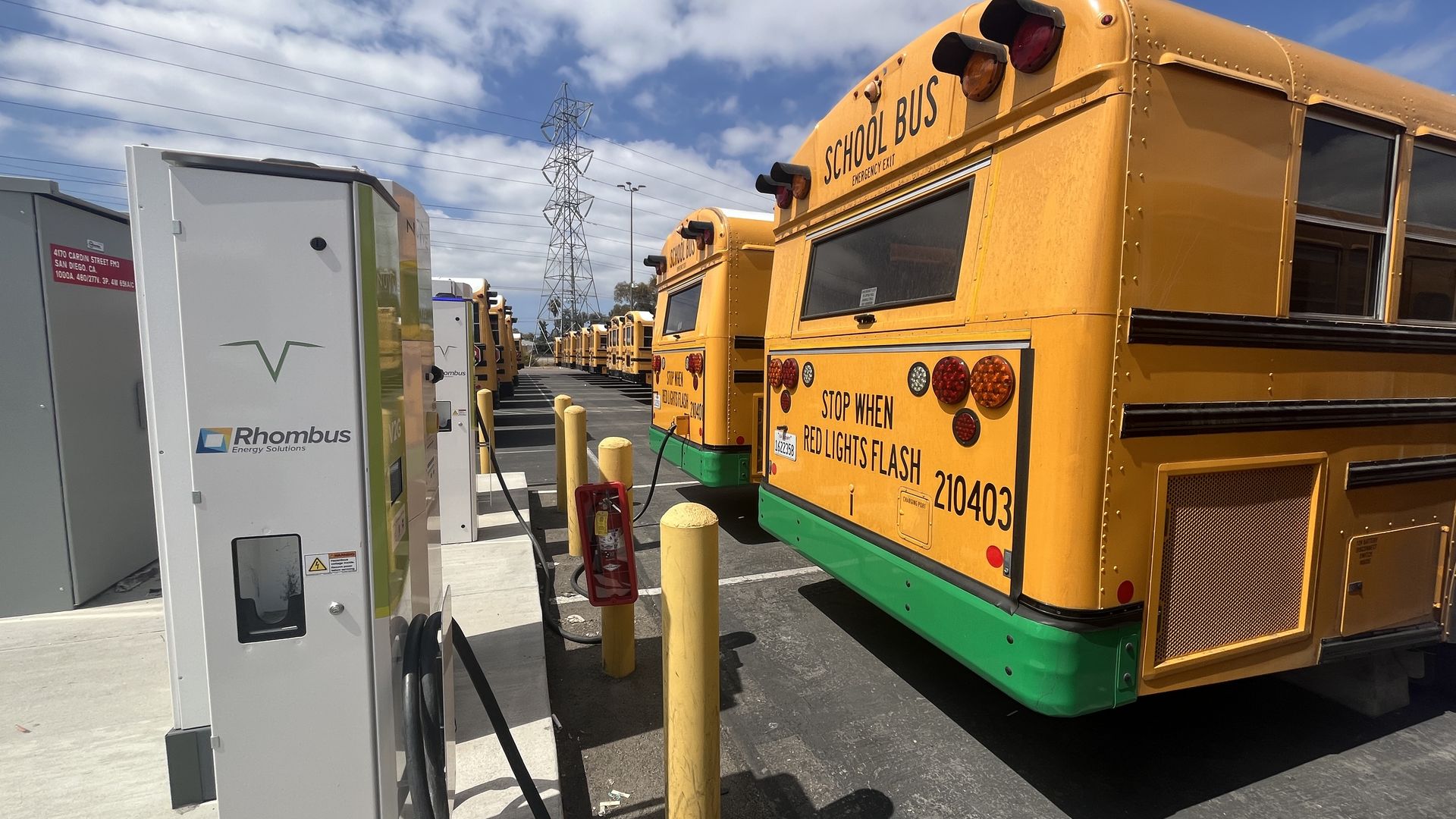
San Diego Unified's electric school buses charge at the district transportation center. Photo: Kate Murphy/Axios
More students than ever are going to class in an electric school bus as school districts, including San Diego Unified, race to take advantage of unprecedented government funding to replace their diesel fleets.
Why it matters: Exhaust from diesel buses is linked to serious health and development conditions for children, especially in low-income communities.
- The growing electric bus movement, fueled by state and federal incentives, promises to reduce tailpipe emissions and improve kids' health, too.
Zoom in: San Diego Unified currently has 13 electric buses in its fleet of more than 400.
- The district will also soon replace 30 diesel buses under a grant through the EPA's Clean School Bus Program. Those are expected to hit the road in the 2026-27 school year.
Flashback: In 2020, the district was awarded a nearly $10 million grant for the 13 electric models and other EVs, plus charging stations and battery storage, to serve neighborhoods most heavily impacted by pollution.
- Those buses transport students at 14 schools in the Lincoln cluster in southeastern San Diego.
How it works: The buses travel about 70 miles during morning routes, which leaves them with about 30% charge. Then they return to the district's bus barn to recharge for a few hours before making the afternoon trips.
- The range of the vehicles and charging times limit bus routes and service areas, district transportation officials told Axios.
- Freeway driving also sucks up more battery life than residential routes because there are fewer stops for regeneration.
The intrigue: Poway Unified has more than two dozen electric buses transporting thousands of students.
- Cajon Valley School District's electric buses are also putting electricity back on the power grid.
Stunning stat: An electric school bus costs about $370,000, more than triple the price of a traditional diesel bus.
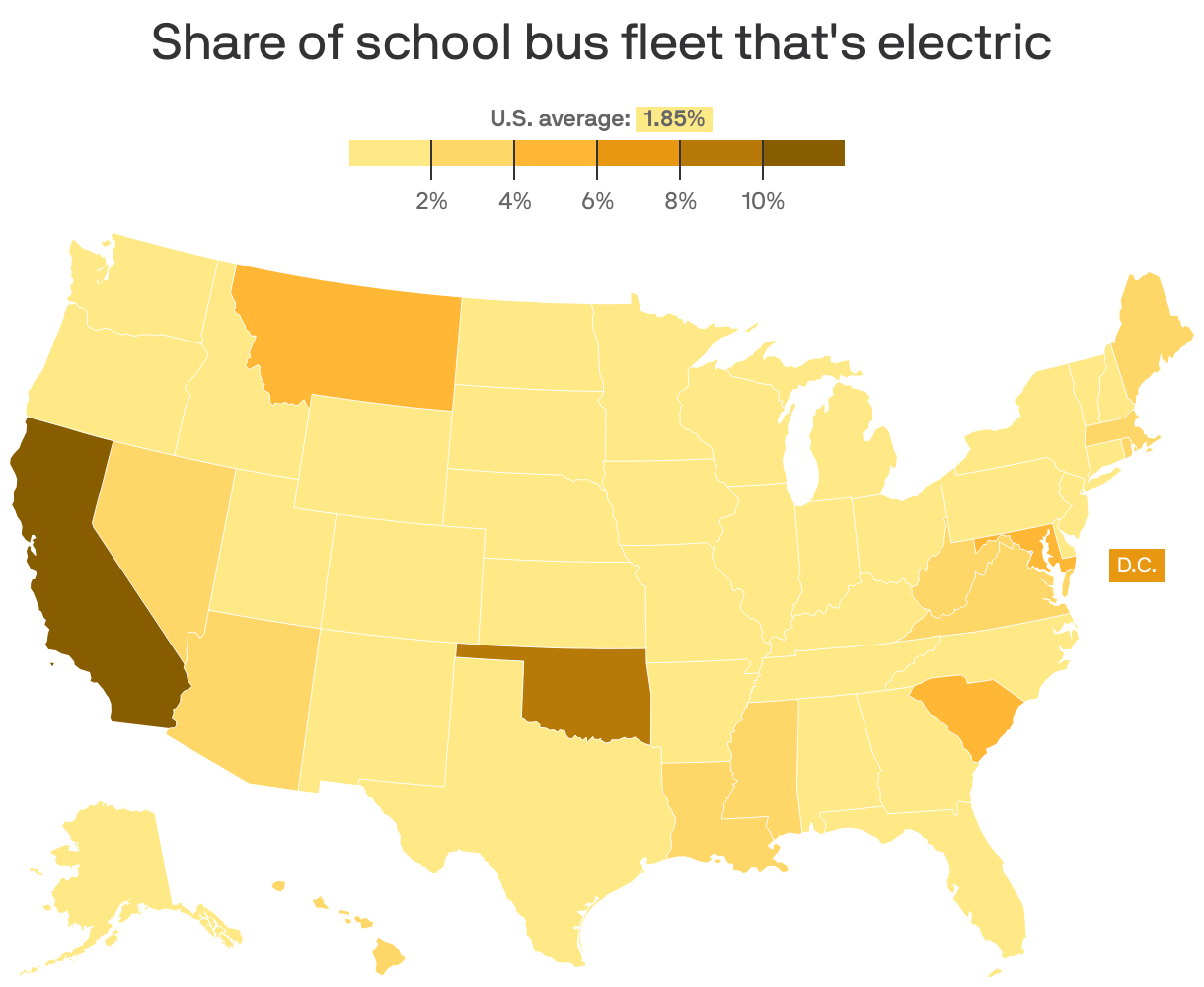
The big picture: There are roughly 12,000 committed electric school buses in the U.S., including those funded, ordered or delivered, as well as the ones currently on the road.
- That's 2.5% of the overall fleet of roughly 493,000 in the U.S.
- California, which offers generous rebates, leads the country with about 12% of its fleet being electric.
Between the lines: Part of the local push comes from state law requiring all newly purchased or contracted school buses to be zero-emission by 2035.
- As of 2023, the state had invested $800 million in zero-emission school buses and committed $1 billion to the effort in future budgets, according to Gov. Gavin Newsom.
- This year, school districts can apply for a new state program that will distribute $500 million total for replacements.
Caveat: While San Diego Unified strives to be carbon-neutral by 2030 and has received grants to electrify its fleet, eliminating emissions through electric buses will be minimal because less than 10% of students ride one each day.