Remembering San Diego's iconic artist James Hubbell

Add Axios as your preferred source to
see more of our stories on Google.
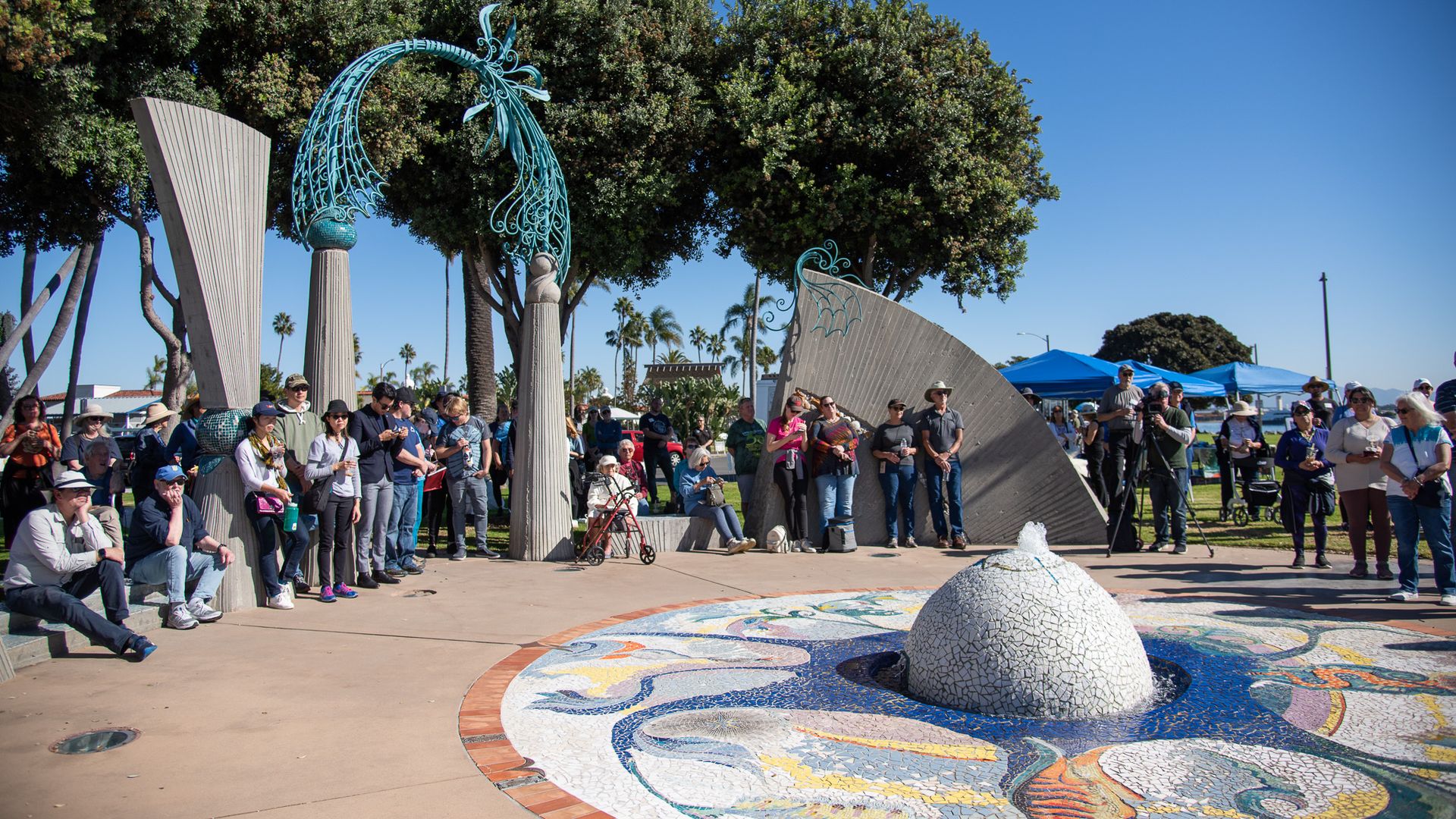
"Pearl of the Pacific" by James Hubbell on Shelter Island, part of Pacific Rim Park. Photo: Laurel Costa
James Hubbell died in May at 92 years old, and this Saturday the foundation he created is holding a memorial and "Friendship Walk" to commemorate his life and career.
Why it matters: The iconic sculptor and naturalist came to San Diego in his early 20s and embraced it. Among his best known works is his Julian-area home, Ilan-Lael, a "habitable sculpture" built from stones pulled from the ground and wood milled from nearby trees.
- "There is a San Diego character in his work, especially his architecture," said Marianne Gerdes, executive director of the Ilan-Lael Foundation.
Driving the news: The Friendship Walk is Saturday from 2-4pm, beginning at Shoreline Park, with a walk to Pearl of the Pacific Park, all on Shelter Island.
- It will feature a New Orleans-style second line, led by the Chunky Hustle Brass Band, followed by a 2:30pm memorial featuring tributes by local artists and community leaders.
Between the lines: Hubbell's works on Shelter Island are part of his Pacific Rim Park, an artistic conversation between Pacific Rim nations, with parks in seven countries that conceptualize the Pacific Ocean as a natural force that connects, rather than separates, those who live on it.
- "He believed art was a powerful tool for communication," Gerdes said. "In a lot of ways, he was a citizen diplomat."
The big picture: In San Diego, Hubbell found a community of artists who were not looking to escape to New York, Los Angeles or another celebrated art center, Gerdes said.
- "These were people who settled in San Diego because they appreciated the place, the beauty, nature, and climate and the freedom and flexibility," she said. "He used nature as his muse, the thing that gave him solace and comfort, and that was San Diego's environment."
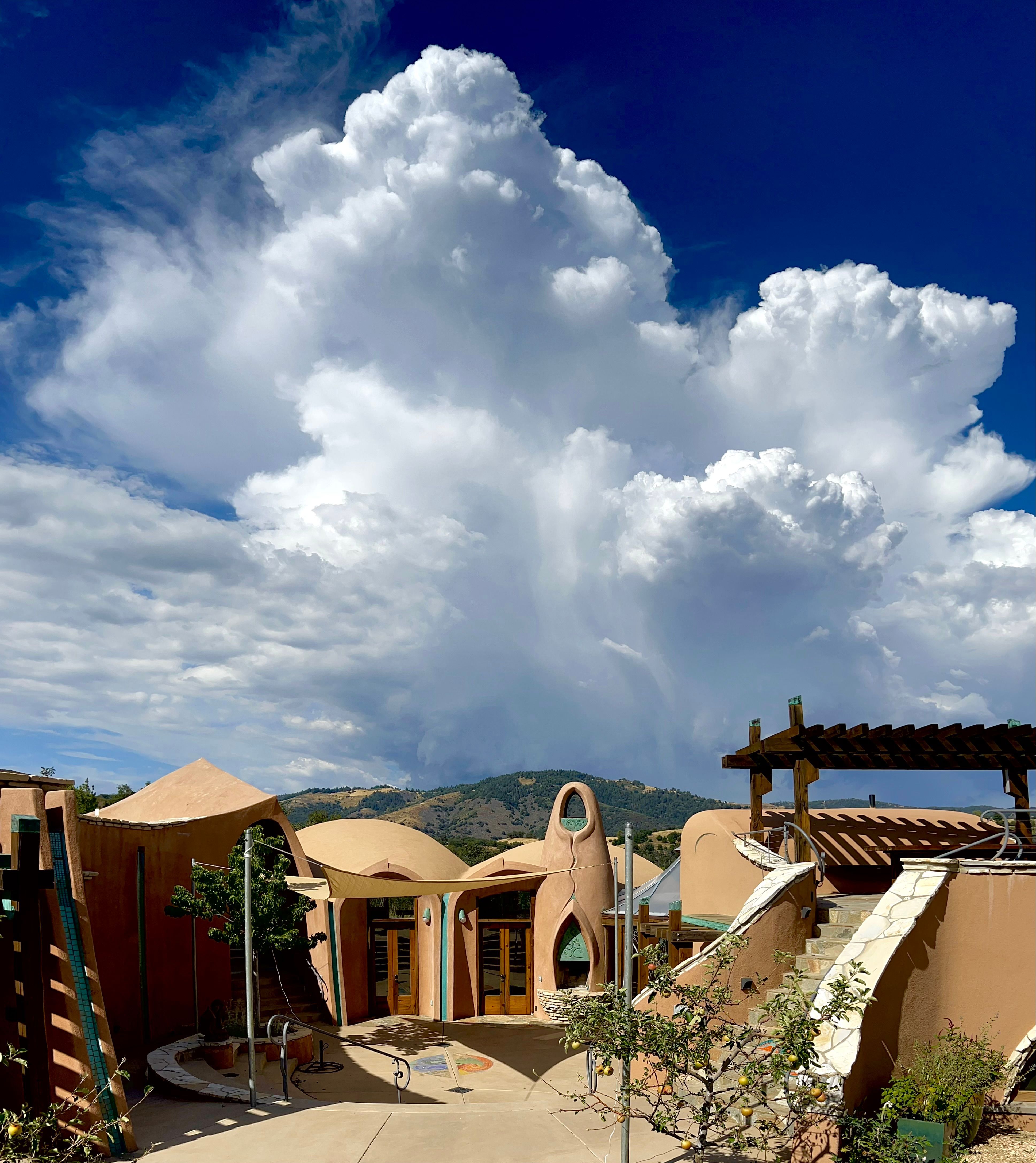
Zoom in: The Ilan-Lael compound — galleries, studios and living spaces spread across Hobbit-like structures, connected by mosaic rivers with sunlight pouring through stained glass — is open to the public for docent-led tours through most of October.
- "He saw everything as connected," Gerdes said. "He didn't see materials as separate — glass belongs next to wood and wood next to concrete and concrete next to teak. We are not separate."