Controversial ADU program accounts for fraction of spike in granny flat permits

Add Axios as your preferred source to
see more of our stories on Google.
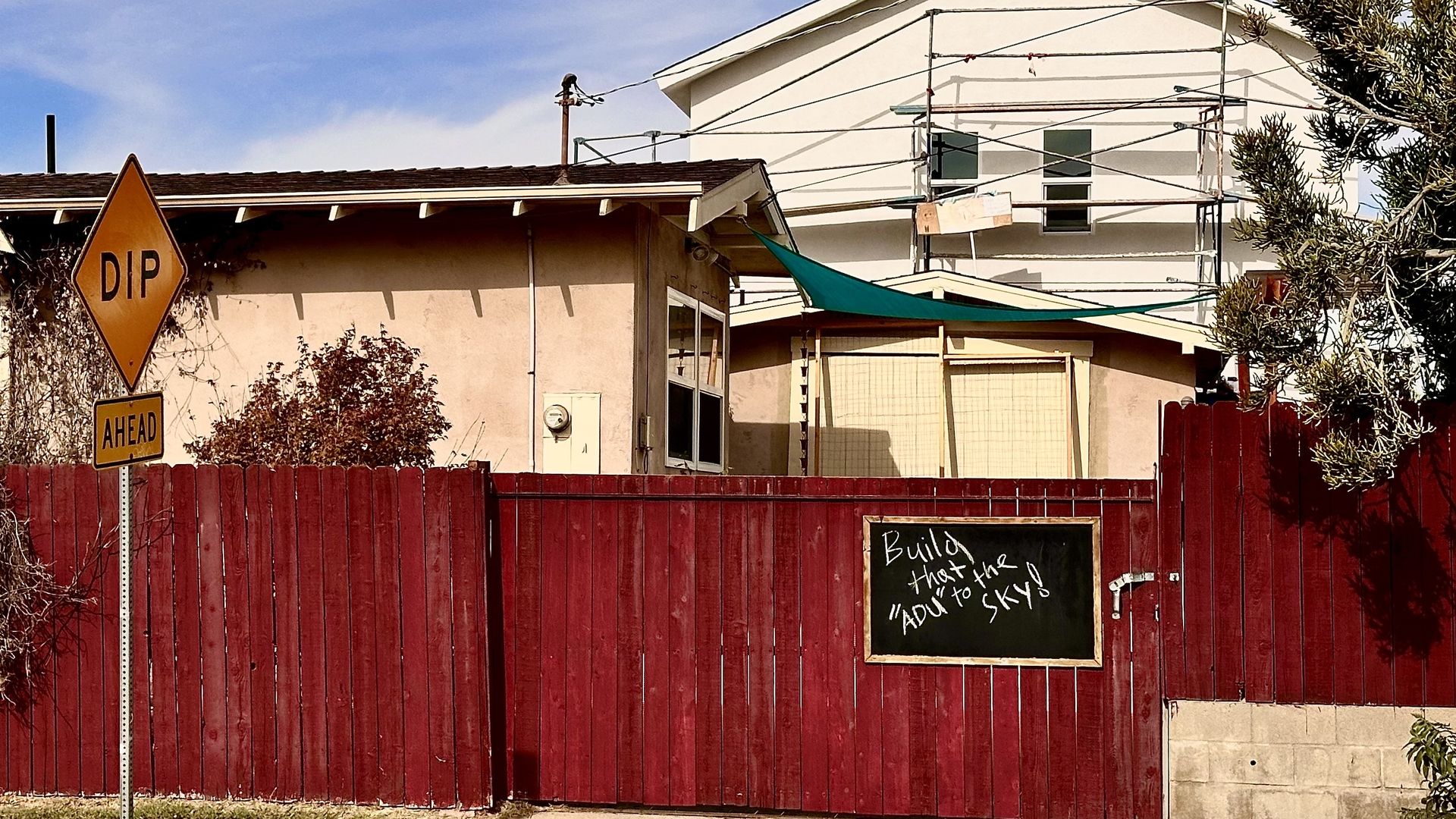
A homeowner in Normal Heights posted a sign protesting a neighbor's ADU. Photo: Andrew Keatts/Axios
Accessory dwelling unit development continues to surge in San Diego after years of changes that made them easier to build.
Why it matters: State officials have long pushed ADUs as a partial fix to California's housing crisis because they're relatively cheap to build, make efficient use of already-developed land and don't require infrastructure upgrades.
State of play: Granny flat permits nearly tripled last year, from 651 to 1,907, and represented almost 20% of all new-housing permits issued in the city's best year for housing development in decades.


By the numbers: In 2015, the city issued just four ADU permits. That figure jumped to 627 in 2019 as city planners reduced fees, expanded where ADUs could be built, streamlined approvals, eliminated parking requirements and more.
Zoom in: San Diego planners have received a lot of credit — and criticism — for a policy that lets developers build apartments in backyards via the state's ADU law.
- The 2021 "ADU bonus program" allows owners to build an extra unit for each ADU they agree to reserve for renters earning below a certain income threshold.
- In areas with frequent public transit service, the total ADUs on the property are limited only by other regulations, like building height.
Yes, but: Despite significant praise and opposition, the program does not yet represent a large share of the city's ADU permits.
- Of the aforementioned 1,907 permits issued last year, just 151, or about 8%, came from the bonus program.
- That could be changing, though. Only a few dozen permits were issued in 2021 and 2022.
Friction point: The city issued permits last year for 87 ADUs with income restrictions for future renters, but nearly all of those were for so-called moderate incomes, or people earning up to 110% of the area median.
- Just five units were reserved for people categorized as having low or very low incomes.
- Still, UC Berkeley's Terner Center for Housing Innovation touted the program's success at generating homes in the "missing middle" density range.
The other side: Neighbors for a Better San Diego, a group opposed to the city's development deregulation spur, argues the bonus program has caused developers to buy up single-family homes for their backyard apartment potential.
- "This program is inflating the cost of land and starter homes, not lowering rents," they write.
What we're watching: "With every change, you have to wait a number of years before a homeowner learns of it, understands it, gets financing and goes through with it," Heidi Vonblum, the city's planning director, told Axios.