Jan 18, 2024 - News
Farms fuel California's food surplus

Add Axios as your preferred source to
see more of our stories on Google.
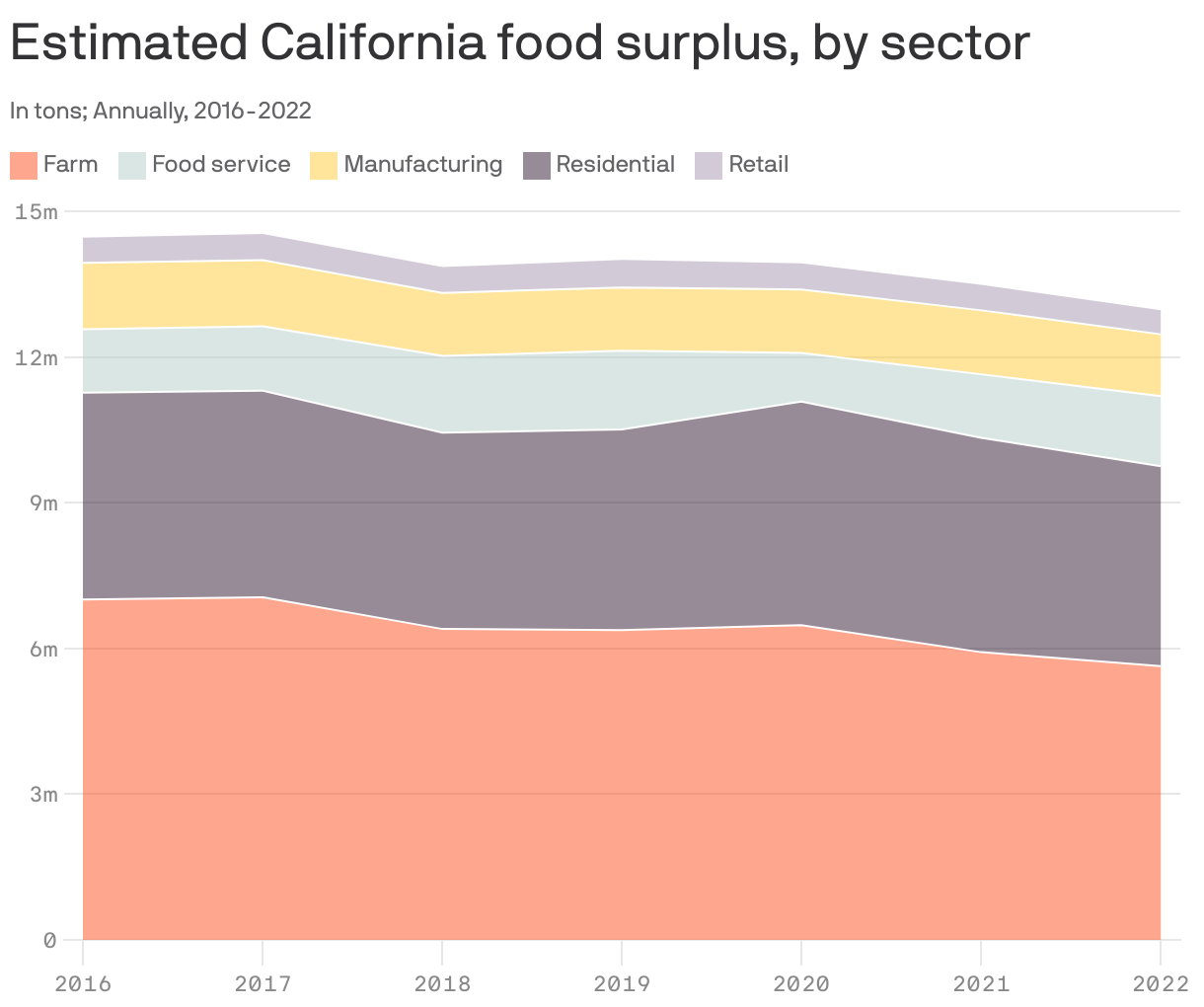
California farms are the biggest contributors to the state's food surplus, generating 44% of the 13 million tons collected in 2022, ReFED data shows.
Why it matters: The majority of surplus food becomes food waste, affecting the climate, food insecurity and personal finances.
By the numbers: Produce from those farms creates 5.64 million tons of surplus food, which also includes food that is composted, donated or fed to animals.
- 4.12 million tons (32%) are residential
- 1.44 million tons (11%) are from food service
What's happening: A 2019 study from Santa Clara University found that one-third of the hand-harvested crops grown in California are left in the field.
- The produce isn't picked for a variety of reasons, including pricing, labor costs and consumers and retail buyers not wanting imperfect fruits and vegetables.
Zoom out: Across the country, 88.7 million tons of food went uneaten or unsold in 2022.
- That's equivalent to nearly 145 billion meals, worth $473 billion.
- Residential waste made up 42.8 million tons, or 48%, of that total.