San Diego's scooter use crashed after city-imposed regulations

Add Axios as your preferred source to
see more of our stories on Google.
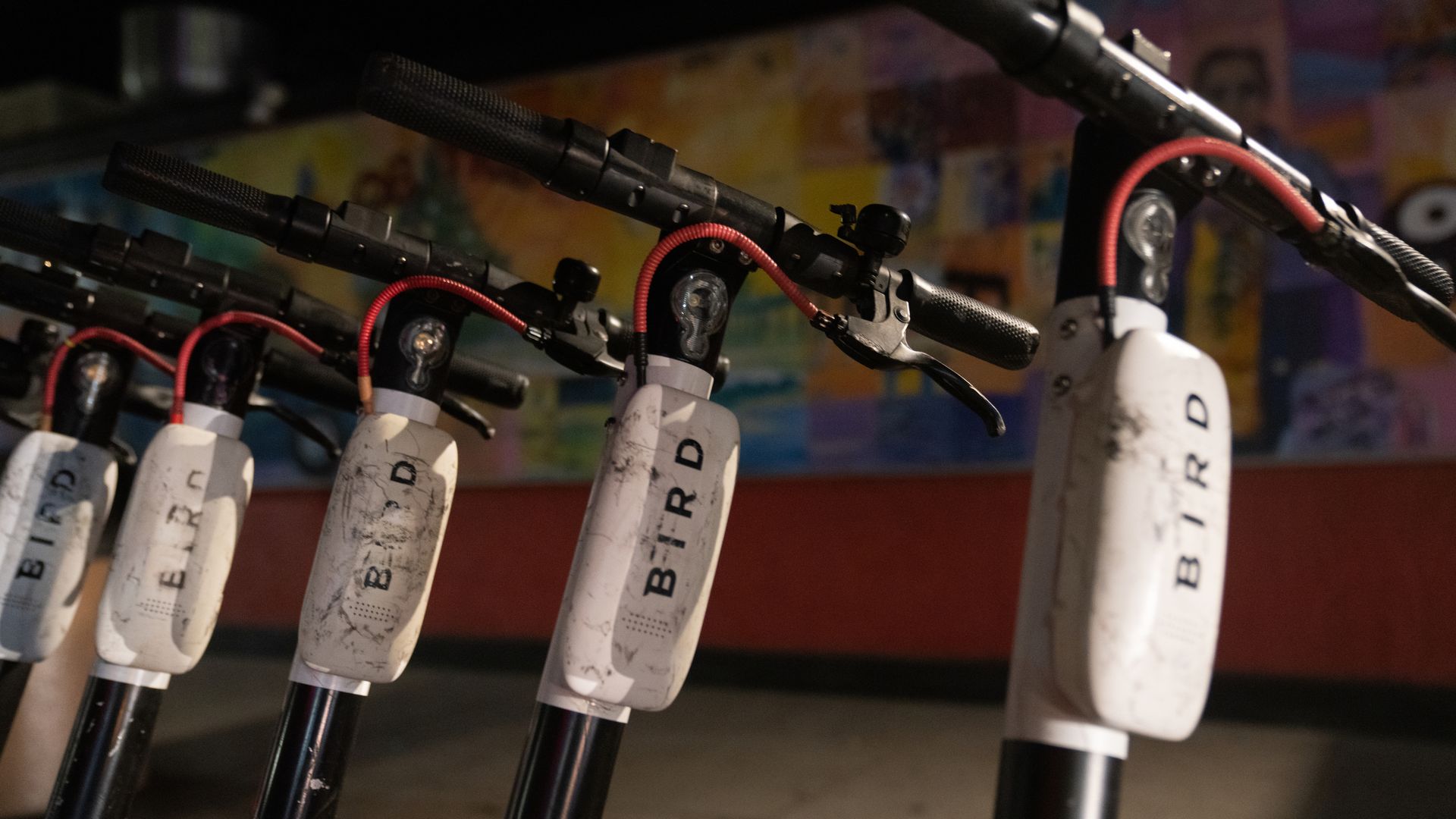
Bird Rides Inc. shared electric scooters in the Ocean Beach in May 2021. Photo: Bing Guan/Bloomberg via Getty Images
Shared electric scooter use is plummeting in San Diego.
Driving the news: Residents and visitors took 595,000 rides on shared bikes and scooters in the year that ended Aug. 1, after logging 3 million trips during the same period one year earlier, according to a new report from city staff.
- The city imposed new rules on scooter-share companies last August, inking contracts to operate here with just four companies, cutting the number of scooters and e-bikes on the roads from 11,000 to 8,000 and restricting users from riding or parking vehicles on sidewalks.
Why it matters: The city regulated the industry last year after the prevalence of shared scooters and e-bikes grew into a massive public debate, with scooters both figuring heavily into the 2020 mayoral campaign and generating national attention as a symbol of ride-sharing's growing pains.
- San Diego Mayor Todd Gloria took up for shared scooters while running for office, arguing they "could play an important role in meeting our city's climate action goals."
Yes, but: Those objectives call for the city to get 36% of residents to commute without driving by 2030, and 50% by 2035.
State of play: The city council's active transportation committee is hearing the new report on the first year of the regulatory regime on Wednesday.
- City staff notes only 15% of vehicles are located in the city's "communities of concern" — areas with low economic opportunity and high environmental disadvantage. The city hopes to increase that to 20% by the end of the year.
The other side: Jonathan Freeman, co-chair of the activist group Safe Walkways that has advocated for tougher city regulations, said the rules have helped, but remain imperfect.
- "The upshot of all of this is, the city needs to decide if motorized scooters make any sense as a part of a transportation system in San Diego," he said. "When it was a new thing, it was a fad and a fun thing to do. That's all faded now."
Freeman and his co-chair Janet Rogers have submitted their own eight-page report to the council committee outlining what they allege are continued failures by the companies to follow the city's rules.