Report: E. coli persists in Pittsburgh-area streams

Add Axios as your preferred source to
see more of our stories on Google.
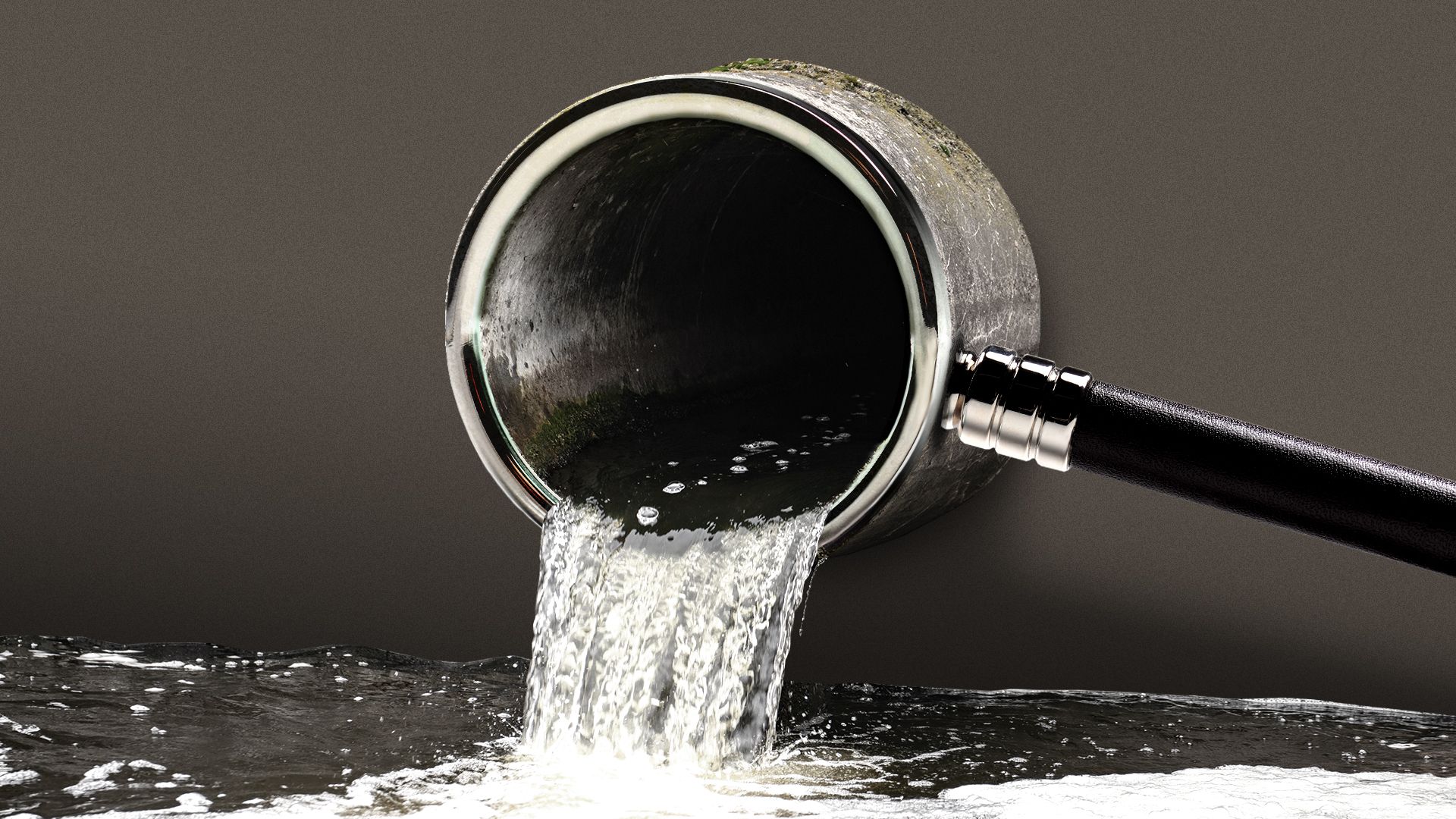
Illustration: Annelise Capossela/Axios
E. coli continues to limit recreation and elevate health risks in urban streams that feed into Pittsburgh’s rivers, per a new report.
Why it matters: It's one of a few reasons plenty of Pittsburghers are happy to kayak on our rivers but often draw the line at taking the plunge.
- Swimming in water contaminated with fecal bacteria like E. coli raises the risk of gastrointestinal and respiratory illnesses, among other health issues. E. coli can also signal the presence of other harmful pathogens, like Giardia, per the EPA.
The big picture: The report from environmental nonprofit PennEnvironment Research and Policy Center asks, “Are Pennsylvania’s rivers and streams safe for swimming?” A mapping tool shows potentially harmful fecal bacteria in waterways across the state.
- The study found that 55% of 650+ monitoring locations in Pennsylvania experienced at least one day when E. coli reached potentially unsafe levels for swimming in 2024-25.
Case in point: In Southwestern Pennsylvania, researchers found potentially unsafe levels in over 80% of samples collected at sites along Saw Mill Run, an Ohio River tributary, and 55% of samples taken from Streets Run, a Mon River tributary.
Zoom in: Common sources of bacteria like E. coli include stormwater runoff and sewer overflow, per the report. Overflow points can send stormwater mixed with raw sewage into waterways during heavy rain.
The fine print: Researchers considered samples “potentially unsafe” if at least one sample on a testing day exceeded the EPA’s Beach Action Value.
- Pennsylvania’s data came from the National Water Quality Monitoring Council’s Water Quality Portal alongside data provided to researchers.
The bottom line: The study’s authors urged governments to better invest in wastewater and stormwater upgrades and expand water monitoring, among other steps.
More resources: ALCOSAN posts sewer overflow alerts online and raises orange flags along the rivers, warning recreational users to limit water contact.
- Three Rivers Waterkeeper regularly tests popular river and tributary recreation sites for E. coli via its Swim Guide.