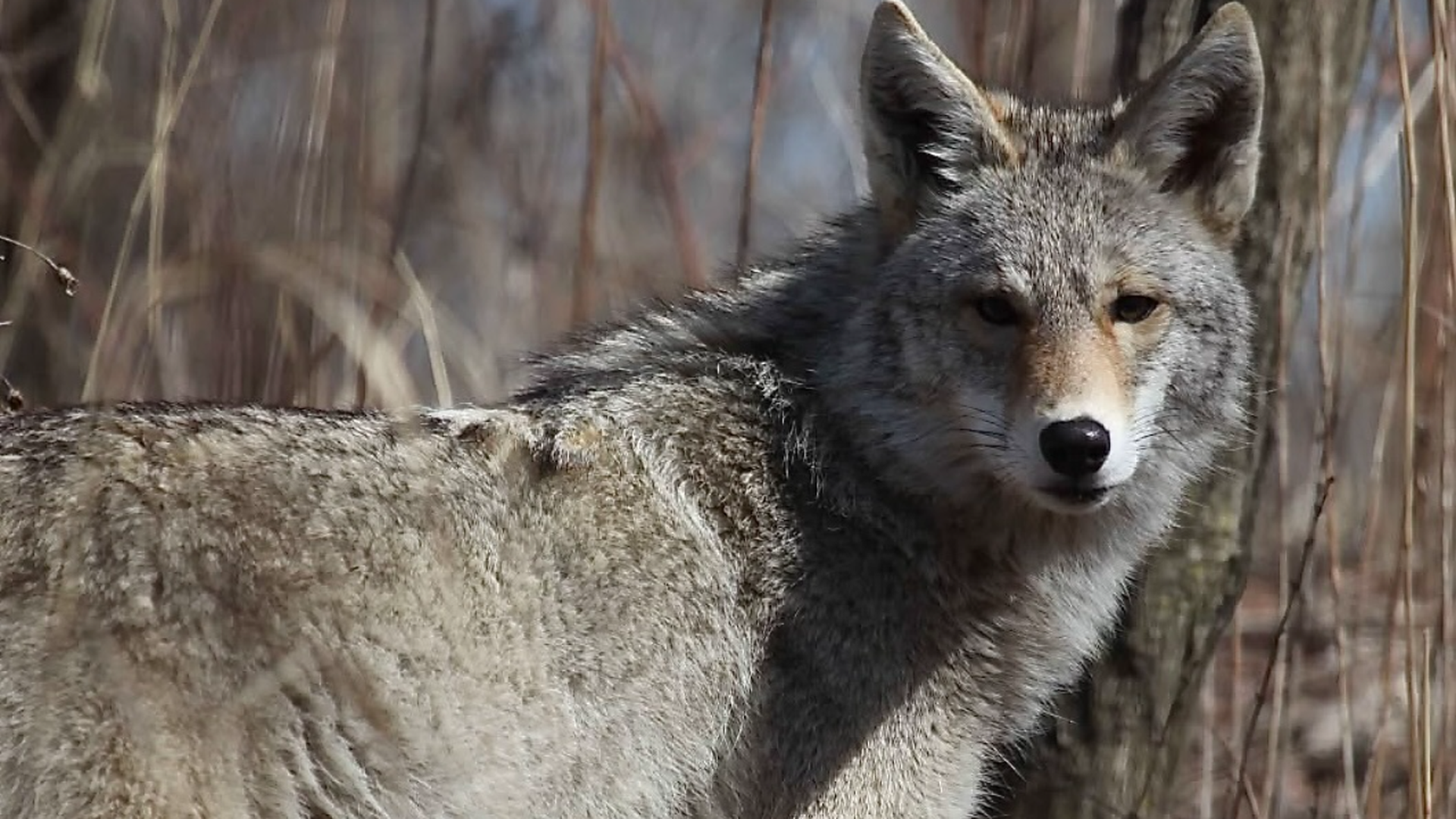
Eastern coyotes are larger than their western counterparts. Photo: Courtesy of Pennsylvania Game Commission
An unexpected neighbor might be closer than you think: Eastern coyotes roam all 67 Pennsylvania counties, including in Southwestern Pennsylvania.
The big picture: Coyotes have moved farther into urban and suburban settings in recent decades, though their instinct to avoid people means they're rarely seen.
A growing number of sightings have put them on more Pittsburghers' radar.
What to expect: Coyotes are medium-sized canines with pointed ears, a bushy, drooping tail and, typically, grayish-brown fur with reddish patches behind the ears.
Eastern coyotes are larger than their western counterparts, with adult males typically weighing 45 to 55 pounds, per the Pennsylvania Game Commission.
Coyotes rarely attack people and typically avoid humans. But sick, scared or food-conditioned animals can become aggressive, per the Game Commission.
Their diet consists mostly of roadkill and deer, small mice, voles, rabbits and other small mammals.
Keep garbage sealed tightly. Remove outdoor food sources like pet food and spilled bird seed. Rodents are drawn to the food, and coyotes are drawn to the rodents.
Keep pets close. Keep dogs leashed on walks and don't leave them unattended outdoors, even in fenced yards. Keep cats indoors. Coyotes are opportunistic predators that can mistake pets for their natural prey.
Don't run if you encounter a coyote. Shout and wave your arms until it leaves.
Call animal control or police only if the coyote appears injured, aggressive or is an immediate threat to public safety. Signs of aggression may include unprovoked barking, snarling, growling or lunging.
The bottom line: Even city dwellers can't escape nature entirely. Coexist — without letting your guard down.