Why Pitt students are tracking Artemis II

Add Axios as your preferred source to
see more of our stories on Google.
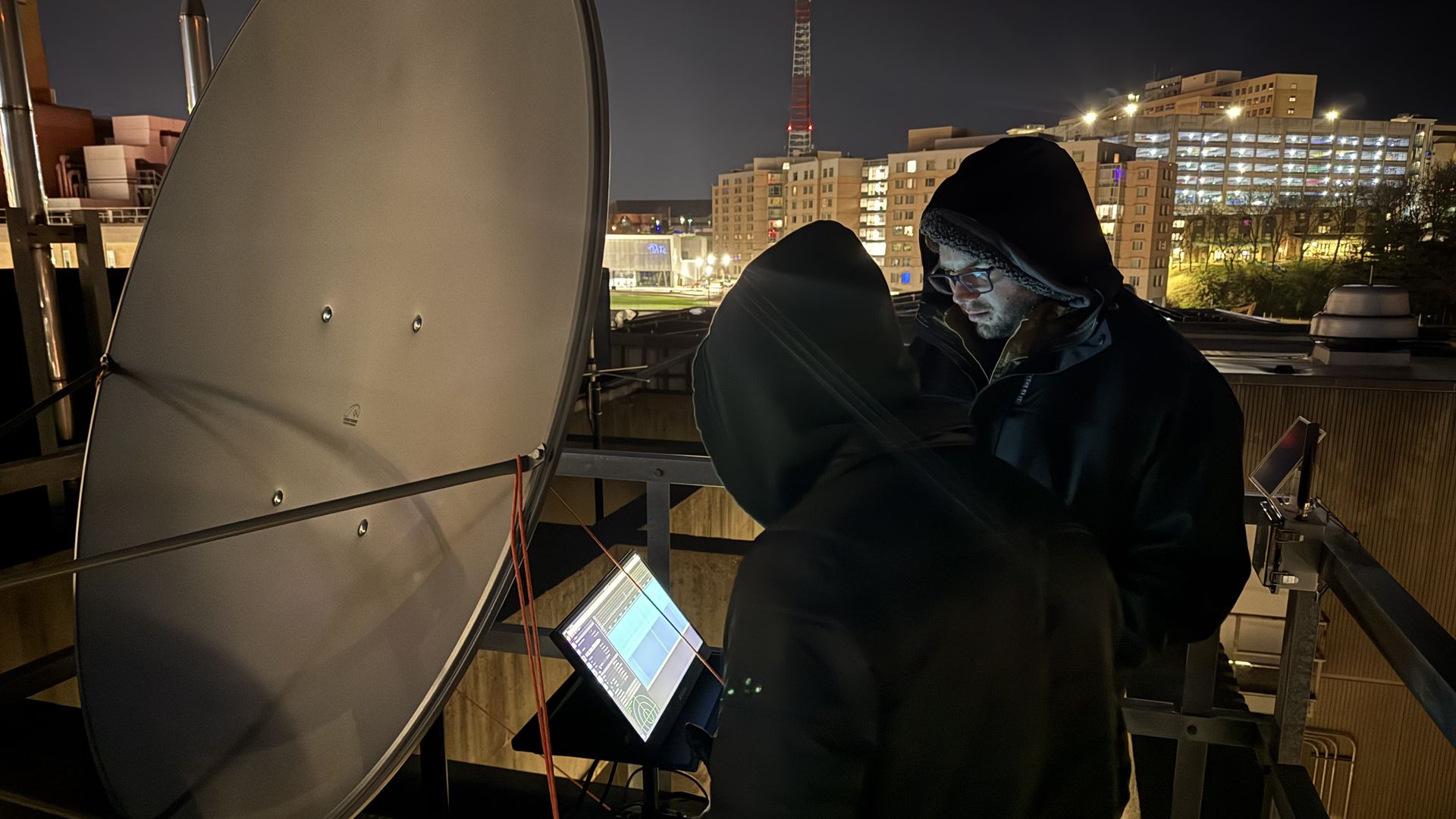
Jacob Wendt, right, and Sawyer Mervis look for a signal. Photo: Courtesy of Samuel Dickerson/Pitt
Yinzers are tracking Artemis.
The big picture: Artemis II set a distance-from-Earth record for human spaceflight Monday, and it's providing important learning opportunities for students in Pittsburgh and around the globe.
Zoom in: A group of students and faculty at the University of Pittsburgh is tracking Artemis II's radio frequency, faculty adviser and computer engineer professor Sam Dickerson tells Axios.
- Five students, led by Jacob Wendt and Sawyer Mervis, and three faculty advisers have been working for over a month to track the spacecraft.
- Yes, but: Dickerson says NASA is tracking Artemis II, and doesn't help, but wants to test private entities' ability to track spacecraft for potential commercial use.
Zoom out: NASA selected just eight academic institutions, including Pitt, to track Artemis II on its 252,760-mile journey around the moon and back.
- Pitt is the only institution in Pennsylvania to track.
How it works: Students built an antenna to track the spacecraft's radio frequency and, given Pittsburgh's place on the globe, only have select windows to try to pick up a signal, says Dickerson.
- They were out from 4am-6am Thursday trying to pick up a signal, for example.
- They take the information they gather and triangulate it with data provided by NASA and their position on Earth.
What they're saying: "You can think of it that they have a big walkie-talkie up there. … How strong the signal is helps to determine how far away it is," Dickerson says.
Between the lines: Pitt is home to The Center for Space, High-Performance and Resilient Computing, and Dickerson says the space tracking program helps remind people of the center's prowess and gives another boost to Pittsburgh's growing space industry.
What's next: Artemis II is set to splash down off the coast of San Diego at 8:07pm Friday.
- The Pitt team has terabytes of data to sift through over the coming weeks to determine the accuracy of their tracking.