Pittsburgh's allergy season is getting longer


Add Axios as your preferred source to
see more of our stories on Google.
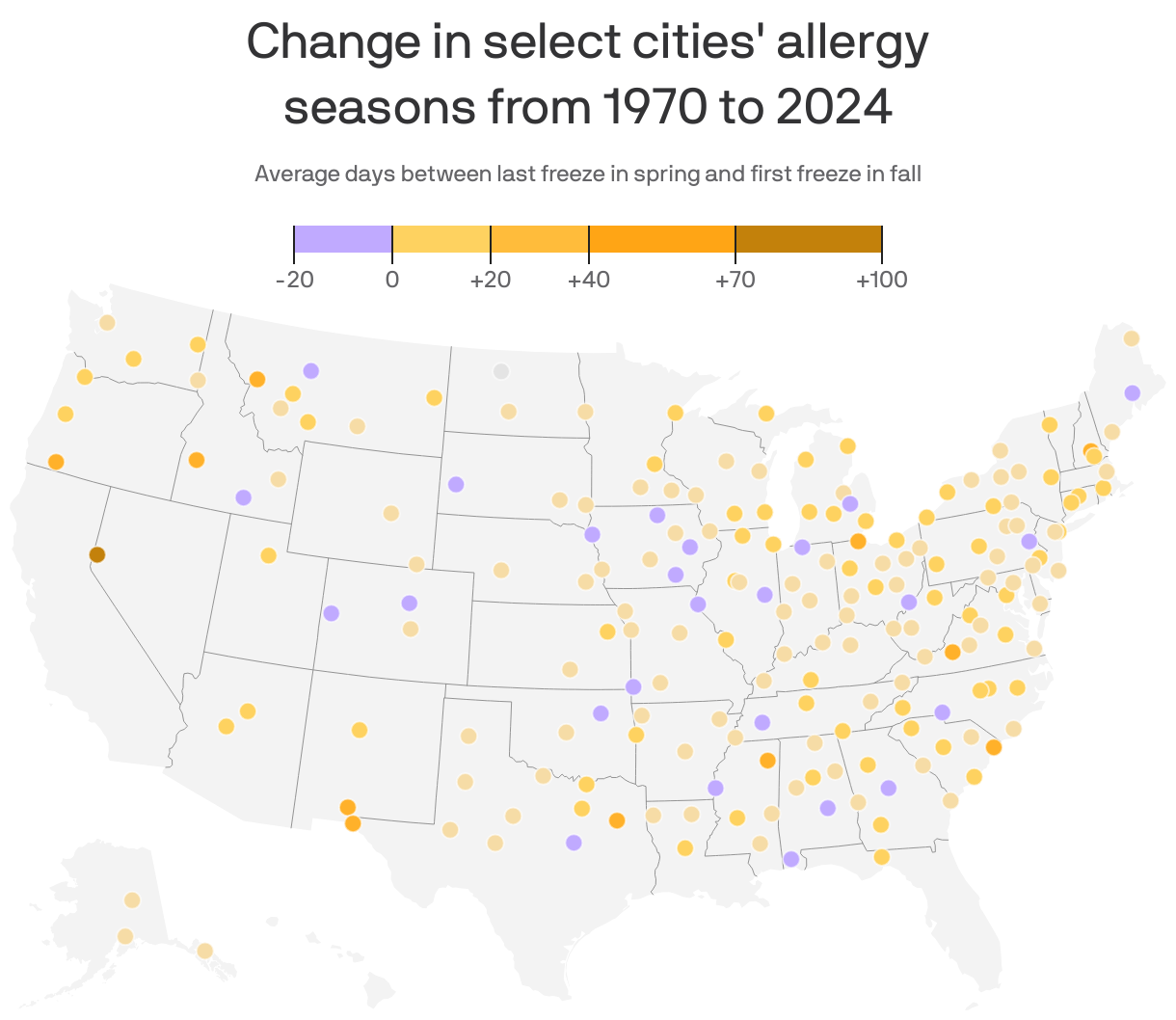
If you're breaking out the Claritin early, you're not alone. Pittsburgh's spring allergy season is getting longer and stronger.
Why it matters: About a quarter of U.S. adults swap fresh spring air for runny noses, itchy throats and puffy eyes as pollination season begins.
- Scientists say climate change-linked weather fluctuations, like heat waves during normally colder months, means earlier allergies.
Driving the news: The freeze-free growing season lengthened between 1970 and 2024 in nearly 90% of the 198 cities analyzed by Climate Central.
- Pittsburgh's freeze-free season grew by 22 days, slightly above the 20-day average among analyzed cities.
Between the lines: "Climate change makes pollen seasons not only longer, but also more intense due to heat-trapping pollution," per Climate Central's report.
- "Higher levels of planet-warming CO2 in the air can boost pollen production in plants, particularly in grasses and ragweed."
Zoom in: Pittsburgh's spring allergy season typically starts late March-early April. The region's pollen count currently remains on the low-medium end, per Pollen.com, but it's expected to rise in the coming weeks.
- Oak, elm, birch, walnut and maple trees, plus timothy grass, are among Pittsburgh's biggest triggers.
Rain doesn't always clear the air. Some pollen fragments can linger for up to 11 hours after heavy downpours and drift deep into the lungs, worsening allergies, per research supported by the National Science Foundation.
Worth noting: Pets can get seasonal allergies, too, often showing up as itchy skin. If your dog or cat starts licking or scratching more when spring rolls around, it might be time to check in with your vet.
How it works: Climate Central uses the freeze-free period, the number of consecutive days with minimum temperatures above 32°F, as a proxy for allergy season.
Threat level: Nationwide pollen production stands to dramatically increase alongside high CO2 pollution, per a 2022 study highlighted in the report.
The bottom line: Pass the tissues, would ya?