Pittsburgh's abolitionist history gains new spotlight

Add Axios as your preferred source to
see more of our stories on Google.
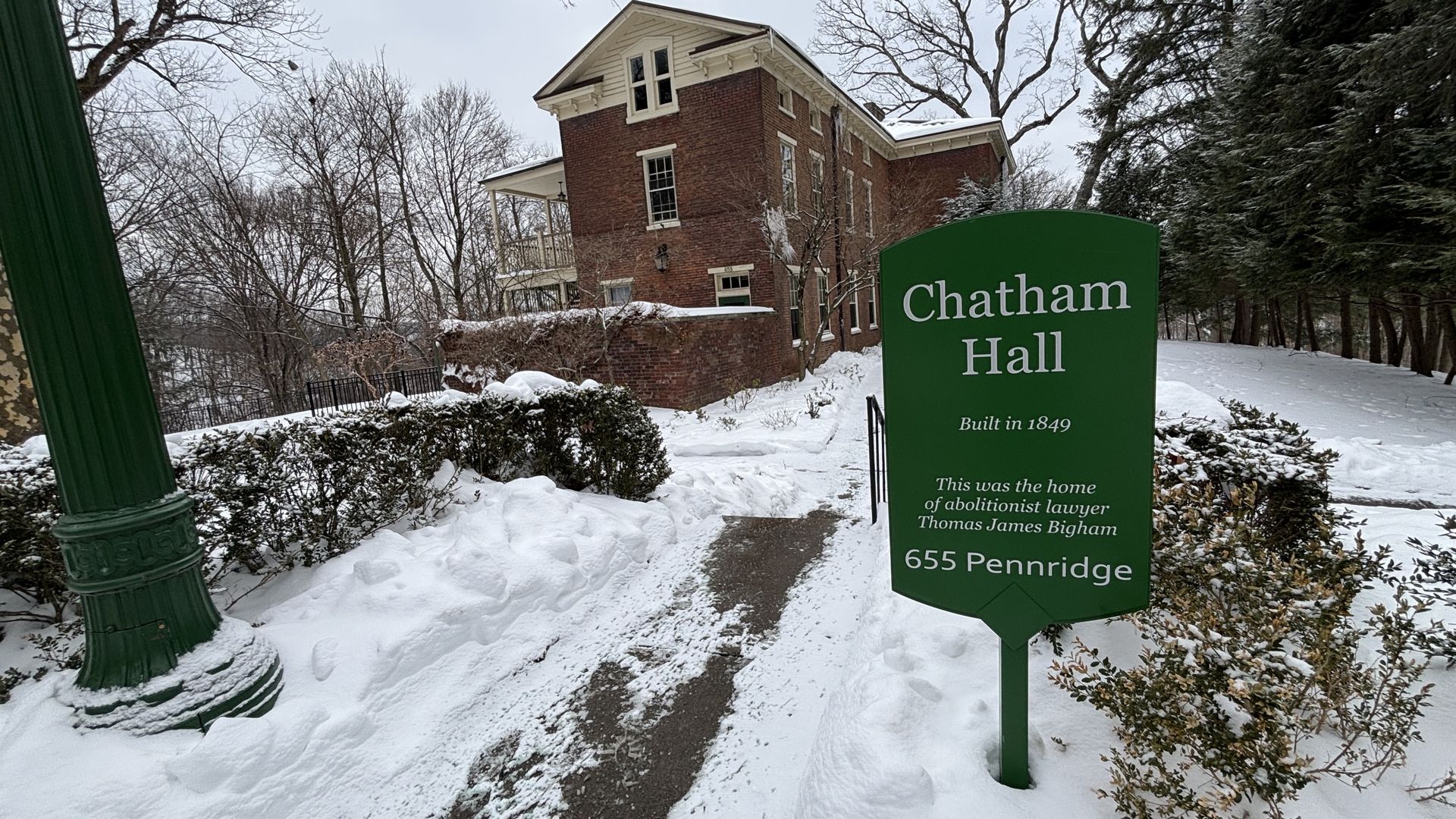
Mount Washington's Chatham Hall still stands today. Photo: Alexis Johnson/Axios
Pittsburgh's deep history with the Underground Railroad and abolitionist movement is still being uncovered.
Why it matters: The city's role in abolishing slavery hasn't been widely taught, Museum of African American History at the Heinz History Center associate curator Alonna Carter-Donaldson told Axios.
The big picture: Southwest Pennsylvania attracted Black people who were enslaved and seeking freedom due to its proximity to states that held slaves like Virginia and Maryland, as well as its throughways to northern areas such as Erie and Canada, Carter-Donaldson said.
- Pittsburgh's rivers also offered an opportunity for freedom seekers to travel unnoticed.
Driving the news: The city honored John B. Vashon, a Pittsburgh barbershop and bathhouse owner who spent decades fighting for the anti-slavery movement, through a Black History Month exhibit in the City-County building.
Flashback: The Hill District, Downtown and Mount Washington were main hubs for abolitionist work throughout the city via church groups, community spaces and harboring sites.
- Bethel A.M.E. Church, the oldest Black congregation in Pittsburgh, was established in the Hill District in 1808. Abolitionist Lewis Woodson served there as a pastor while co-founding the Pittsburgh African Education Society with Vashon.
- A historical marker dedicated to the church's civil rights contributions can be found on First Avenue Downtown.
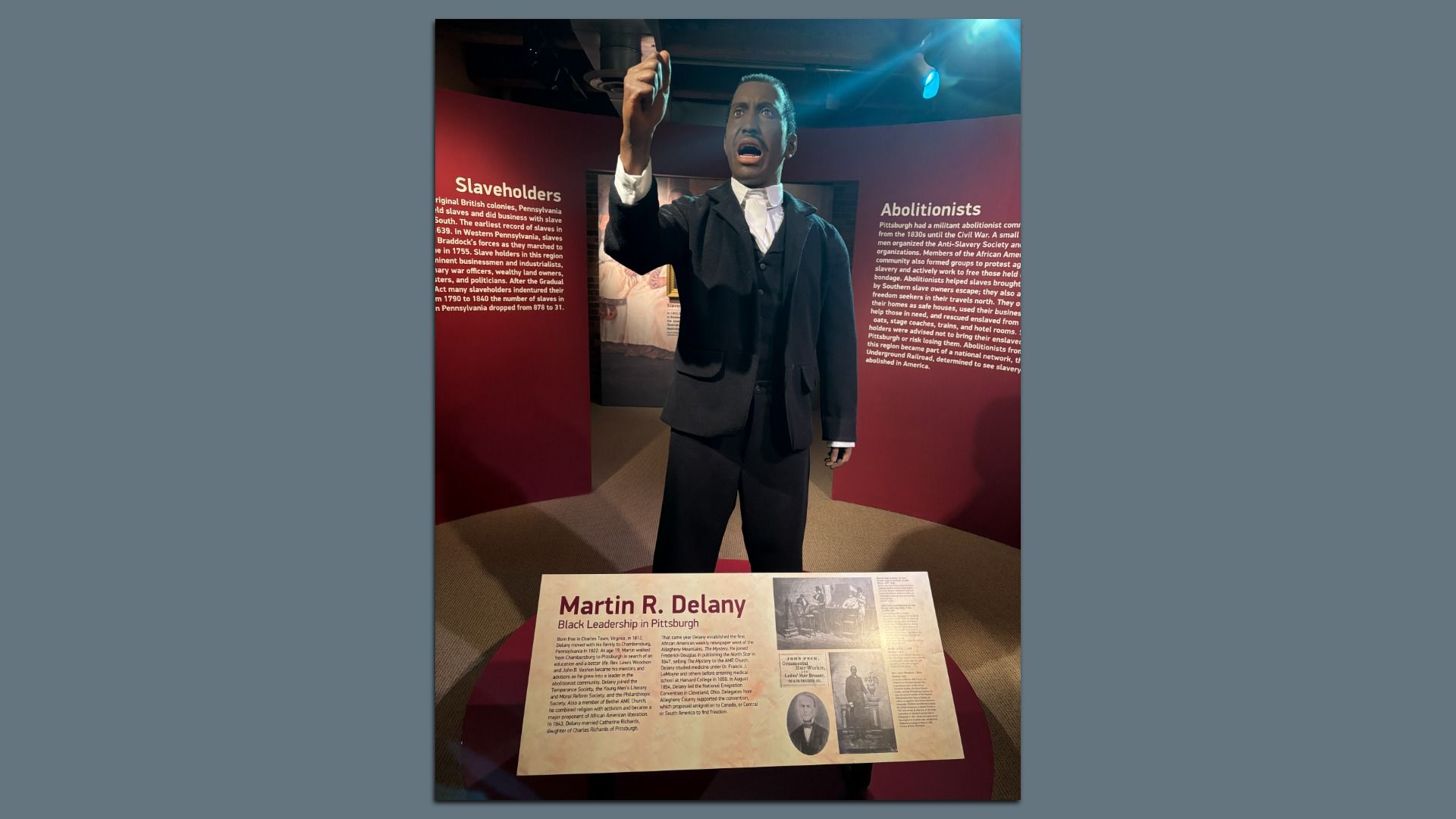
Zoom in: In 1831, Martin R. Delany settled in Pittsburgh and went on to become a researcher, writer and activist. After years of tutelage under Woodson, he founded The Mystery newspaper, the first Black paper west of the Allegheny Mountains. A historical marker honoring Delany sits in PPG Plaza.
- Westmoreland County native, abolitionist lawyer and legislator Thomas Bigham owned a home in Mount Washington that still sits in Chatham Village where he harbored escaped enslaved people. Bigham House served as a station on the Underground Railroad and is a designated historic landmark.
What they're saying: Carter-Donaldson said the history center's "From Slavery to Freedom" exhibit helps shed light on the contributions of Black people during Western Pennsylvania's abolition movement.
- "Knowing this history helps people feel included and involved and perhaps will make people feel that Pittsburgh is a place for them as well."
If you go: The "From Slavery to Freedom" exhibition explores more than 250 years of African American history in Western Pa. on the fourth floor.