New PIT terminal won't guarantee more flights

Add Axios as your preferred source to
see more of our stories on Google.
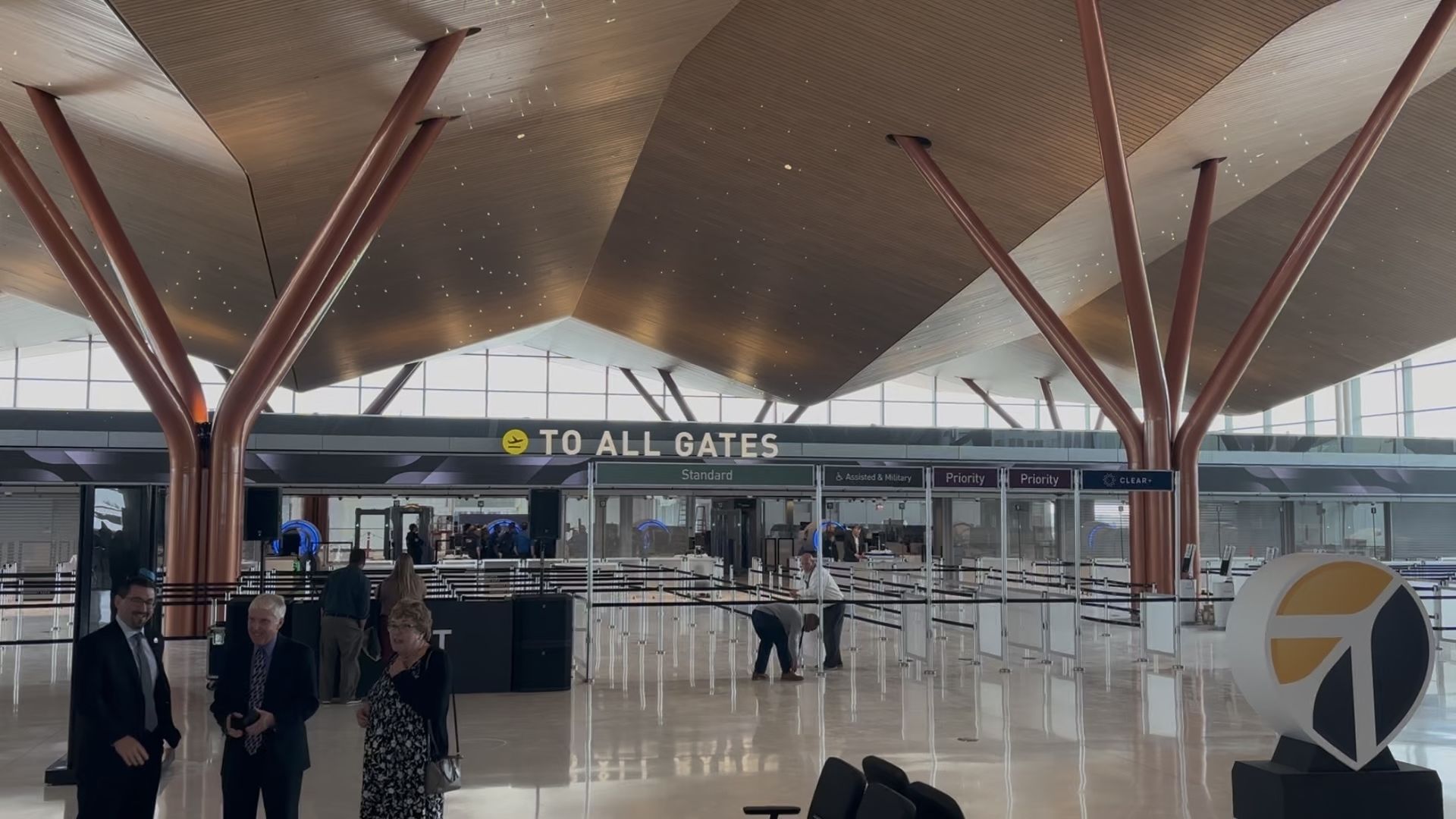
The new security gate at the revamped PIT landside terminal. Photo: Ryan Deto/Axios
Allegheny County officials are wowed by the new $1.7 billion terminal at Pittsburgh International Airport but are hesitant to promise it will lead to more flights soon.
Why it matters: PIT has been steadily increasing nonstop destinations since its low point more than a decade ago, and residents are hungry to return to hub days when it served more than 100 destinations.
What they're saying: Allegheny County Executive Sara Innamorato told Axios the airport upgrades will help add flights, but not on their own.
- She said they will help Pittsburgh boost its image to outsiders, particularly when hundreds of thousands visit for next year's NFL draft.
- "We want people to see what else we have to offer, and maybe they will leave here and look at us to invest," she said.
PIT CEO Christina Cassotis agrees that continuing to market Pittsburgh as a worthwhile destination is the main ingredient to grow service.
- "We will get more service if the market grows," she told Axios, adding that the new terminal "can show that more is possible."
State of play: The airport can support more seasonal European destinations and warm-weather stops, Cassotis said.
- But year-round destinations and cities that are less touristy are harder to get, she said.
By the numbers: The airport serves 62 destinations, according to officials.
- PIT served only 36 destinations shortly after it lost its hub in 2014.
Flashback: Now-defunct US Airways based its main hub at PIT between 1979 and 2014.
- Traffic peaked in the mid-1990s, when passengers eclipsed 20 million a year.
Context: PIT had 4.8 million passenger boardings in 2024, the 48th most in the nation, according to Federal Aviation Administration data.
The bottom line: Innamorato said the region needs to boost its tourism and attract more venture capital investment, and thus business travelers, to add more nonstop destinations with increased business travel.
- The region's hotel occupancy was just 89% of pre-pandemic levels and lagged behind the national average in the third quarter of 2024, according to data from the Allegheny Conference on Community Development.