Carnegie gets Walk of Fame star along with scrutiny

Add Axios as your preferred source to
see more of our stories on Google.
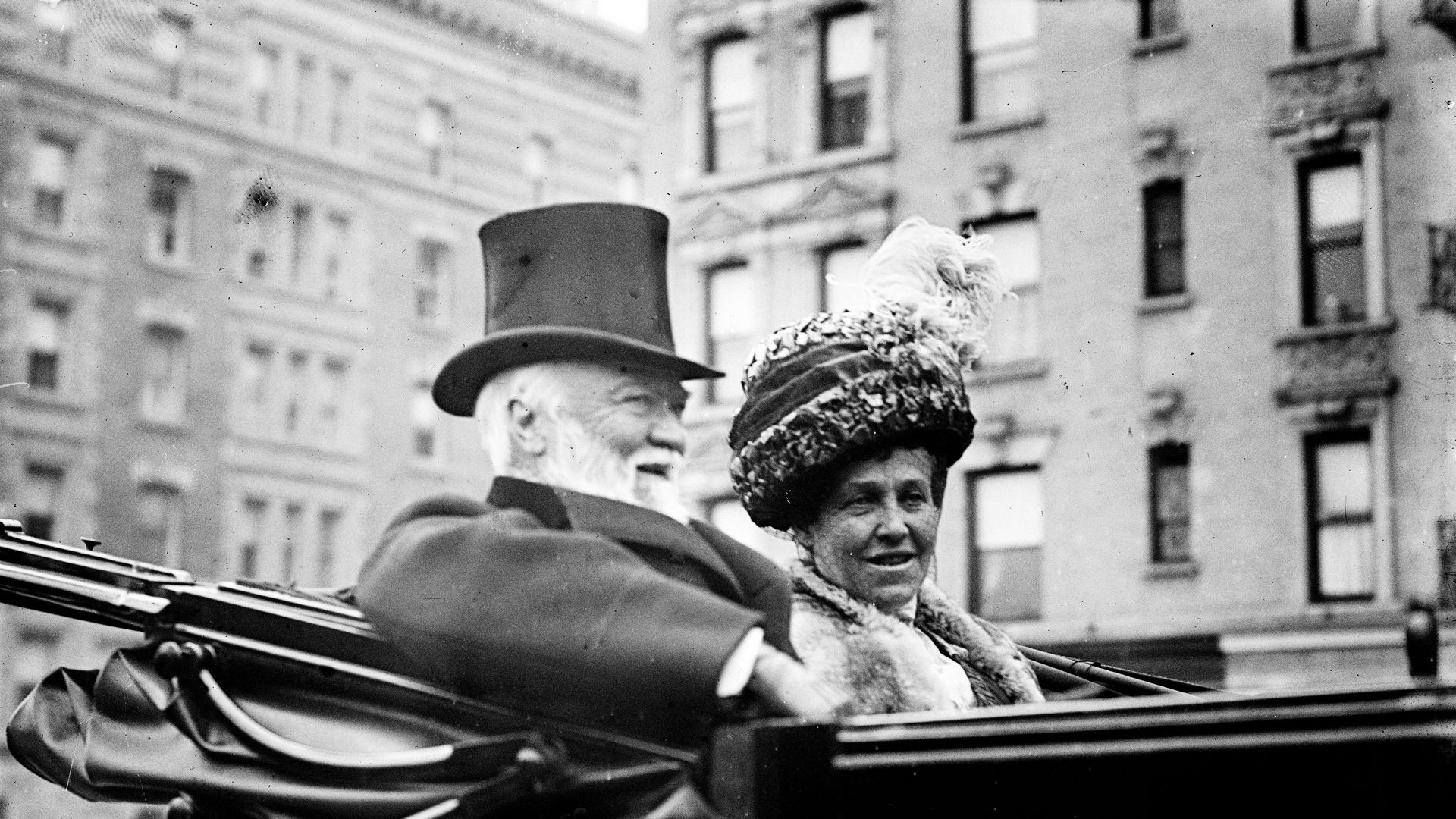
Andrew Carnegie and his wife, Louise, in the early 20th century. Photo: Universal Images Group via Getty Images
The inaugural Pittsburgh Walk of Fame is giving Andrew Carnegie a star, but some say his legacy deserves an asterisk — taking aim at the prominent industrialist's checkered past.
Why it matters: The debate reflects a larger question: How do we remember our most influential figures without ignoring the darker chapters of their lives?
Catch up quick: The first inductees, including Fred Rogers, August Wilson, Rachel Carson and Jonas Salk, will be given bronze stars in the Strip District.
- Chosen through public nominations and vetted by more than 100 local leaders, the walk celebrates Southwestern Pennsylvanians who helped shape the nation and invites out-of-towners to discover their stories.
Driving the news: While some Axios Pittsburgh readers and social media users have praised the inaugural class as a reflection of the area's national impact, others criticized Carnegie's inclusion, citing his role in the violent Homestead Strike, support for eugenics research, and his ties to the deadly Johnstown Flood.
What they're saying: "Andrew Carnegie was a robber baron who profited from exploiting miners and their families. Living and working conditions were horrific," TikToker @jenevivebrady said.
- "I'm proud of my Pittsburgh heritage, and I do recognize the beautiful additions to this great city that Carnegie contributed," she later added. "But that's after he gained his wealth from the backs of immigrants and the working class. I just believe those who sacrificed their lives to make Pittsburgh great should be acknowledged."
The other side: Those tasked with selecting this year's inductees discussed the full scope of Carnegie's story, but ultimately recognized his contributions — from more than 2,000 libraries and museums to the founding of Carnegie Mellon University, Walk of Fame founder Nancy Polinsky Johnson said.
- Few capitalists of his era, she said, championed the idea that the wealthy have a moral duty to give back.
- The Scottish immigrant-turned-steel magnate gave away his fortune to fund libraries, schools, museums, scientific research and more, Johnson noted, adding his inclusion reflects a philanthropic impact that shapes the nation today.
Between the lines: "It's something everyone acknowledges, and it's true of our founding fathers," she said. "We could go down the list of the complicated legacy of people who are noteworthy in America. But there's no question that Andrew Carnegie's philanthropy was extremely valuable not just to this region, but to the world."
What's next: The Walk of Fame induction ceremony will be held at 10:30am on Oct. 20 at the Strip District Terminal.