Sound healing takes root in Pittsburgh

Add Axios as your preferred source to
see more of our stories on Google.
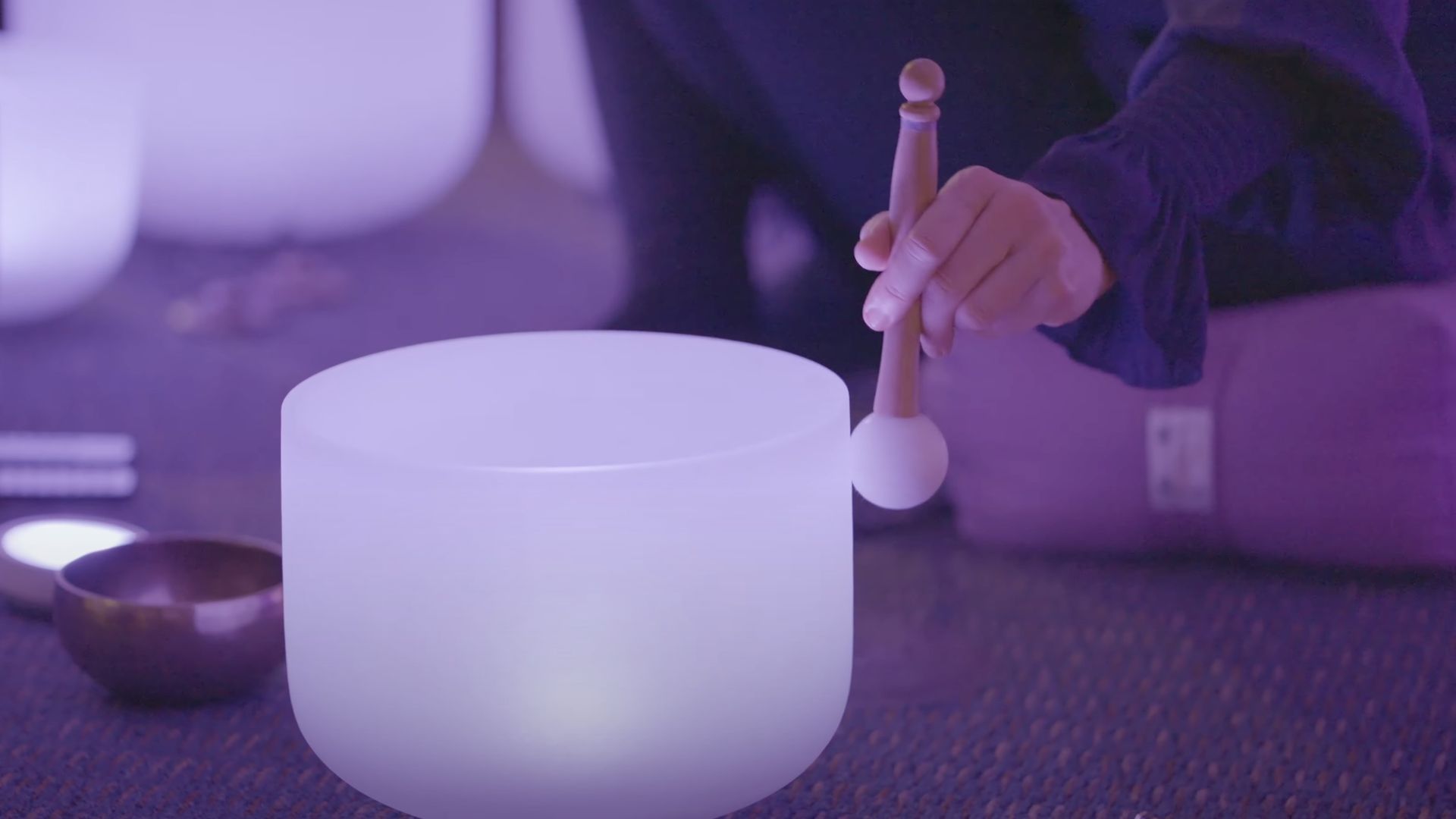
Monique Mead hosts regular sound baths at her studio in Shadyside. Photo: Courtesy of Carnegie Mellon University
Sound healing is catching on in Pittsburgh, and self-care seekers say it's more than just noise.
Why it matters: Sound baths, a form of guided meditation using layered instruments like gongs, singing bowls and chimes, aren't just a wellness trend here — they're the subject of academic study.
- Early research shows the practice may help ease anxiety and stress and improve sleep, similar to music therapy.
State of play: World-renowned Pittsburgh violinist Monique Mead is working alongside local research institutions to expand the science behind sound baths and train students to take the lead.
Zoom in: Mead, who is also Carnegie Mellon School of Music's director of music entrepreneurship, started hosting sound baths three years ago as a practitioner at the Awareness and Wellness Center in Shadyside — enticing maxed-out minds of all ages.
- Once a skeptic, Mead attended her first sound bath in Mexico a decade ago. She says the deep, droning tones of rubber mallets on singing bowls quickly quieted her racing mind.
- "It was a very powerful experience as a musician to realize that it can have that immediate effect on the mind," Mead tells Axios.
How it works: Participants at Mead's studio unwind on mats or bean bags as she leads a live, hour-long sound bath using violin, quartz crystal singing bowls, gongs and percussion to "bathe" the room in a sea of calming sounds.
- "People respond in many ways," she says. "Some say they feel lighter afterward, others enter a deep relaxation or feel a sense of 'timelessness,' and some cry or process grief."
The intrigue: A group of CMU students launched the on-campus Scottie Sound Bath two years ago after attending Mead's sessions — making it the first university in the U.S. to establish an in-house sound bath program, she says.
- Mead's guidance helped launch a similar program at the University of Pittsburgh, which will fuel research into topics like sound healing's affect on students' test scores.
Reality check: Sound baths, drawn from centuries-old Eastern traditions, have yet to gain a solid scientific footing and are not often used in clinical settings.
- Recent peer-reviewed studies show possible mental health and cardiovascular benefits from singing bowls — but call for more research.
Yes, but: American medicine is already embracing the fundamentals of sound healing through music therapy.
- A number of hospitals use music to ease pre-surgery nerves, and research shows listening to music may even speed up recovery, among other benefits.
By the numbers: A Scottie Sound Bath co-founder partnered with a Pitt Public Health researcher last year to survey 200 participants.
- After one session, reported stress levels dropped from 76% to 22%, and exhaustion levels fell from 78% to 28%, per CMU.
What's next: Mead is creating a sound bath app with guided sessions.
- She occasionally leads large-scale sound baths at venues like Heinz Chapel and will host an outdoor session in Schenley Park on June 29.
If you go: Register for a sound bath at the Awareness and Wellness Center, 5541 Walnut St. in Shadyside. Sessions are $35.