What opioid use disorder costs Pennsylvania


Add Axios as your preferred source to
see more of our stories on Google.
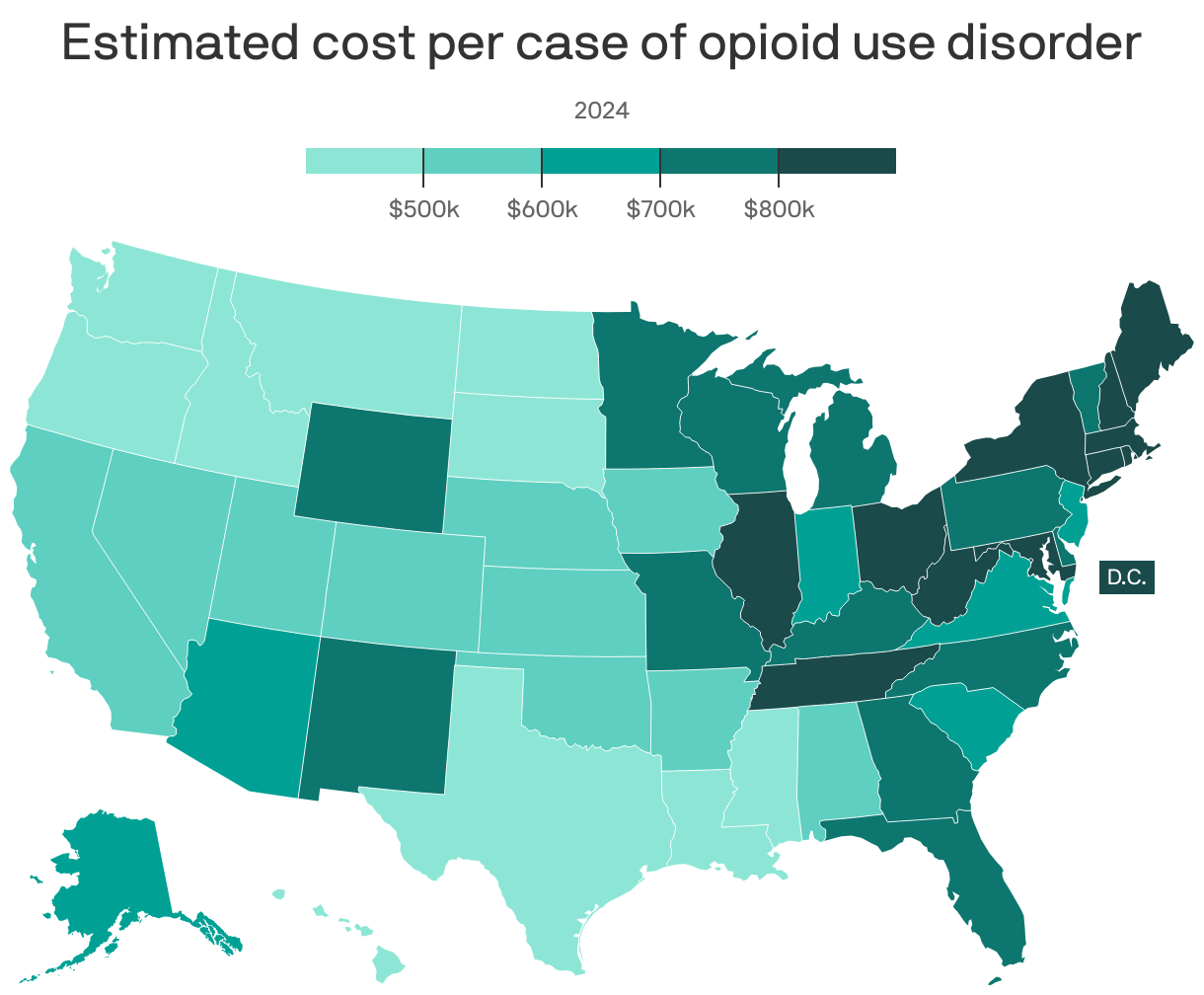
Opioid abuse is as much an economic problem as a public health crisis, according to a comprehensive analysis provided first to Axios that shows Pennsylvania spends nearly $730,000 on each such case.
Why it matters: The cost burden falls unevenly across the country, with states in a belt stretching through Appalachia to New England typically having bigger caseloads and a higher cost per case.
Context: Opioid use disorder — defined as frequent opioid use and unsuccessful efforts to quit — is estimated to affect more than 6 million people in the United States, costing the nation an estimated $4 trillion last year, per health care consulting firm Avalere Health.
Zoom in: At $728,200, Pennsylvania's average cost per case is higher than the national average, per the analysis from Avalere, which used 2017 figures to project 2024 net costs.
- Pennsylvania patients bore more than $177 billion in costs from reduced quality of life and statistical loss of life.
- Businesses absorbed more than $28 billion in costs from lost productivity and health insurance costs.
What they're saying: "While this is a cost to governments, it's also a cost to private businesses, and the huge cost, of course, is to the individuals who have OUD," said Margaret Scott, a principal at Avalere and author of the report.
State of play: Pennsylvania will receive more than $1 billion over 18 years in a settlement with major U.S. opioid distributors and manufacturers to further address the opioid crisis.
Zoom out: The projected cost of opioid use disorder in 2024 ranged from $419,527 per case in Idaho to more than $2.4 million in D.C. That covers lost productivity, health insurance costs, property lost to crime and other variables.
- The total average annual cost associated with each case nationally is nearly $700,000.
- Some of the regional variation in costs is from lost tax revenue, which varies by state, and the local availability of treatment for opioid use disorder.
By the numbers: The cumulative economic burden on patients, including years of life lost and reduced quality of life, exceeded $3 trillion in 2024, Avalere estimated.
Between the lines: Overdose deaths in the U.S. fell to the lowest level since 2019 last year, partly due to expanded availability of the overdose reversal drug naloxone.
- Drug overdose deaths in Pennsylvania dropped 31% last year, per preliminary CDC data.
The bottom line: Some addiction experts say cuts to federal grant funding and other program changes led by Health and Human Services Secretary Robert F. Kennedy Jr. could hurt addiction recovery programs.