Zoning fight could be slowing Pittsburgh development

Add Axios as your preferred source to
see more of our stories on Google.
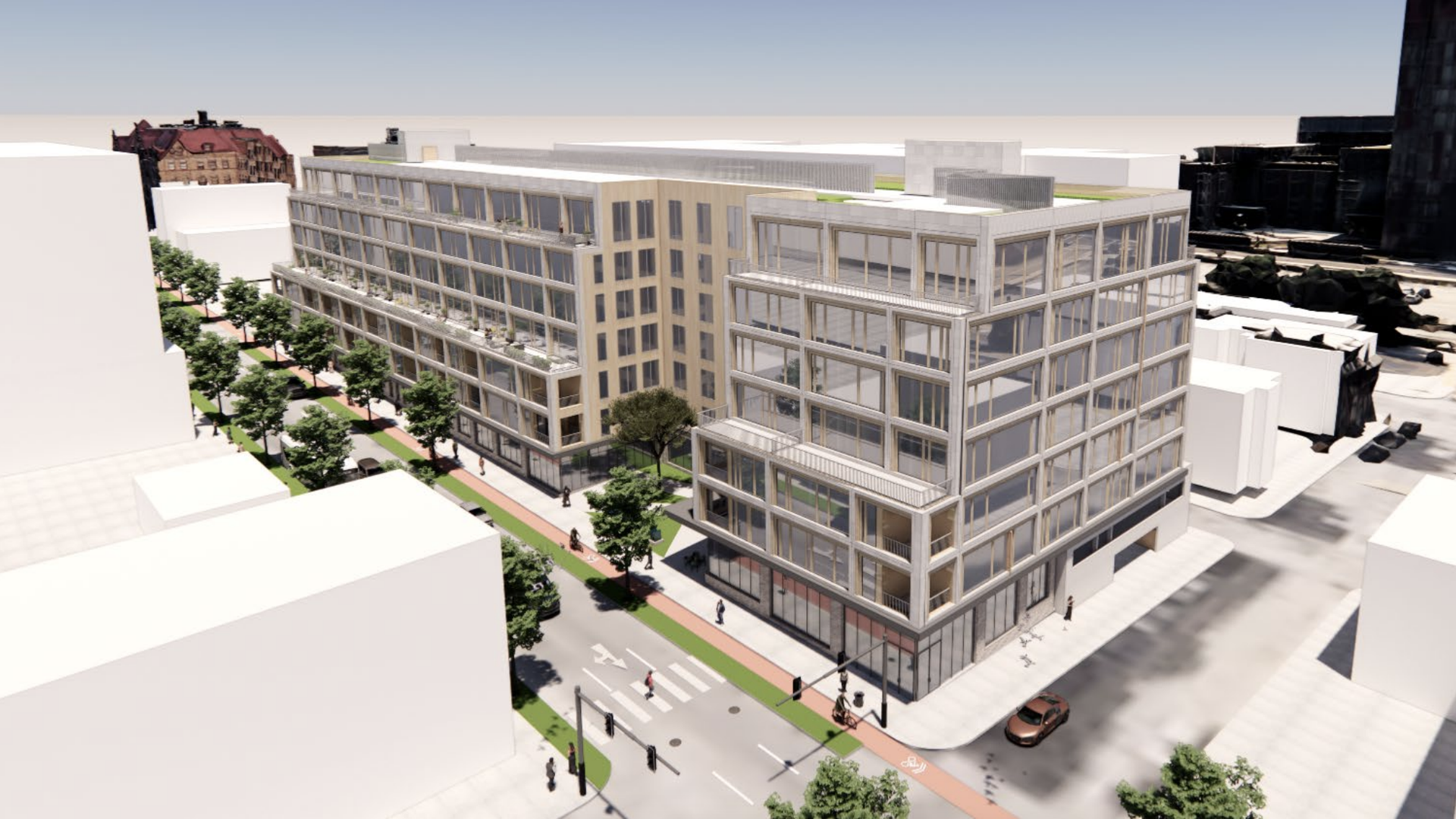
This seven-story project in Uptown is on pause as inclusionary zoning drama plays out. Image: Courtesy of GBBN
A zoning rule requiring developers to build a percentage of affordable housing could be slowing development across the city.
Why it matters: Pittsburgh, like most U.S. cities, is struggling with rising housing costs, and policymakers are at a crossroads to figure out the best way to boost the supply of affordable housing.
Context: Mayor Ed Gainey wants to expand inclusionary zoning (IZ) citywide, requiring developments of 20 units or more to set aside 10% of units for residents making about $17 an hour or less working full time. The city currently has IZ requirements in Lawrenceville, Bloomfield, Polish Hill and parts of Oakland.
- Others on City Council and Gainey's challenger, Corey O'Connor, think inclusionary zoning shouldn't be mandatory citywide, and they advocate for boosting the supply of market-rate and affordable units to lower housing demand, and thus prices.
State of play: Because the mayor's plan is being countered by a more lenient IZ bill that would allow neighborhoods to opt in or out, his plan currently applies to projects under consideration due to the "pending ordinance" rules in the city code, per the mayor's office.
- His office said City Council must act to vote on both bills so developers don't see as much confusion.
Driving the news: Scott Stough, CEO of Cincinnati-based Stough Group, tells Axios that his 196-unit mixed-use development in Uptown is on pause due to the requirements.
- He said the $100 million project was submitted last year, prior to Gainey's IZ plan, but the affordability requirement is being applied and it's too costly to move forward.
- "My family has owned that property since 1983 and were investing in Uptown for the long haul," he said. "But [the IZ proposal] really makes us think twice about developing in Pittsburgh."
Between the lines: Dennis Allen of Portland-based real estate investment firm Wolverton Capital, which invests in the Industry Pittsburgh apartment complex in East Liberty, said Pittsburgh's inclusionary zoning is causing investment firms to look at other cities.
- He understands that IZ proponents believe developers have enough profit to pay for permanently affordable units, but he said construction costs are too high.
- "You can take away all the profit … [and] you would not be able to get apartments affordable for people who make the area median income," he said.
Stough said his group could afford a different 5% affordability requirement that applies to his seven-story project in Uptown, but anything beyond that would require some financial incentives like tax breaks, citing moves the city has made in Downtown.
- Ultimately, he would prefer that Pittsburgh crafted policies to allow more market-rate housing to flourish, which has been shown to lower rents in Austin and Minneapolis.
The other side: Gainey's office said his bill offers density and height bonuses to help shrink developers' costs, as well as existing programs through the city's Urban Redevelopment and Housing authorities.
- "We believe that our legislation, if adopted and placed fully into effect, strikes an appropriate balance between providing protections to our residents and flexibility for developers," said city spokesperson Cydney Cooper.
Yes, but: City Council member Erika Strassburger said new city housing policies must address costs so developers don't flee. Strassburger, who endorsed Gainey's opponent, said she believes inclusionary zoning can be a successful tool but should include some kind of financing that would most likely be tax breaks.
- "There is this misnomer that developers are rolling in cash," she said. "No, they are getting bank loans, and IZ throws that off a bit. That is why we need to help finance the gap."
What's next: Strassburger said City Council is eyeing some moves to help developers like Stough, who proposed their projects before inclusionary zoning was submitted but still must comply.
- "We have to get it exactly right and do it quickly so there is not this question like what is happening in Uptown," she said.