How locals are pushing back against Trump

Add Axios as your preferred source to
see more of our stories on Google.
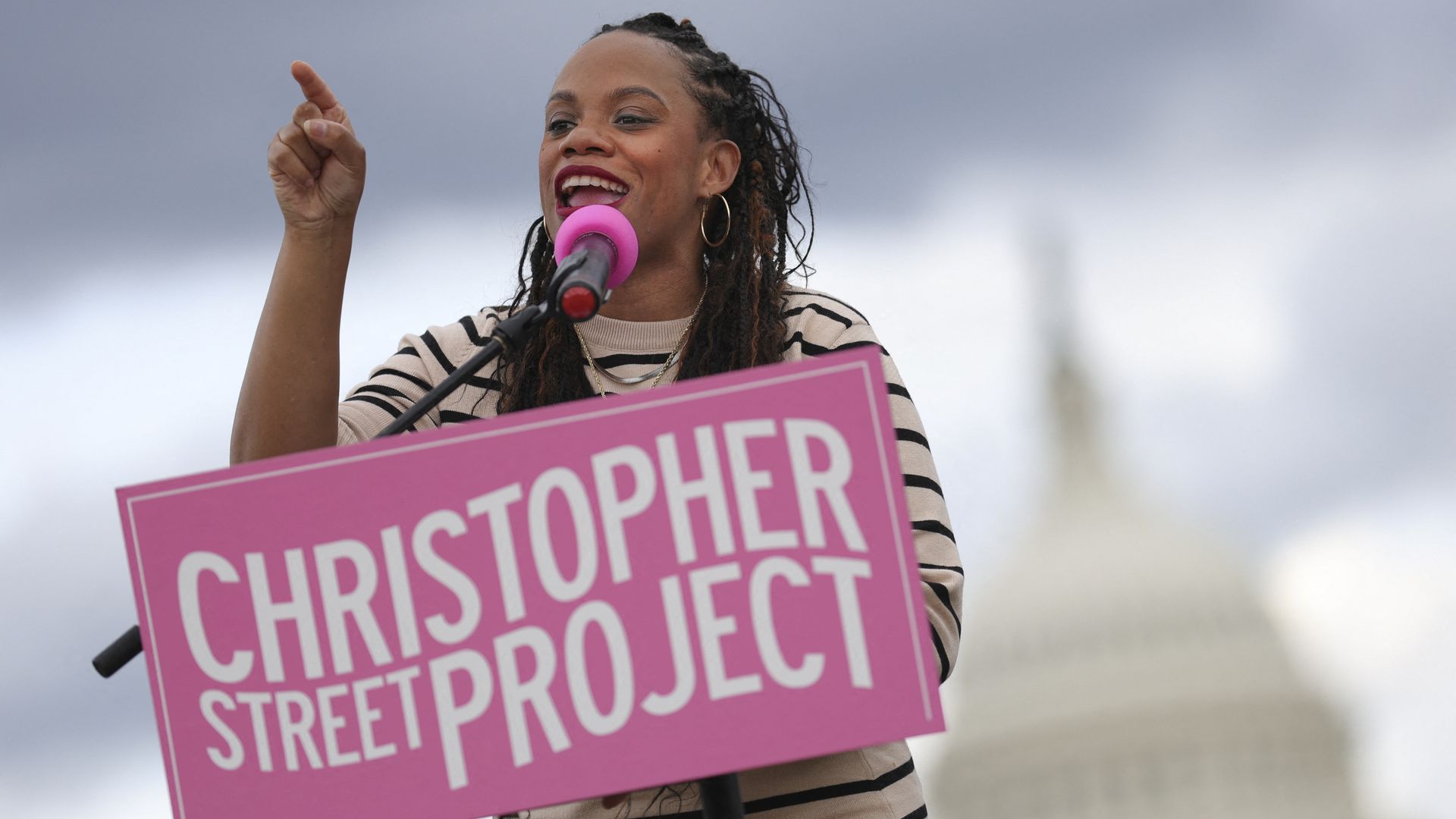
U.S. Rep Summer Lee speaks at the Trans Day of Visibility Rally in March. Photo: BRYAN DOZIER/Middle East Images/AFP via Getty Images
Pittsburgh Democrats are using what power they have to combat President Trump's attacks on the Steel City's universities, nonprofits and LGBTQ+ community.
Why it matters: The Trump administration's push to strip federal funding through DOGE and other federal agencies is having a strong impact on Pittsburgh institutions.
What they're saying: U.S. Rep. Summer Lee (D-Swissvale) said at an April town hall meeting in Pittsburgh that local forces must organize labor unions and activists to push back against Trump and Republicans until Democrats have a chance to retake some power in the midterms next year.
- "What we're seeing from the Trump administration isn't just politics as usual. It's a full-blown assault on our rights, our voices, and our communities."
- Lee led more than 100 congressional reps to sign a letter demanding the EPA reverse its March decision to eliminate regional environmental justice offices and programs.
Catch up quick: The National Institutes of Health announced billions in cuts nationally, causing anxiety from local health research funding recipients like the University of Pittsburgh and potentially disrupting $2.5 billion in economic impact for the region.
- Carnegie Mellon could face funding cuts after being targeted in a federal DEI probe and being one of six universities asked by a federal committee to provide detailed information on international students with ties to China-based institutions.
- The Greater Pittsburgh Community Food Bank is expected to slash its distribution by 13% following the elimination of a federal loan program.
- UPMC has stopped providing gender-affirming care for patients under 19 in response to an executive order from Trump.
Allegheny County Executive Sara Innamorato has joined three lawsuits against the Trump administration, including one that challenges the NIH funding cuts, per the county solicitor.
- The county opened a portal in March hoping to attract people laid off from federal jobs to jobs in county government.
- Innamorato announced county funding for refugee resettlement after local agencies saw their funds frozen by the Trump administration.
- "I'm proud that Allegheny County is a welcoming community," she said in February. "We want immigrants and refugees to put down roots here and succeed."
Mayor Ed Gainey said at the April town hall that the political frontlines are not just in the nation's capital, "they're right here in Pittsburgh."
- Gainey also launched a portal to attract laid-off federal workers and joined several lawsuits against Trump.
- He pledged in January that Pittsburgh Police would not cooperate with ICE, except when presented with valid criminal warrants.
- The mayor signed two executive orders in March to combat housing discrimination even as Trump rolled back the Affirmatively Furthering Fair Housing rule.
Reality check: Barring successful lawsuits, Democrats can't do much to stop the Trump administration from cutting programs and its other attacks unless they retake the House or Senate.
The other side: Republican Sen. Dave McCormick took a nuanced stance on some cuts the region was seeing, particularly the NIH cutbacks. He said he met with local universities and told them he doesn't support axing existing grants midstream.
- "Let's not do anything disruptive, because we don't want to upset the research enterprise, which has been so valuable to America and so valuable to Pittsburgh," McCormick told reporters last week while in Ross.
- But he defended Trump's authority to make the cuts, and he added that local universities should be more introspective of their own budgets.
The bottom line: These battle lines are likely to continue until the midterms in 2026 as Trump has shown a proclivity for executive action, and it doesn't appear to be slowing down.