Medicaid and SNAP cuts could slash Pa. jobs


Add Axios as your preferred source to
see more of our stories on Google.
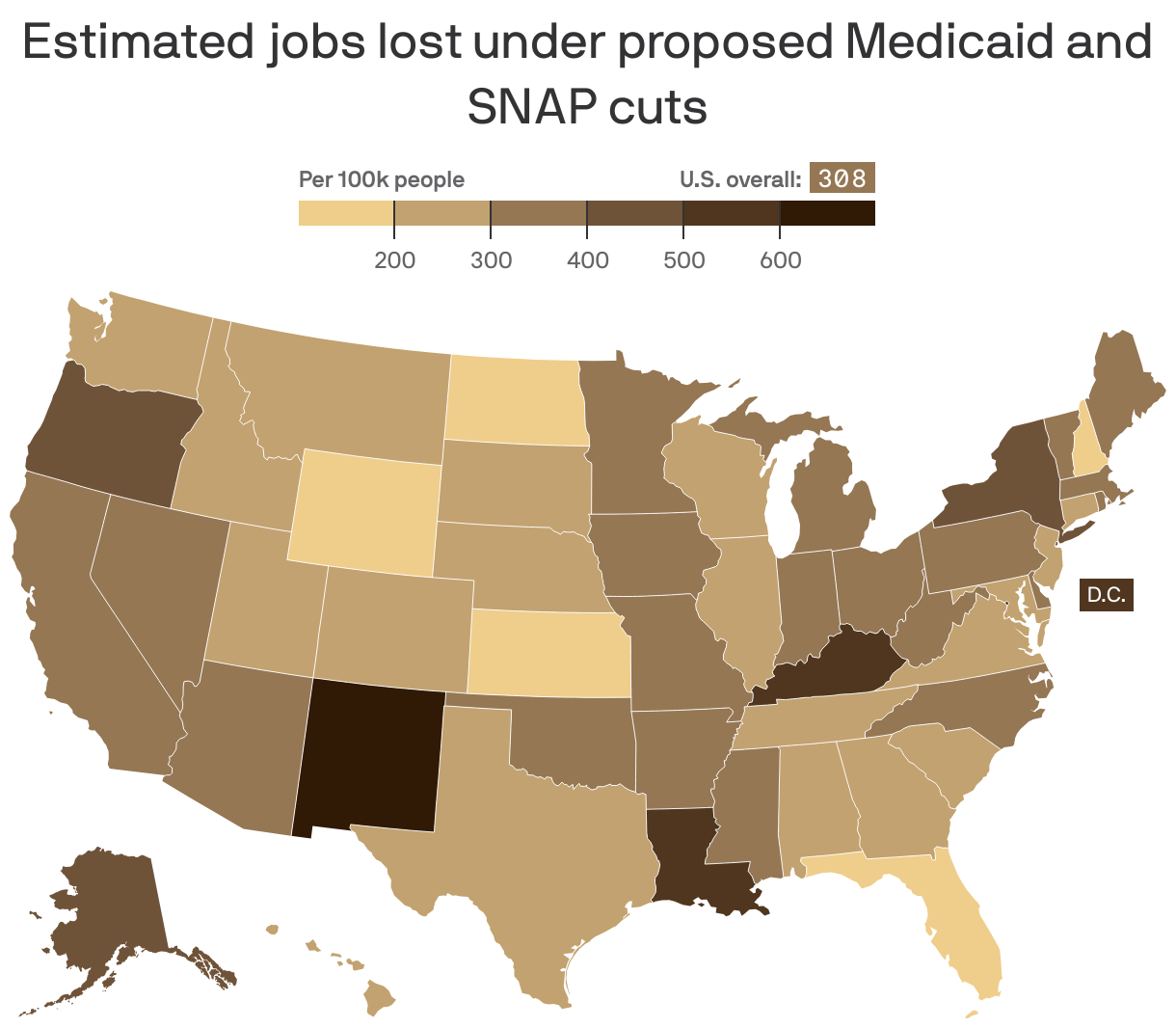
Pennsylvania could lose nearly 49,000 jobs and see its GDP shrink by $5.3 billion under potential federal budget cuts to SNAP and Medicaid, a new report estimates.
Why it matters: Millions of Pennsylvanians rely on federal financial assistance, but direct recipients of Medicaid payments and SNAP benefits are hospitals, pharmacies, nursing homes, grocery stores and more.
- Cuts in federal funding would shrink revenue for those businesses and their employees, rippling across other supply chains, including food producers and medical equipment suppliers.
Driving the news: The U.S. House of Representatives' latest budget resolution calls for more than $1 trillion in combined cuts to programs overseen by the House commerce and agriculture committees, including Medicaid and the Supplemental Nutrition Assistance Program (SNAP).
- The details of any such cuts would need to be sorted out in Congress; the Senate has not yet worked out its own budget blueprint.
By the numbers: Medicaid covers approximately 3 million Pennsylvania residents — 23% of the population.
- More than 2 million Pennsylvanians — 15.4% of the population — participate in the SNAP program.
- Almost 58% of SNAP participants in the state are in families with children, and more than 44% are in families with older adults or people with disabilities.
- Roughly 250,000 people are enrolled in Medicaid in Allegheny County.
Zoom in: A new analysis from the Commonwealth Fund and the George Washington University Milken Institute School of Public Health estimates the economic consequences of major Medicaid and SNAP cuts.
- The researchers' estimates assume $880 billion and $230 billion in broad Medicaid and SNAP cuts over 10 years, respectively, spread out evenly among all states.
What they found: In 2026 alone, such cuts could cost more than 1 million jobs nationally, cause a $113 billion drop in combined state GDPs and result in nearly $9 billion in lost state and local tax revenue, the researchers estimate.
- The hit to state GDPs would exceed the estimated $95 billion in federal savings achieved through such cuts, the report finds.
Zoom out: In terms of job losses, New Mexico (about 634 per 100,000 people), Kentucky (579) and Washington, D.C., (560) could be the hardest-hit areas.
- Pennsylvania could lose 376 jobs per 100,000 people.
Caveat: Actual cuts to Medicaid and SNAP could wind up being smaller.
What they're saying: "Slashing these programs will worsen health outcomes for all Americans, and particularly for people with chronic conditions who rely on Medicaid for ongoing care," says Commonwealth Fund president Joseph Betancourt.
- "The ripple effect will hit the entire health care system and impact everyone — not just those with Medicaid — driving more people to emergency rooms and further straining an already overburdened system."
- At a virtual forum on Medicaid's future earlier this month, former Pennsylvania DHS Secretary Teresa Miller warned that Medicaid funding cuts could devastate small, rural hospitals by increasing uncompensated care, noting many older adults rely on Medicaid to fill Medicare gaps.
- Advocates for disability rights say reducing Medicaid funding would strip Pennsylvania's most vulnerable of the opportunity to lead independent, fulfilling lives.
The bottom line: The latest polling shows broad support for leaving Medicaid untouched or increasing spending, even among Republicans — numbers that may give some lawmakers pause before approving big cuts.