Brush Creek advocates fight sewers and stigma

Add Axios as your preferred source to
see more of our stories on Google.
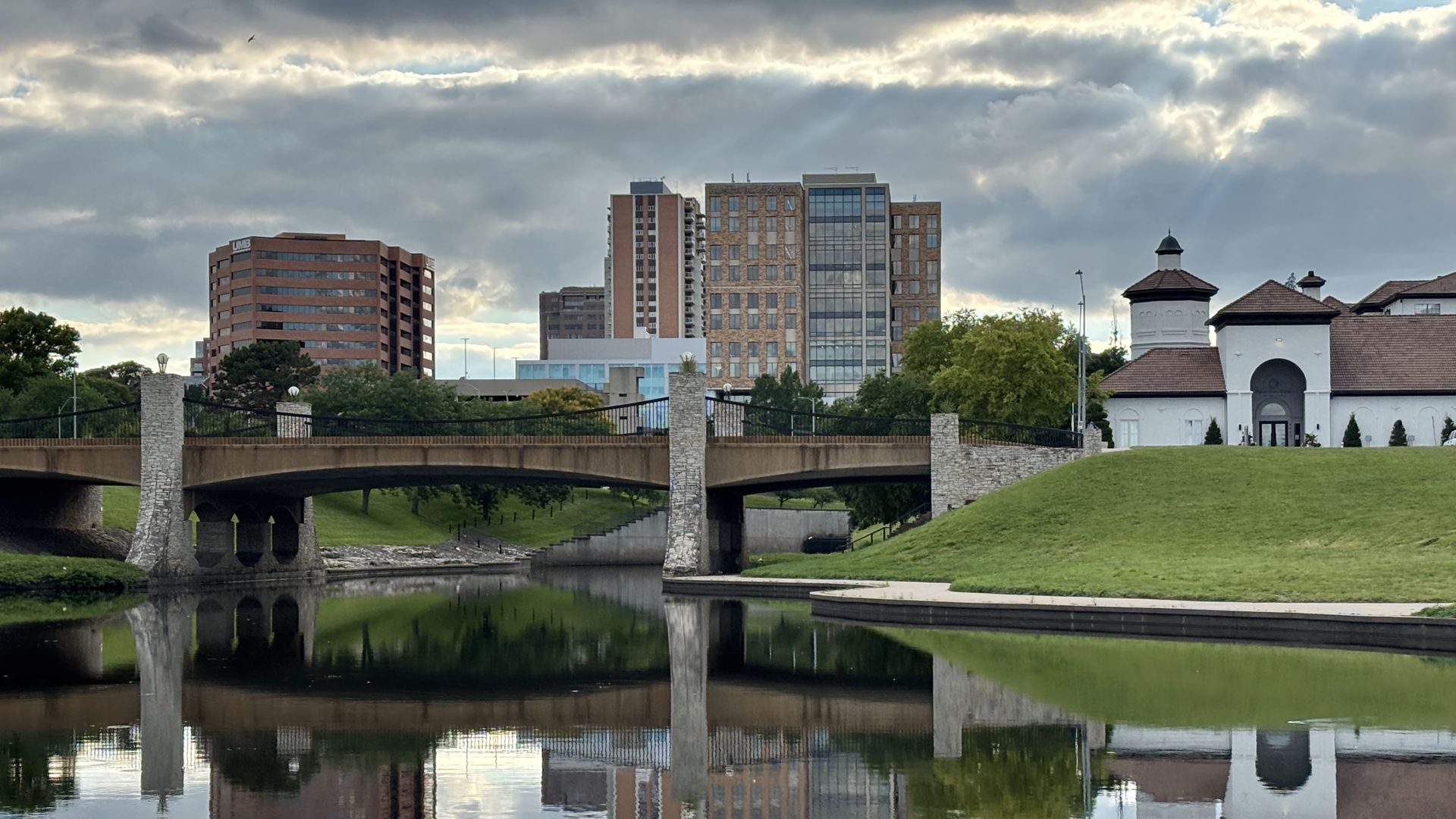
The creek, just east of the Plaza. Photo: Travis Meier/Axios
Brush Creek has a problem: Most people avoid it.
Why it matters: Community leaders say the urban waterway is ripe for revitalization, but none of its plans mean anything if they can't break its stigma.
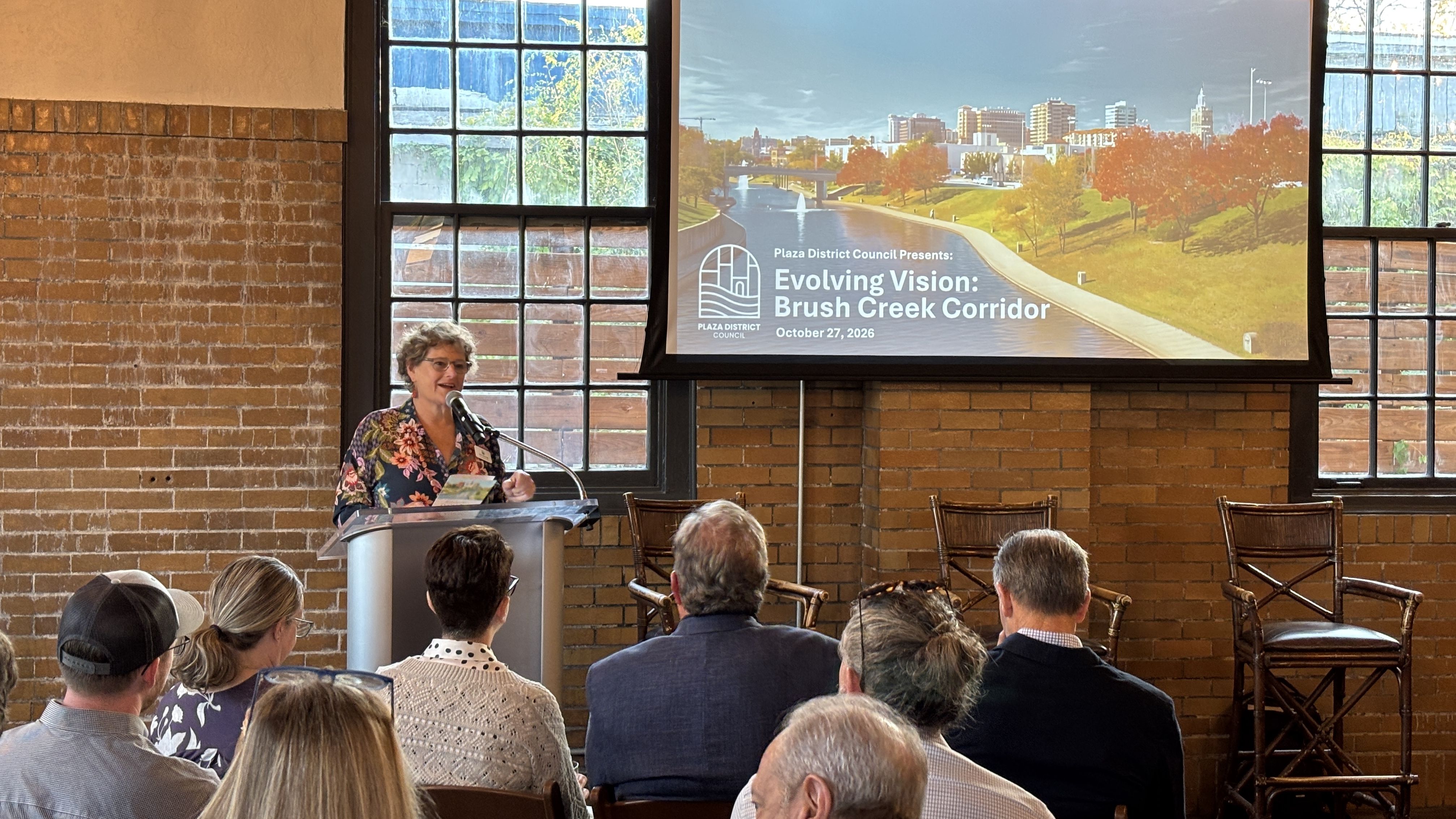
Driving the news: The Plaza District Council (PDC) brought together business leaders and community stakeholders Tuesday to talk about the creek's issues and build momentum for the future. Topping the discussion: sewage.
Zoom in: "Flush Creek" gets its cheeky moniker from the city's combined sewer system, which dumps wastewater and storm runoff into the stream during heavy rainfall.
- The resulting smell, along with concerns over cleanliness, safety and access, has kept residents away.
By the numbers: A recent PDC survey of area residents and district frequenters found only 16% of respondents would recommend spending time along Brush Creek, with 13% saying it's well-maintained.
- More than a third said they never spend time there, but 97% said improving the creek is important.
- Respondents want more cleaning, less odor, better lighting, additional shady spots to sit and attention to homeless encampments along the banks.
State of play: The city is reducing the load on its sewer system through projects like the new Westport stormwater storage and planned green infrastructure construction at Mill Creek Park.
- Andy Sauer, a stormwater expert with Burns & McDonnell, said at the event that improvements underway in Brookside will separate the neighborhood's wastewater from Brush Creek.
The big picture: Brush Creek runs from Johnson County to Kansas City's East Side. Its watershed covers roughly 30 square miles.
- Speakers recognized the difficulty of aligning governments and communities along the creek, and said that changing its perception will require attracting more visitors.
What they're saying: "People recognize the potential of Brush Creek," PDC president and CEO Kate Marshall said Tuesday. "They see what it could be, and they know we can be better."
- "Our capacity to get there has everything to do with your collective energy," BNIM founder emeritus Bob Berkebile told the room.
- "I want your emotional commitment," PDC chair David Westbrook said, underscoring the need for new energy and bistate cooperation.
What's next: The MLK Park pedestrian bridge, which will provide trail access to neighborhoods north of the creek, is scheduled to finish construction next year.