Missouri's data center power demand to grow 20-fold


Add Axios as your preferred source to
see more of our stories on Google.
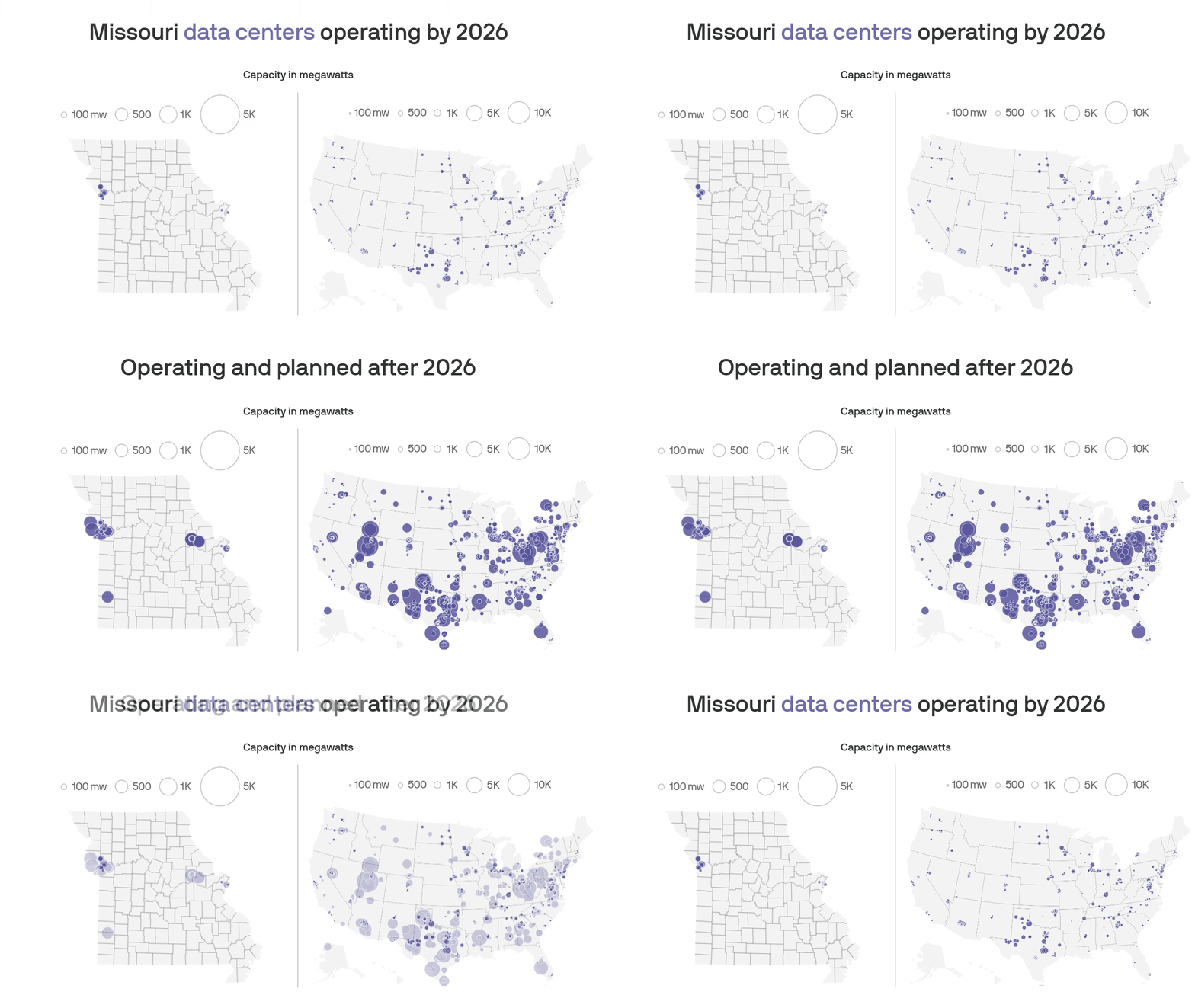
Missouri's planned data centers would draw more than 20 times the power of the ones running by the end of this year, per records analyzed by market intelligence company Cleanview.
Why it matters: Most of that growth is aimed at the Kansas City metro, where the biggest projects have already started construction and generated fights over power, water and tax breaks.
By the numbers: The state will have 11 data centers running by the end of this year at around 340 megawatts. The 50 planned after that would push capacity past 7,400 megawatts.
- Running at two-thirds capacity, typical for a data center, the average new one uses enough energy to power 54,000 homes, according to Cleanview.
Catch up quick: Google's Project Mica in the Northland could draw up to 500 megawatts.
- Nebius won more than $6 billion in tax breaks for an 800-megawatt campus in Independence.
The latest: Nebius broke ground in May after a judge blocked residents from forcing a vote, and the campus will eventually run on its own natural gas plant at the retired Blue Valley site.
- Its chairman expects the first phase online by mid-2027.
Across the state line: Kansas would grow from around 30 megawatts across three data centers to nearly 1,400 across nine, a jump officials credit to a 2025 state law offering 20-year sales tax breaks.
- Cloverleaf's Project Bluestem south of Tonganoxie doubled to 1.2 gigawatts with an on-site gas plant after Leavenworth County let its moratorium expire in August.
- Opponents have hired a lawyer and won two of three commission primaries, and the new commissioners take office in January. Emporia voters decide Nov. 3 whether to ban high-impact data centers.
Reality check: Analysts at Sightline Climate told Axios that as many as half of the data centers slated to open worldwide this year could be delayed, and 45 on Cleanview's list have already been canceled.
What's next: The rebuilt Blue Valley plant is slated to grow from 250 megawatts to around 1,100 by the end of 2029.