Royals stadium funding plan details costs, timeline


Add Axios as your preferred source to
see more of our stories on Google.
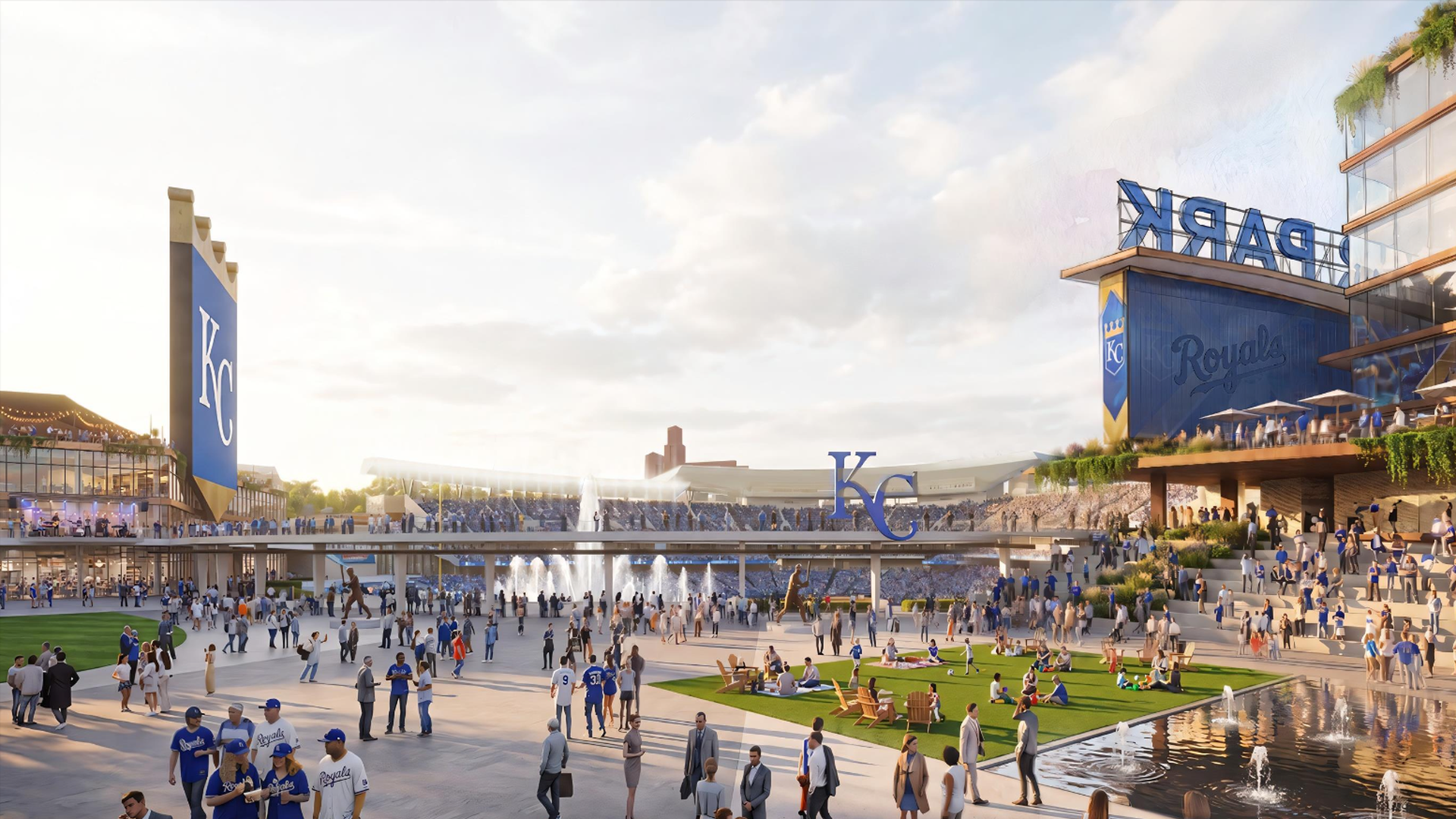
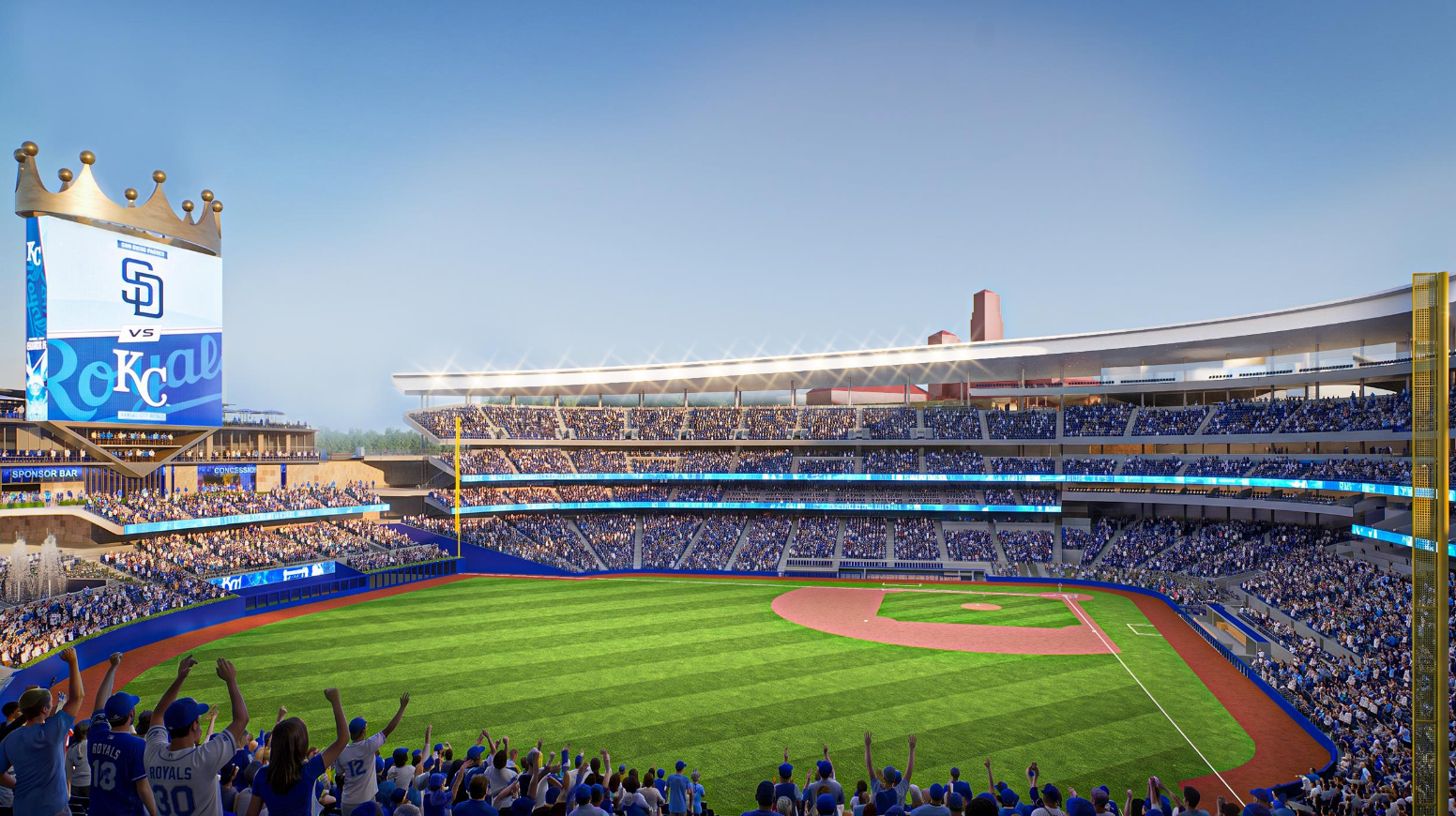
What the outside of the stadium could look like. Rendering: Courtesy of the Royals via the city of Kansas City
Details have emerged on how Kansas City plans to pay for its $600 million commitment to the Royals' new stadium: borrow most of it and repay the debt with a multi-layered tax strategy hinging on the ballpark district's performance.
Why it matters: The long-debated stadium is moving closer to construction, with a timeline and builders selected even as the city works through the final details of how to pay its $600 million commitment.
The big picture: The stadium project costs $2.05 billion, including development and financing, with KC paying $600 million, the state of Missouri and other public sources $540 million and the Royals $911 million, which puts taxpayers at 56%.
- Hallmark and other private investors are funding the surrounding district, which this plan doesn't cover yet.
Catch up quick: The Royals and Hallmark announced in April that the team will leave Kauffman Stadium for a new ballpark on the site of Hallmark's headquarters, anchoring a $3 billion district built by the two companies.
- In August, city council approved the city's share of the costs, including borrowing via bonds, but the city's Tax Increment Financing (TIF) Commission still had to hammer out the debt repayment details. Now, they have.
- Axios obtained a copy of the recommended TIF plan from the Economic Development Corporation, which includes the TIF Commission.
How it works: Tax increment financing bets that a project will generate tax revenue that wouldn't exist otherwise, then uses that new money to pay back the debt on construction costs over time.
- The city plans to borrow $510 million for the stadium and spend $90 million directly on infrastructure.
What's inside: For 23 years, half the increase in sales and earnings taxes generated inside the district would go toward costs. For 30 years, so would several of the city's own taxes, plus a new sales tax of up to 1%. That covers up to $381.9 million.
- The rest of the city's reimbursement comes from state money, a "stadium impact area" of redirected taxes and about $259.5 million in restaurant and gaming taxes, parking revenue and surrounding development.
- If those revenues fall short, the city still has to cover the bond payments by other means. KCUR reported that missing a payment would hurt Kansas City's credit rating and raise its borrowing costs.
The latest: The Royals on Monday picked Mortenson and McCownGordon to build the ballpark and JE Dunn, part of the team's ownership group, to develop the surrounding district.
- Mortenson, a Minneapolis-based company, built the T-Mobile Center.
- The TIF plan's schedule has preconstruction starting this month, a demolition permit in January, groundbreaking in May 2027 and a home opener in March 2030.
By the numbers: The plan estimates 16,000 job-years (meaning one person working for one year) of construction work and 2,275 permanent jobs — up 200 from those that already exist.
What they're saying: "The scale of the proposed investment, combined with major infrastructure improvements and long-term job creation, has the potential to support continued growth well beyond the ballpark itself," Andrea Bough, interim president and CEO of the EDC, said in a statement.
The other side: Council members Johnathan Duncan and Nathan Willett voted against the deal in August. Duncan said the $55 million in community benefits that the team promised wasn't enough.
- Missouri Workers Power, which gathered signatures to require public votes on stadium deals, asked the city clerk earlier this month to put it on the April ballot.
- Mayor Quinton Lucas said a vote wouldn't change the city's plans because the council has already acted.
What's next: The council has to approve the plan before it takes effect.