Therapy is part of the schedule at this KC school

Add Axios as your preferred source to
see more of our stories on Google.
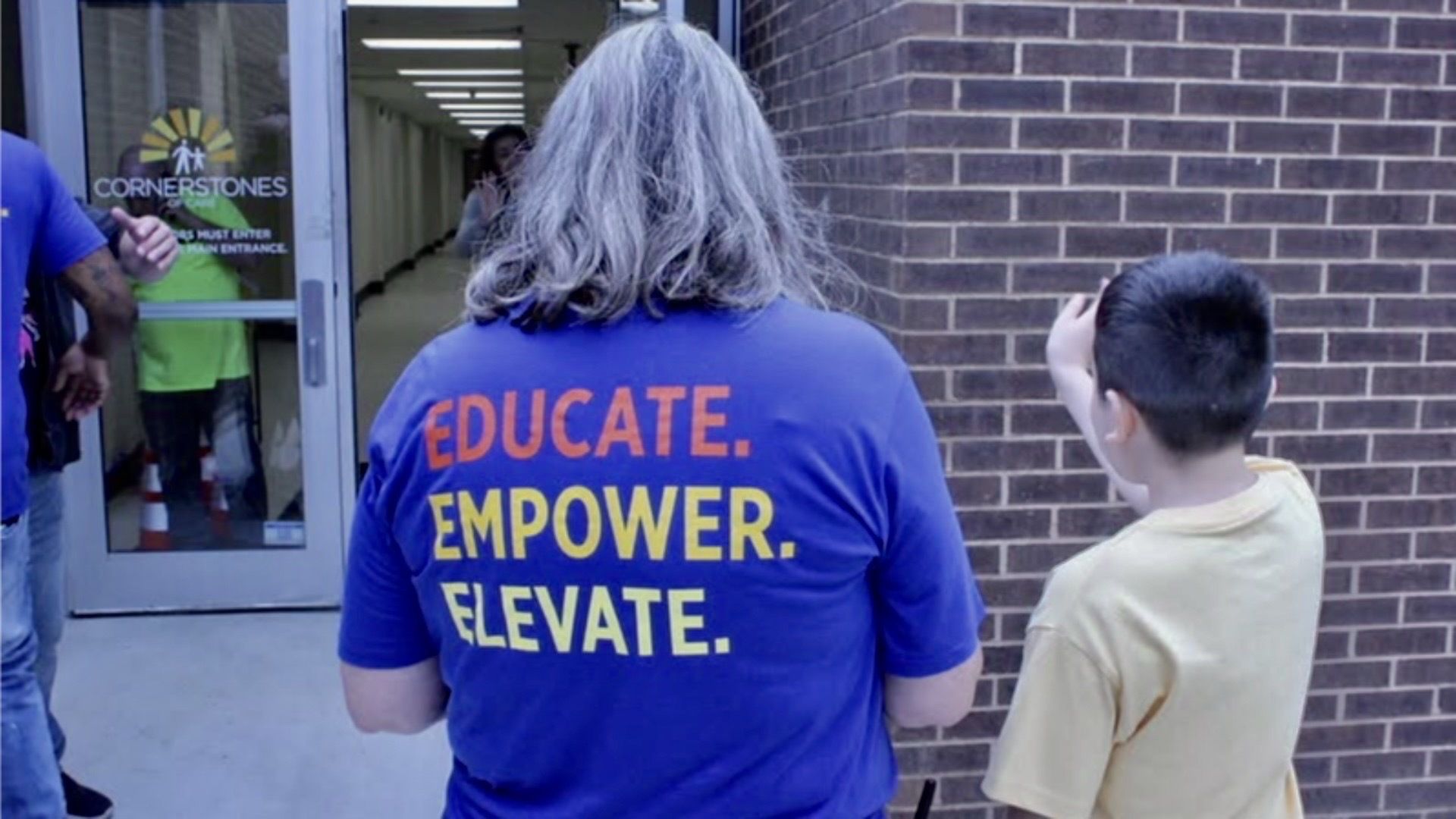
Students walk into the new Cornerstones of Care building on the first day of school. Photo: Courtesy of Cornerstones of Care
Cornerstones of Care opened a K-12 school Monday in south Kansas City where every student gets therapy built into their class schedule.
Why it matters: Students whose anxiety, depression or behavioral challenges are severe enough to qualify for special education drop out at higher rates than any other disability group, per the National Center for Education Statistics.
- Cornerstones of Care is where more than 40 districts across Missouri and Kansas send those kids to keep them on track.
How it works: It's called day treatment. Districts refer students here when a regular classroom isn't working. Kids attend a full school day and go home to their families each afternoon.
- Students ages 6 to 19 take regular courses taught by special education teachers, with individual counseling and expressive therapies scheduled between classes.
Classes hold 10 to 12 students, and every teacher works with a full-time classroom aide, Cornerstones of Care senior director of education Angela Danley told the Martin City Telegraph.
- In regular public schools, students share one counselor per 372 kids on average, according to the American School Counselor Association.
- The goal is returning students to their home district or getting them to graduation.
Follow the money: Federal disability law requires the referring district to pick up the cost, tuition included. Families pay nothing.
Zoom in: The campus fills the former Archbishop O'Hara High School, which sat empty after closing in 2017.
- It merges Cornerstones' two day treatment programs, a K-8 school and a high school, into one K-12 building for the first time.
- Renovations added a therapy suite where students can decompress, a training kitchen for a culinary program, and a resource center stocked with food and clothing for families.
What they found: Early evidence says the model helps kids. University of Kansas researchers found students in an intensive school-based mental health program made early gains both in class and in behavior, though York University researchers wrote last year that research on day treatment remains scarce.
- The hard part comes after. When students return to their old school, the daily counseling and small classes disappear, and in one Oregon program researchers studied, most middle schoolers who went back ended up pulled out of regular classrooms again within a year.
What's next: The new campus holds 150 students, 50 more than the two old buildings did, and Cornerstones says the added room lets it start pulling families off its waitlists.