More than a century of KC drag on one wall

Add Axios as your preferred source to
see more of our stories on Google.
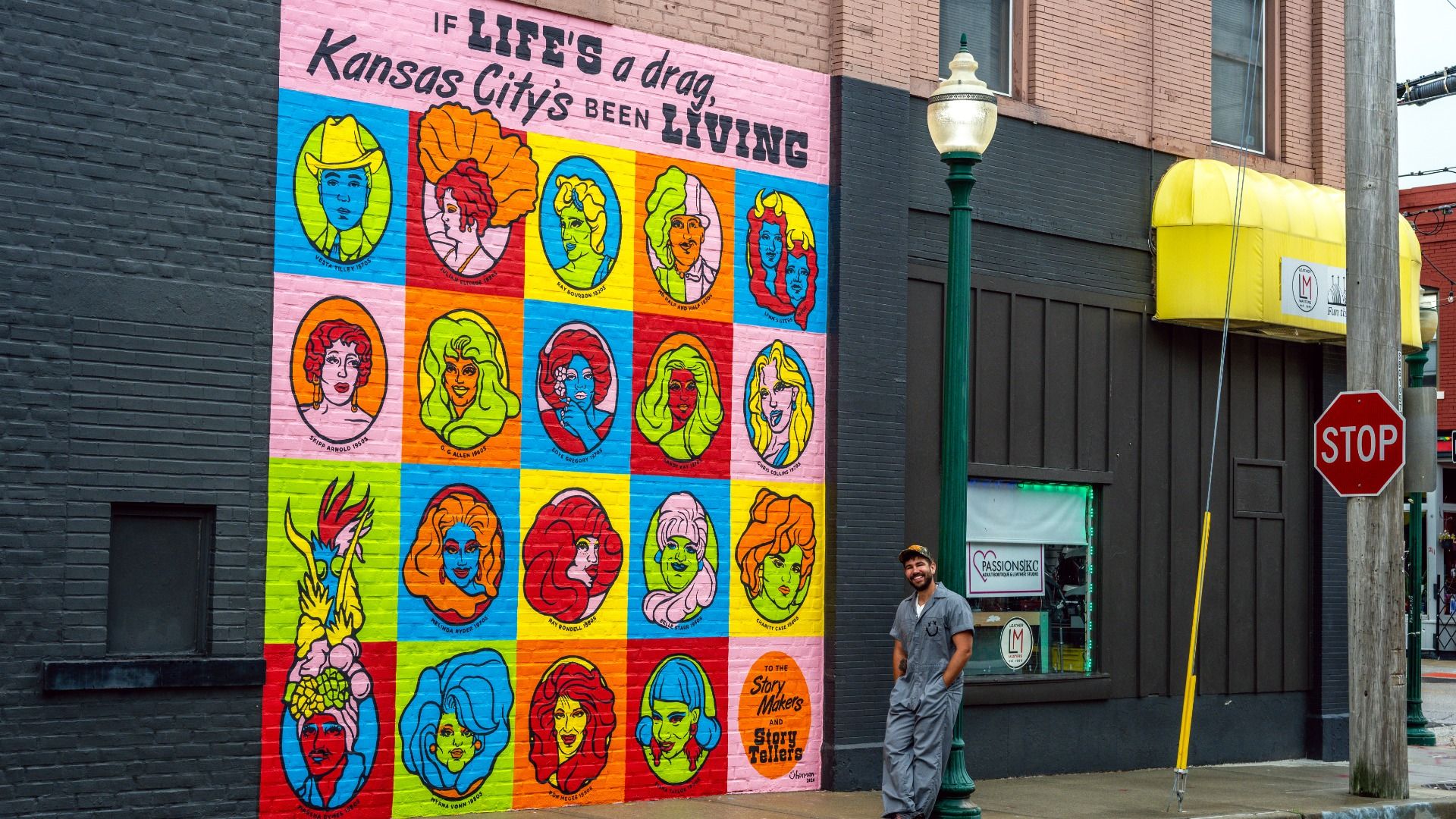
Jared Horman next to his art. Photo: Courtesy of John Brant
More than a century of Kansas City drag history now lives on one Westport wall, where a new mural brings 18 performers back into public view.
Why it matters: The mural only exists because a handful of local archivists spent years saving the flyers, photos and costumes that kept those names alive.
Zoom in: Muralist Jared Horman, who co-painted Midtown's Chappell Roan mural last year, spent June building his lineup with three organizations.
- He worked with the Gay and Lesbian Archive of Mid-America at UMKC, Black/queer Kansas City and the KC Rainbow Tour.
- "A big part of this mural wouldn't exist if those archives didn't exist," Horman tells Axios.
The mural covers the side of the adult boutique Passions KC in Westport.
- Hand-painted letters across the top read, "If life's a drag, Kansas City's been living."
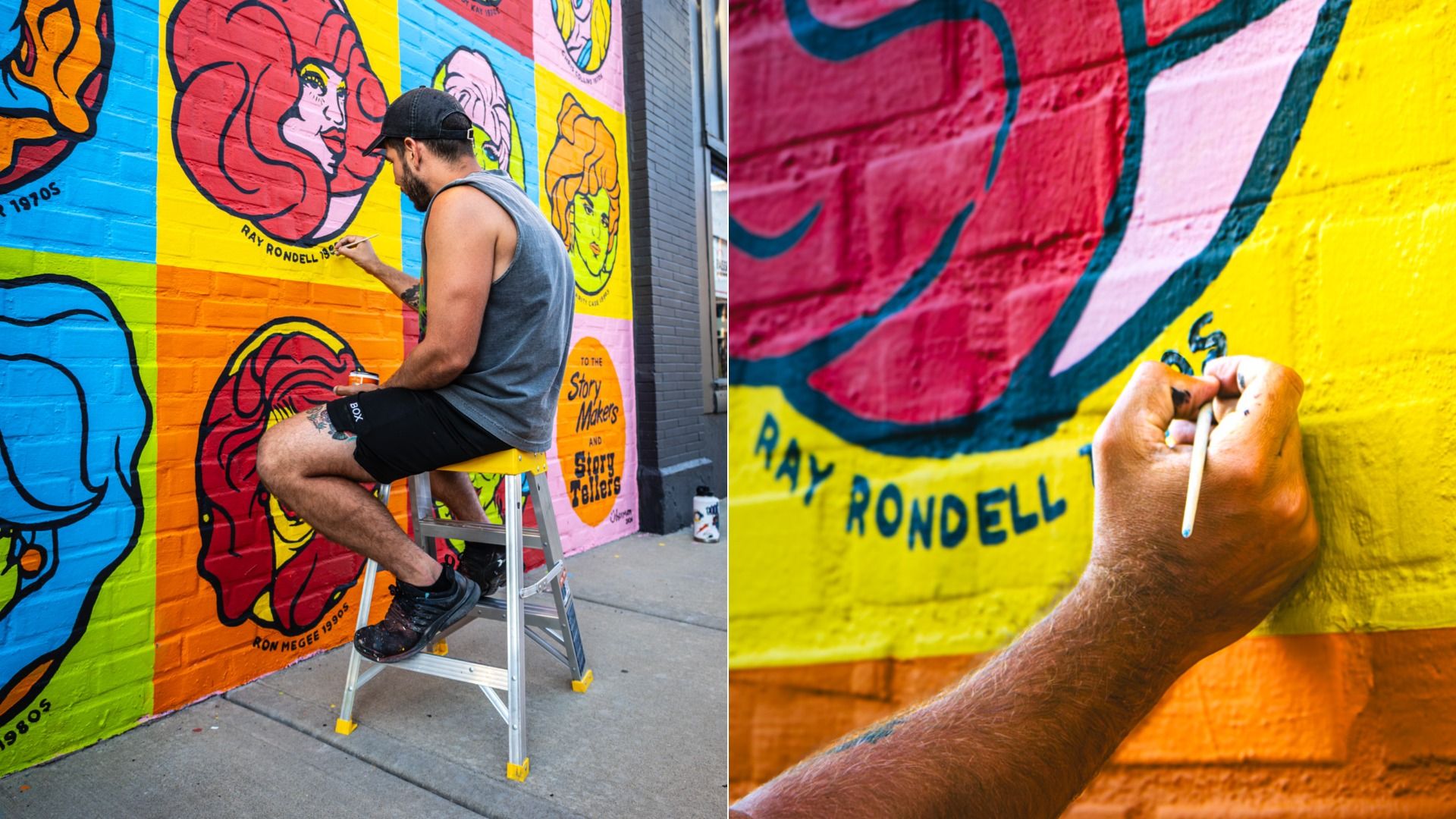
- Each square is labeled with a name and the decade the performer started.
What they're saying: "I wanted to show that we've had this history without it feeling like a memorial," Horman says. "I wanted it to feel joyful and fun and bright and colorful."
- The wall shouldn't feel "bleak or stodgy," he says, "because drag is neither of those things."
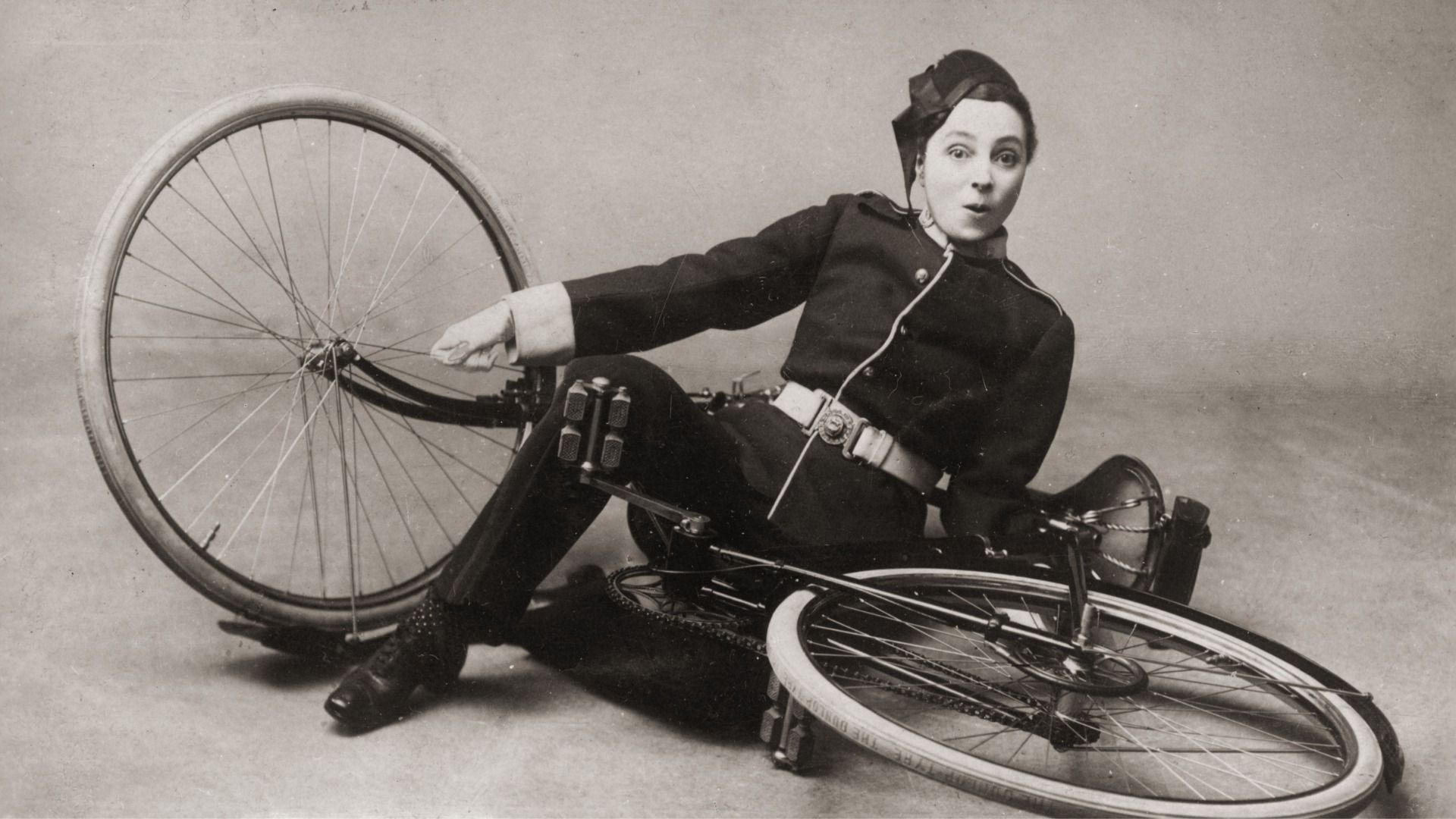
Flashback: The oldest face on the mural is Vesta Tilley, a drag king who built a 50-year career playing men, and by the 1890s, she was the highest-earning woman in England, according to researchers at the History Workshop.
- Another queen on the wall is Mr. Half-and-Half, who sang at a KC nightclub called Dante's Inferno in half a gown and half a tuxedo. Horman painted him split down the middle to match.
A lot of the wall's midcentury faces trace to one address. The Jewel Box Lounge ran female impersonation shows for 34 years on Troost and later Main before closing in 1982.
- Skip Arnold, a comic there, became the central figure in "Mother Camp," the first book-length study of a gay community.
- Anthropologist Esther Newton wrote it after sitting through more than 100 Jewel Box shows in the mid-1960s.
The bottom line: Horman wants people to dig out their old drag flyers and photos and donate them to an archive, so they're not lost to time.