The local cook keeping Native food on the menu

Add Axios as your preferred source to
see more of our stories on Google.
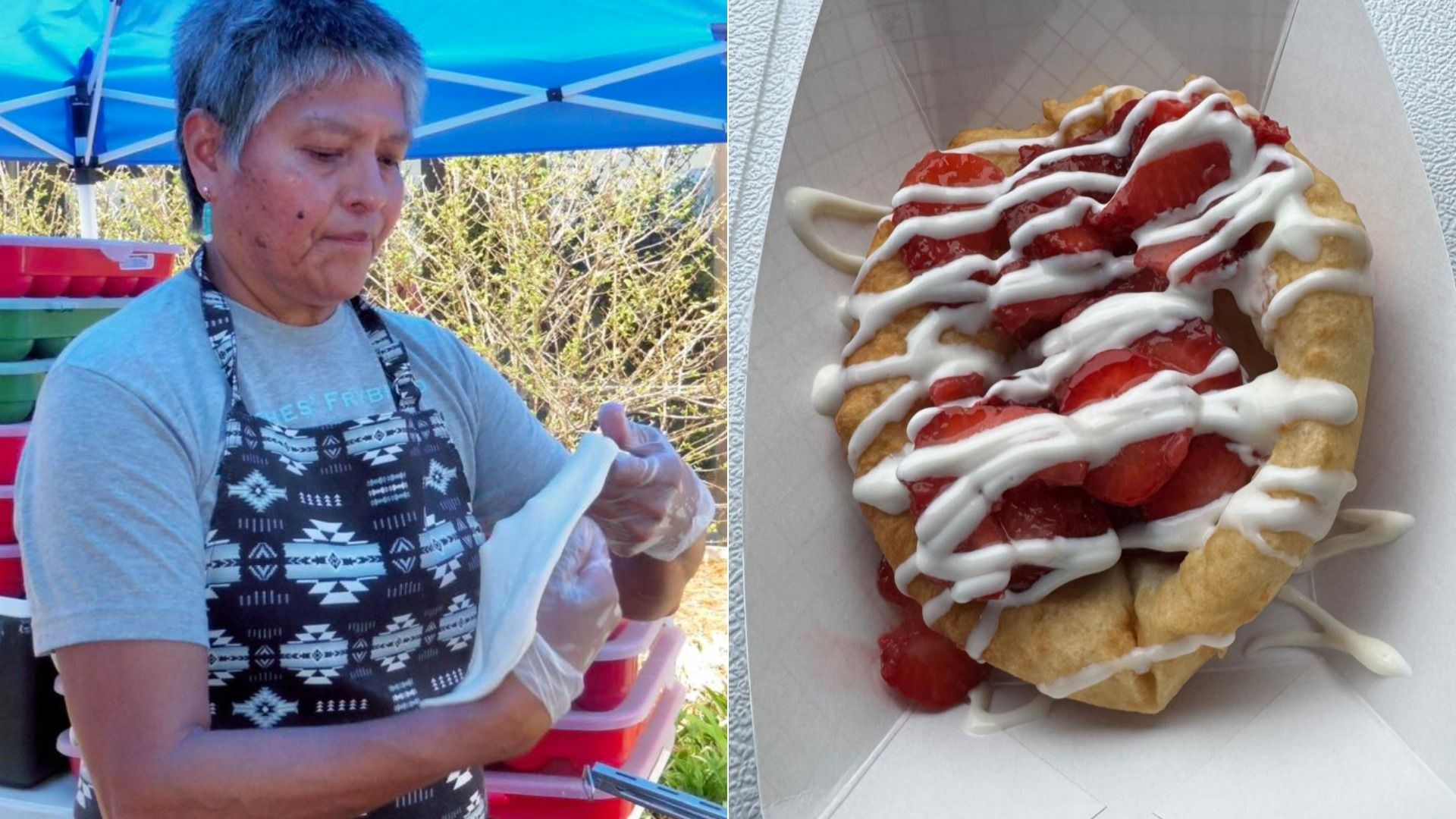
Nadine Peaches preparing to fry the dough. Photo: Courtesy of Nadine Peaches
Nadine Peaches has been cooking Navajo food for more than 20 years in and around KC, and her pop-ups are some of the only places in the metro to find it.
Why it matters: Only 1% of U.S. restaurants are Indigenous, per the nonprofit North American Traditional Indigenous Food Systems, making Peaches part of a small group of cooks keeping the cuisine alive.
Context: Frybread is the base of nearly everything Peaches' Frybread sells. The dough comes together with flour, water, salt and baking powder, then gets fried until puffed and golden, roughly the size of a dinner plate.
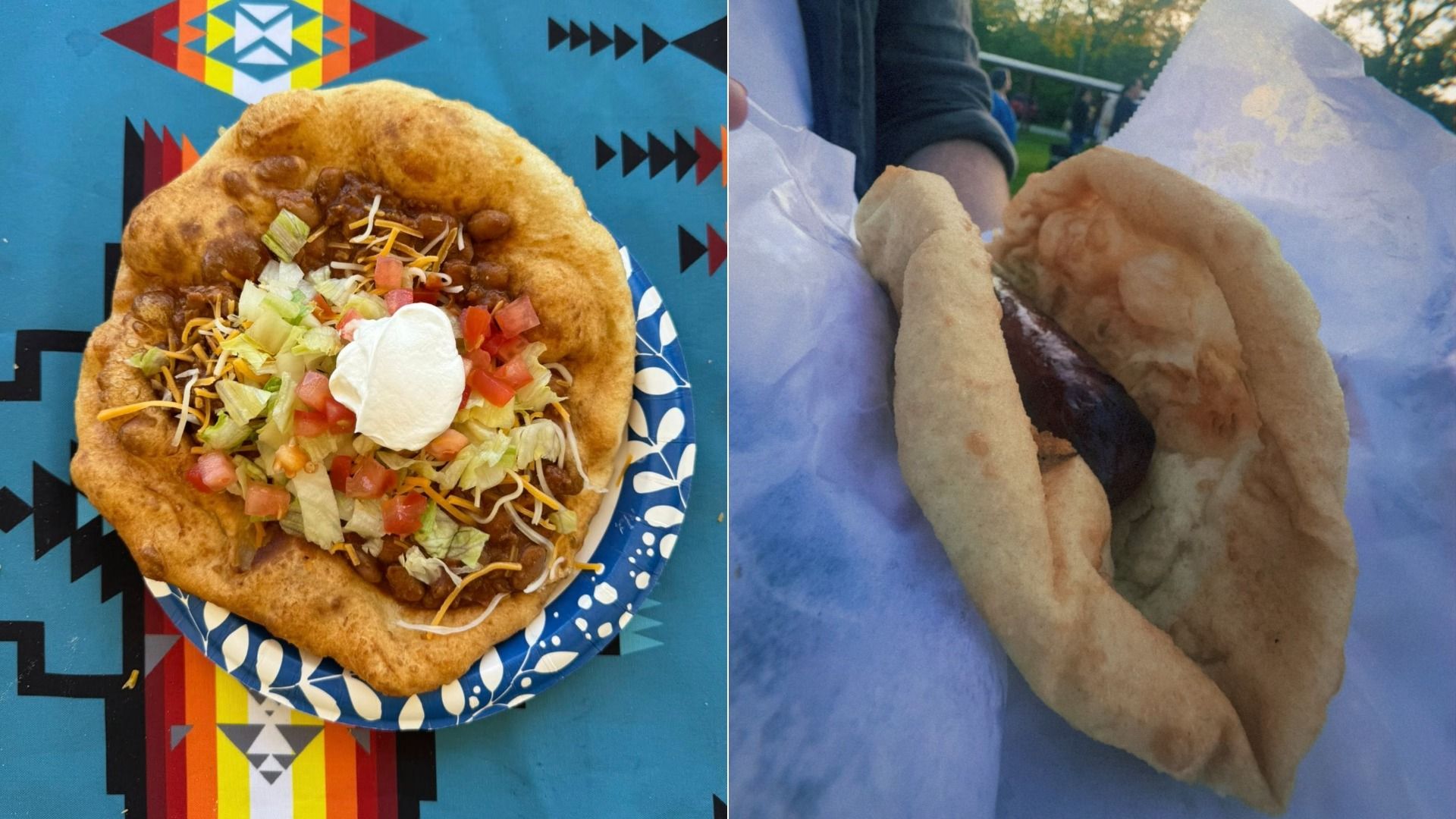
- The Navajo taco piles seasoned meat, beans, lettuce and cheese on top of the frybread. The dessert version gets strawberries and cream cheese.
- Peaches also serves Rez Dogs (Native hot dogs), tamales, corn stew with lamb and breakfast burritos.
Peaches learned to make frybread from her mother at age 7 in Tsegi, Arizona, the youngest of 15 kids. She moved to Lawrence in 1989, took a nursing job, and has run the frybread business on the side since 2006.
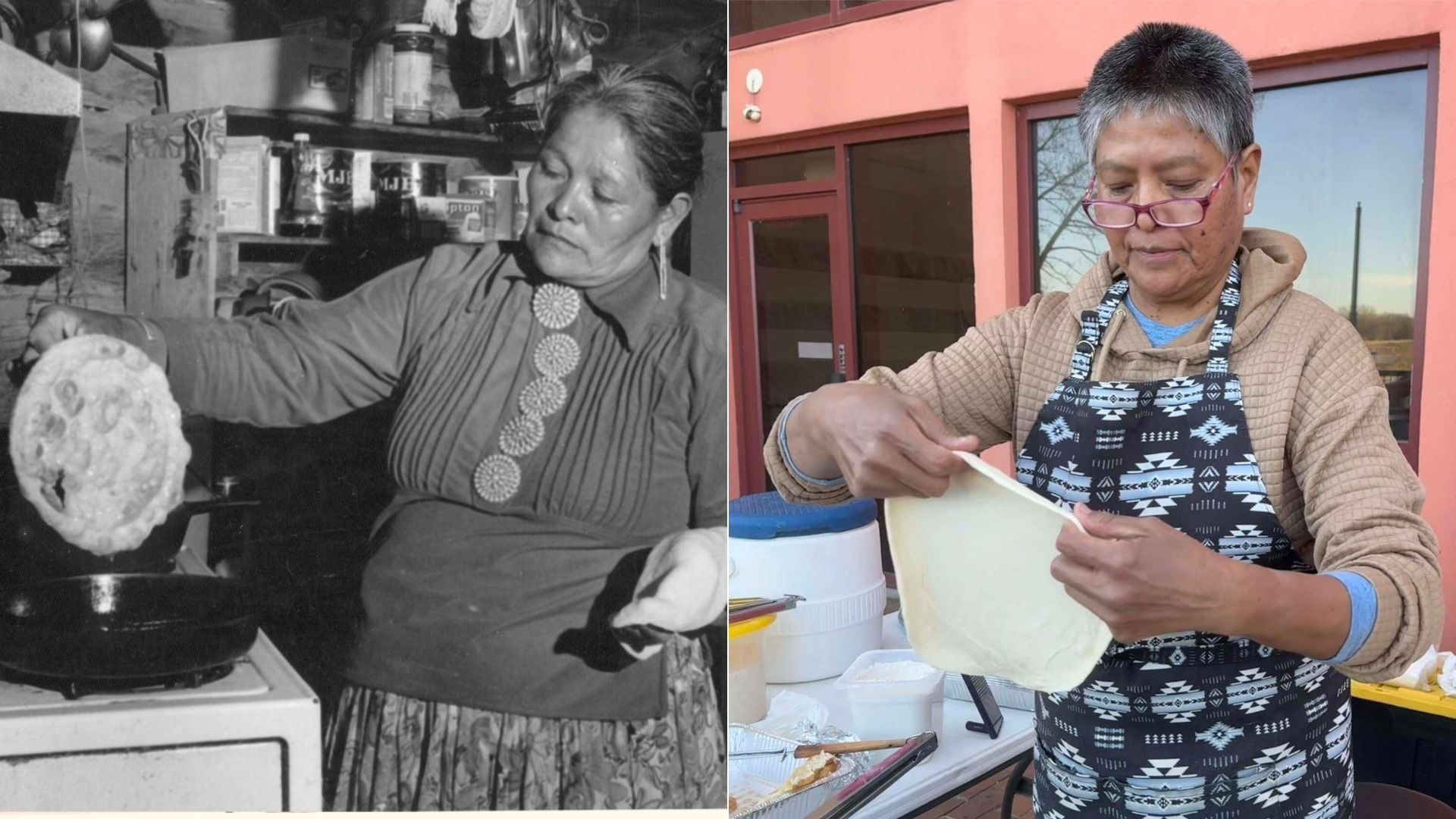
- "I would make my frybread too sticky, too hard. I didn't like cooking at the beginning, and then I took it and made it into, how can I make it better?" she tells Axios.
Flashback: Frybread isn't ancient. Navajo tradition traces it to 1864 at Bosque Redondo, the eastern New Mexico internment camp where the U.S. military held more than 8,500 Diné people, per the Bosque Redondo Memorial.
- They got there by way of the Long Walk: a series of forced marches that ran 250 to 450 miles from the Navajo homeland in present-day Arizona and New Mexico, depending on the route, per the Smithsonian.
- Army rations were flour, lard and sugar — strange ingredients to people who had grown corn, beans and squash for generations. They mixed and fried what they had. Frybread came out of the pan.
- The recipe traveled home with survivors after the 1868 Treaty of Bosque Redondo and spread to other tribes, becoming a staple at powwows.
What they're saying: "When they did the Long Walk, they gave us all these things, and they were supposed to kill us. But they didn't. We survived and we learned how to utilize it," Peaches tells Axios.
- "Each tribe has a different, unique way of making frybread. I do it the way my mother made it."
💭 Abbey's thought bubble: I'm Seminole and have always loved my mom's frybread. I got the opportunity to try Peaches' Frybread at a powwow over the weekend and was transported back home.
What's next: Peaches' next chapter is teaching frybread classes and getting a food truck. The plan solidified after her daughter came home from school and told her a classmate had asked if Native Americans still existed.
- "I want to teach frybread so people can pass on the tradition," Peaches tells Axios.