KC crackdown on "gas station drugs" spreads to suburbs

Add Axios as your preferred source to
see more of our stories on Google.
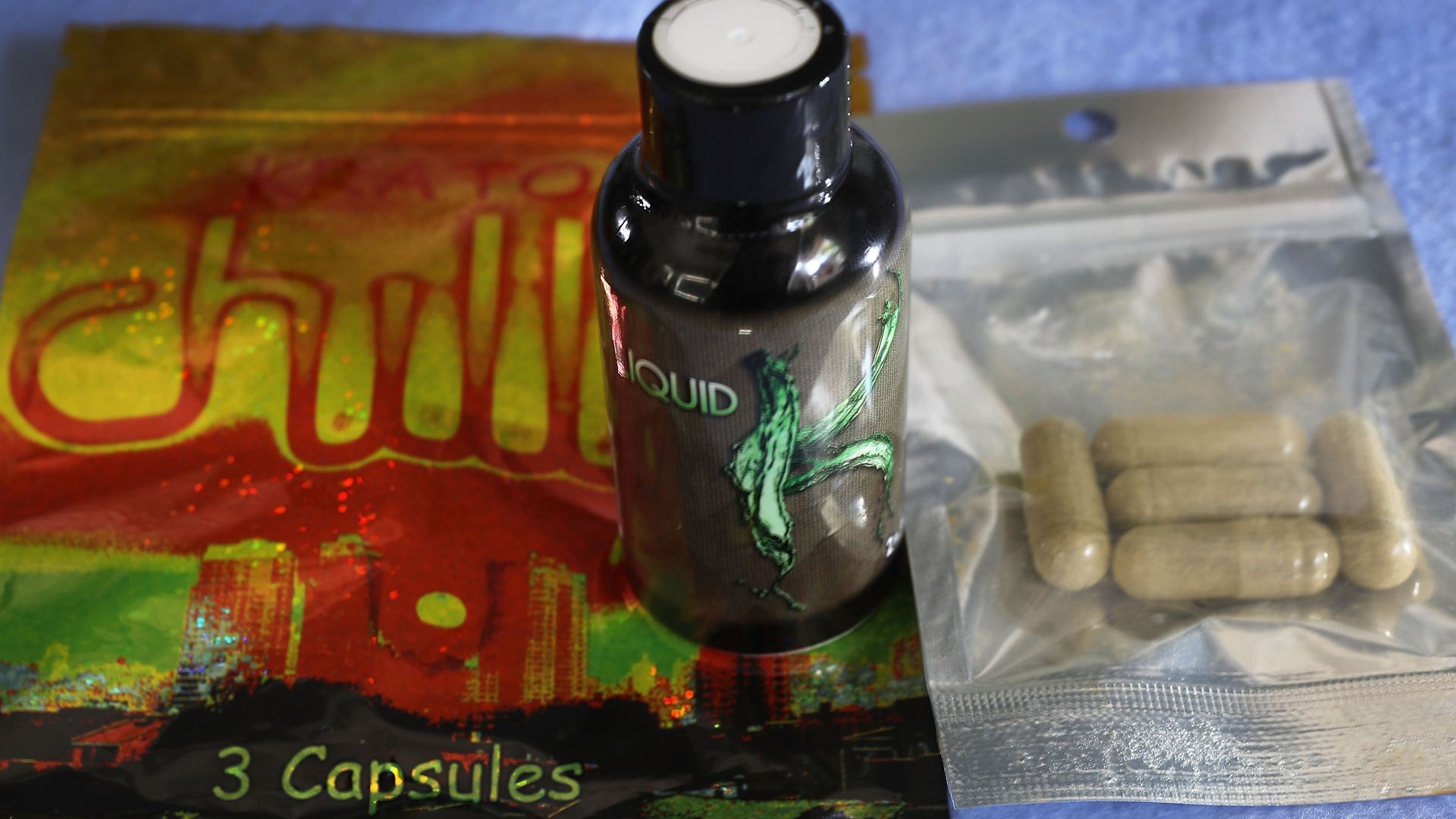
A bottle with kratom liquid and bags of herbal supplements. Photo: Joe Raedle/Getty Images
Lee's Summit is joining Kansas City in tightening rules on kratom and certain cannabinoids, expanding a push to rein in a fast-growing market of unregulated intoxicants.
Why it matters: What you can legally buy now varies across the metro, as cities move faster than Missouri and Kansas to regulate drugs that are sold in gas stations and smoke shops.
State of play: State law does not clearly regulate many of these products, allowing intoxicants like delta-8 THC or products containing 7-OH, a compound derived from kratom that acts like an opioid, to be sold in gas stations and smoke shops without the testing, labeling or age restrictions required for marijuana sold in licensed dispensaries.
Context: Kratom comes from the leaves of a tropical tree native to Southeast Asia. It's usually sold as powders, capsules and teas, but also in more concentrated forms like gummies that are widely available.
Zoom in: KC's ordinance targets kratom and bans synthetic 7-OH and restricts natural kratom to adults 21 and older, while requiring sellers to get a license.
- Lee's Summit went further, voting last week to restrict high-potency kratom products, intoxicating hemp-derived cannabinoids like delta-8 and delta-10 and nitrous oxide sold for recreational use, according to city ordinance records.
The other side: "This bill is throwing the baby out with the bath water," Rachel Crawford, who owns Rustic Oils in Lee's Summit, told Axios regarding the banning of cannabinoids.
- Crawford says customers call daily, worried about losing access to products they rely on for pain, including seniors and people in recovery.
- She worries that she may have to close her store after eight years in business, as more than 60% of her sales come from hemp-derived products.
Zoom out: At least 24 states regulate kratom or its compounds in some way, with some banning it outright and others focusing on restrictions for high-potency products like 7-OH.
Reality check: These rules are still rolling out. The KC ordinance goes into effect on April 13, and Lee's Summit's date has not been publicly specified.
- Similar products remain available in nearby cities without restrictions, making it easy for buyers to go elsewhere.
What's next: Lawmakers on both sides of the border are working on setting statewide rules.
- One proposal in Missouri would regulate kratom, including age limits and restrictions on high-potency compounds like 7-OH.
- Another would tighten rules on hemp-derived THC products by pushing them into the state's regulated cannabis system, if Gov. Mike Kehoe signs it.
- In Kansas, lawmakers passed a bill last month that would classify kratom as a Schedule I controlled substance, putting it in the same category as heroin if signed.