Feb 19, 2026 - News
Chart to go: More degrees for KC


Add Axios as your preferred source to
see more of our stories on Google.
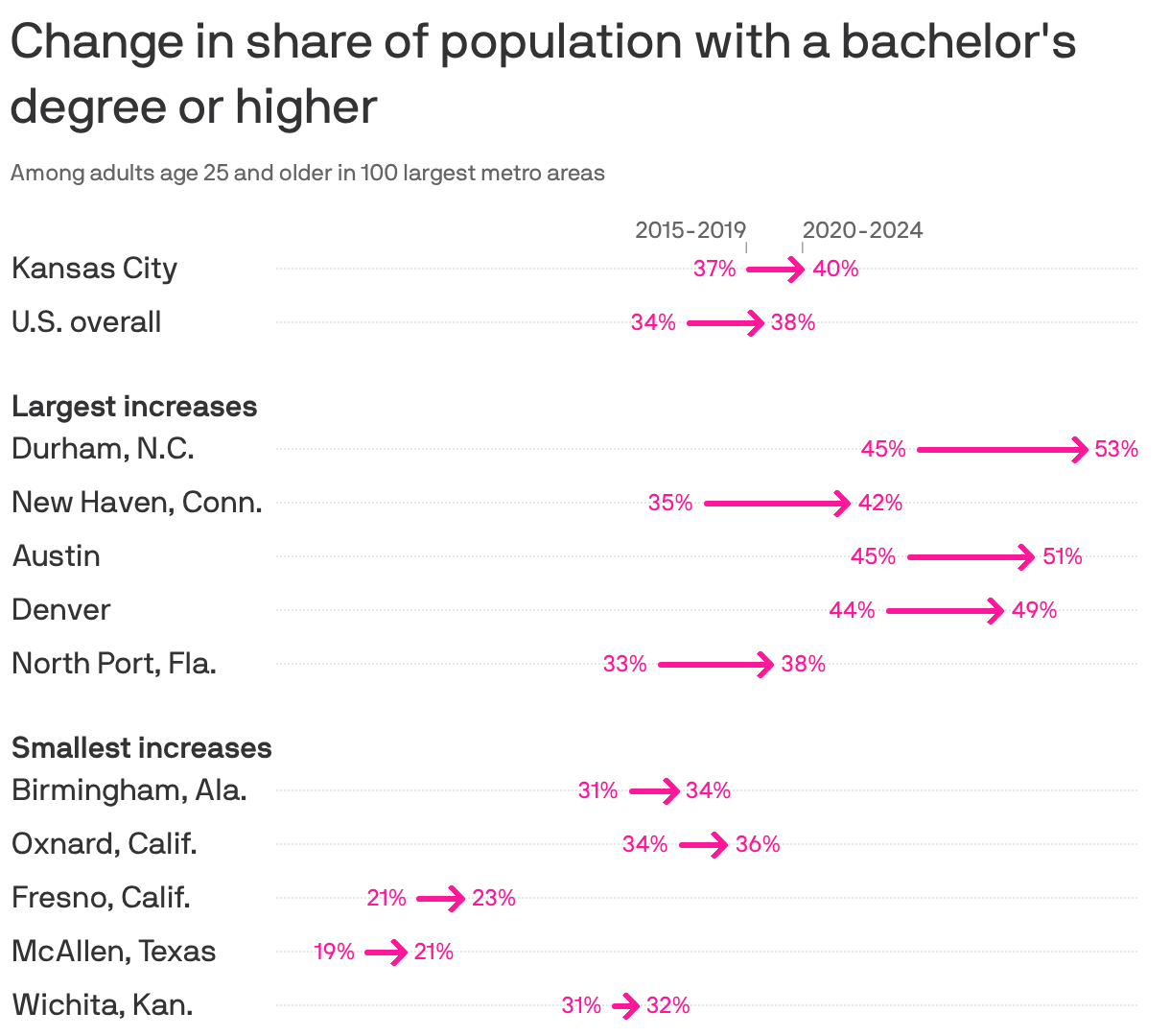
Kansas City's share of adults 25 and older with a bachelor's degree or higher rose from about 37% to 40% between the 2015–2019 and 2020–2024 periods, according to new census data.
The big picture: That's on par with 89% of other metro areas that also saw some growth during this time, and slightly ahead of the national average, which rose to 38%.
- The biggest gains among the 100 largest metro areas: Durham, N.C. (53%, up from 45%); New Haven, Conn. (42%, up from 35%); and Austin (51%, up from 45%).
- Springfield, Mass., was the only metro with a decrease, dropping from about 33% to 29%.
How it works: That's based on the Census Bureau's latest five-year American Community Survey estimates.
- A metro's share can increase if more residents get degrees, or if more people with degrees move into town.
Yes, but: Many graduates are saddled with debt, with about 42.7 million borrowers owing more than $1.6 trillion in federal loans.
- And 13.4% of unemployed people in July 2025 were new to the workforce, the highest rate since 1988.
The bottom line: Degrees are going up, but so is the pressure on graduates.