Phone data to retime traffic signals in KC using federal grant

Add Axios as your preferred source to
see more of our stories on Google.
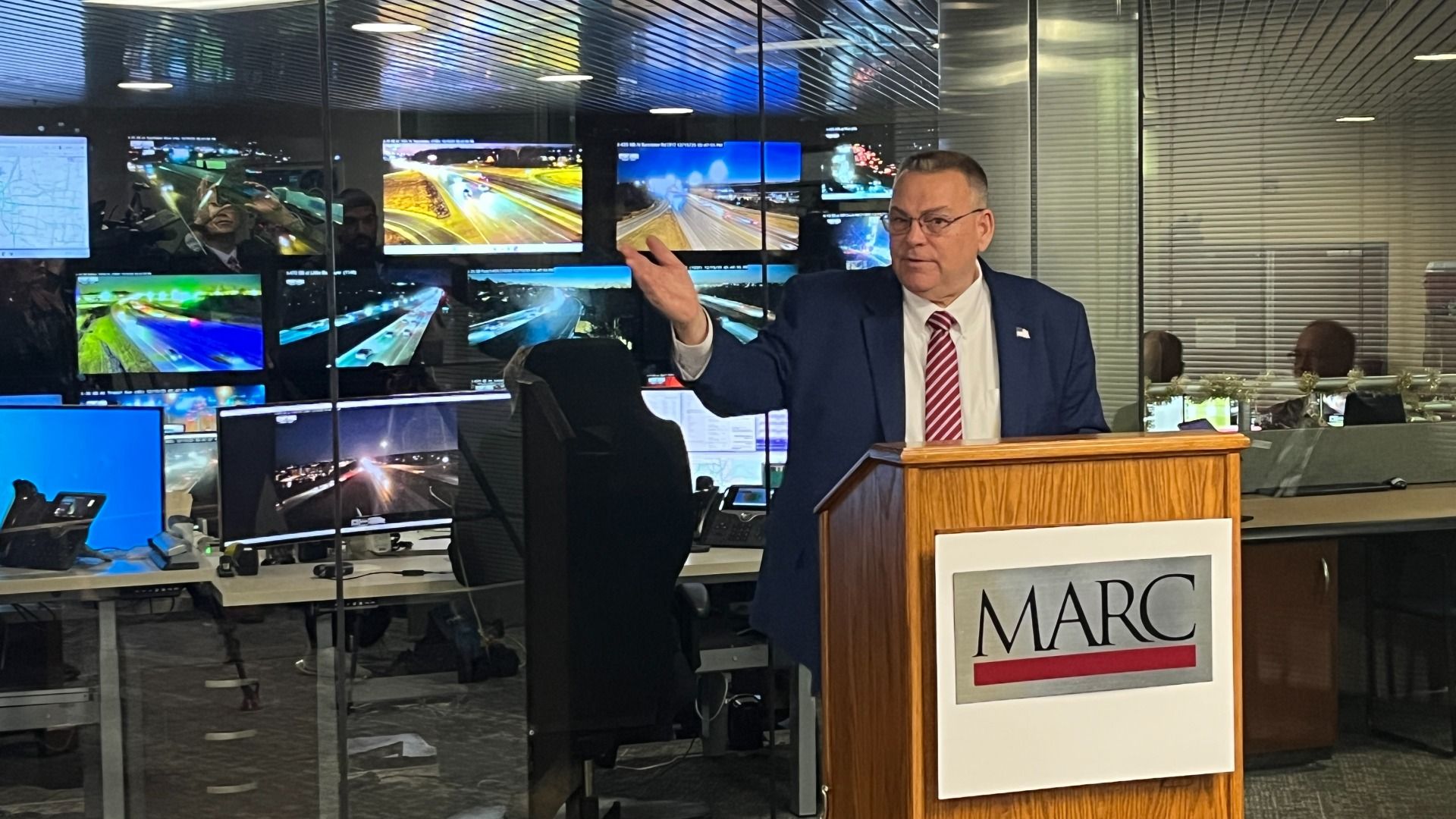
USDOT deputy assistant secretary Lee White. Photo: Travis Meier/Axios
Transportation leaders in Kansas City are implementing new real-time traffic technology to help reduce traffic jams, thanks to funding from the U.S. Department of Transportation.
Why it matters: The initiative, dubbed Operation Green Light, seeks to retime traffic lights to lower fuel emissions, commute times, and even risky driving.
How it works: The Mid-America Regional Council (MARC), a bi-state coordination group, used a USDOT SMART grant of about $735,000 awarded in 2023 to evaluate and select a traffic data vendor.
- That vendor, which has not yet been named, will use tracking info from people's cars and phones — like when they use map navigation — and package it for KC's regional freeway management system, Kansas City Scout.
- Traffic analysts will then use that information to make remote changes to signal timing.
What they're saying: "Traffic hot spots will be identified faster, and transportation managers can adjust how long specific lights remain green and when they turn red," USDOT deputy assistant secretary Lee White said at a press briefing Monday.
- "This directly improves the safety, efficiency and reliability of the system for both vehicles and pedestrians," he added.
Zoom in: The tech will be tested this summer during the World Cup, where an expected 650,000 fans will converge on Kansas City's roadways.
- "We expect that this SMART grant will help create a positive fan experience, reduce traffic bottlenecks and offer a glimpse into the future of transportation," White said.
- "We want to keep people safe," during the World Cup, KC2026 chief operations officer Lindsey Douglas said at the briefing. "When you have technology that's helping to aid fluidity, people take less risky decisions."
Zoom out: Technology like this is springing up around the country, from California to Florida.
- "What makes this Kansas City project unique is their integration of data and systems among multiple counties and two states," USDOT communications officer Dov Schwartz tells Axios.
Between the lines: Raymond Webb, the traffic operations director at MARC, says the data they receive will be anonymized from multiple sources, including built-in car systems, commercial vehicles and phones.
- Heavy data processing like this is often done with the help of artificial intelligence, as is now industry standard, per Webb.
Context: Operation Green Light also installed 16 video surveillance systems and 54 traffic signal controllers across the metro in 2024, and it retimed 73 lights.
- The mobile tracking data will work in tandem with these intersection systems.
What's next: Once MARC finalizes the vendor contract, traffic officials plan to meet with 12 metro agencies and local governments over the coming months to determine how to best roll out the tech, Webb says.